Introduction
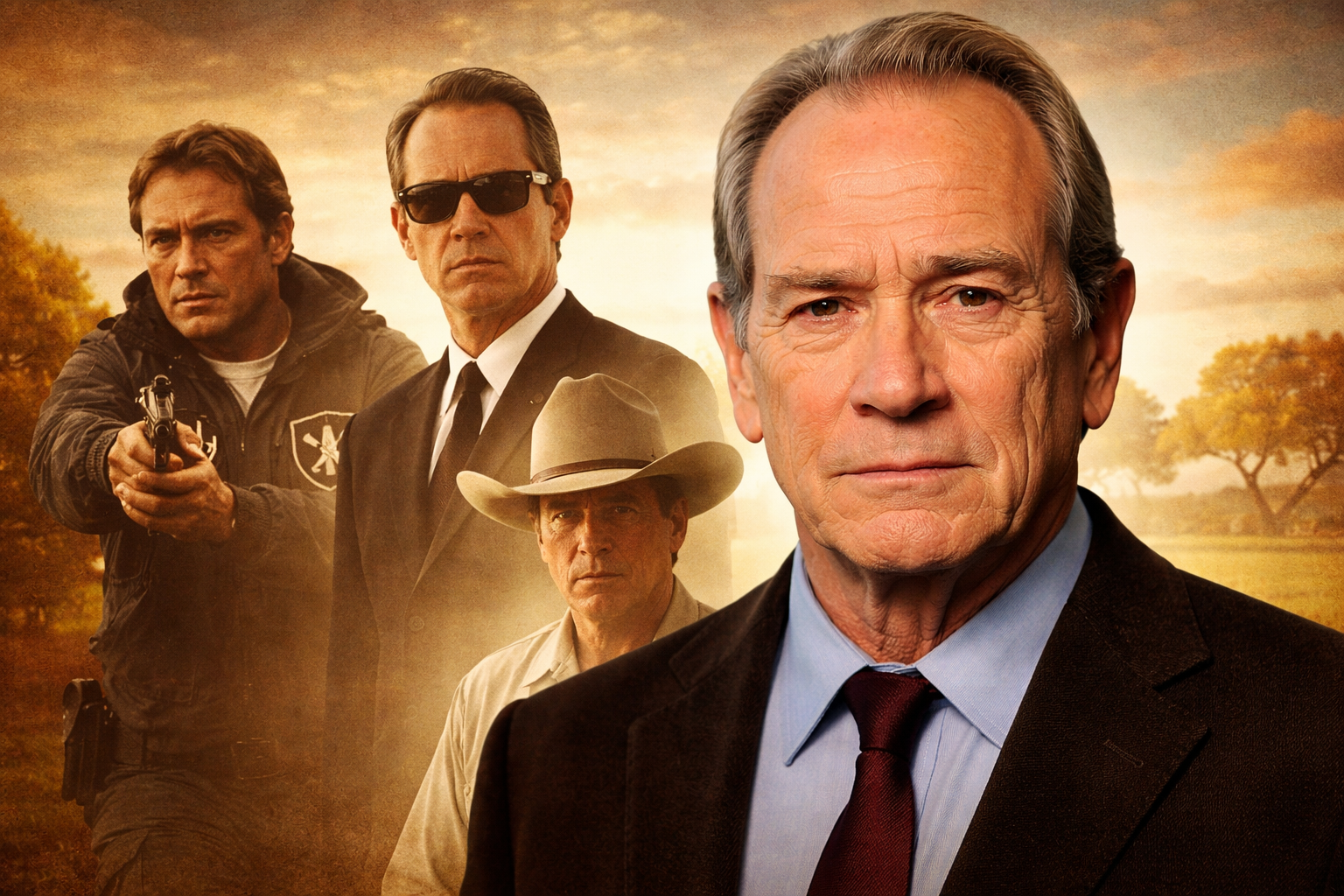
Thank you for reading this post, don’t forget to subscribe!Tommy Lee Jones is widely regarded as one of the most formidable and intellectually grounded actors in American cinema. Known for his stern authority, emotional restraint, and deeply human performances, Jones has built a career that spans more than five decades. From Westerns and political thrillers to blockbuster science fiction and historical dramas, he has consistently chosen roles that reflect substance over spectacle.
As of 2026, his life reflects both towering professional achievement and profound personal loss — making his journey not only cinematic but deeply human.
Early Life and Family Background
Tommy Lee Jones was born on September 15, 1946, in San Saba, Texas, a small town that shaped his grounded worldview. He was raised primarily in Midland, Texas, by his parents:
- Clyde C. Jones, an oil-field worker and cowboy
- Lucille Marie Jones, a schoolteacher, police officer, and beauty shop owner
His parents’ marriage was turbulent, involving separation and reconciliation, which exposed him early to life’s complexities. Jones has Cherokee ancestry, and his rural upbringing instilled in him a strong sense of discipline, independence, and resilience — qualities that would later define many of his screen characters.
Education: A Scholar-Athlete Turned Artist
Jones attended St. Mark’s School of Texas, one of the state’s most prestigious institutions, before earning a football scholarship to Harvard University. At Harvard, he studied English Literature and graduated in 1969.
Notably, he shared a dormitory room for four years with Al Gore, who would later become Vice President of the United States. While Jones excelled academically and athletically, it was theatre and classical literature that ultimately shaped his future.
After graduating, he consciously chose acting over professional football, a decision that would alter the course of American cinema.
Early Acting Career
Jones began his professional acting career in theatre and television, gaining recognition on the soap opera One Life to Live in the early 1970s. His film debut came with Love Story (1970), followed by years of character roles that sharpened his craft.
During this period, he developed a reputation for seriousness, discipline, and emotional depth — traits that later distinguished him from many of his contemporaries.
Rise to Stardom and Iconic Roles
The 1990s marked his ascent to global recognition. His portrayal of U.S. Marshal Samuel Gerard in The Fugitive (1993) earned him the Academy Award for Best Supporting Actor, solidifying his place among Hollywood’s elite.
Other defining performances include:
- JFK (1991) — as Clay Shaw
- Men in Black series — revealing his impeccable deadpan comedic timing
- No Country for Old Men (2007) — a chilling, morally complex performance
- Lincoln (2012) — as Thaddeus Stevens, earning another Oscar nomination
His work is marked by intellectual rigor, moral ambiguity, and emotional restraint.
Director, Writer, and Creative Thinker
Tommy Lee Jones is also an accomplished director and writer. His most celebrated directorial work, The Three Burials of Melquiades Estrada (2005), won him Best Actor at the Cannes Film Festival and showcased his deep engagement with themes of justice, borders, and human dignity.
He later directed The Homesman (2014), further affirming his artistic seriousness beyond mainstream cinema.
Personal Life, Marriages, and Children
Jones has been married three times:
- Kate Lardner (1971–1978)
- Kimberlea Cloughley (1981–1996)
- Dawn Laurel (married in 2001, present)
He had two children, Austin Jones and Victoria Jones, from his second marriage.
- Austin Jones is a composer and actor who collaborated with his father on film projects.
- Victoria Jones appeared in minor roles as a child and largely lived outside the public eye as an adult.
Tragic Loss: Death of His Daughter (2026)
On January 1, 2026, Tommy Lee Jones’s daughter Victoria Jones was found deceased in a hotel in San Francisco at the age of 34. Authorities responded to a medical emergency, and she was pronounced dead at the scene. At the time of reporting, officials stated that the cause of death was under investigation, with no immediate signs of foul play disclosed publicly.
Victoria had appeared briefly in films connected to her father, including Men in Black II and The Three Burials of Melquiades Estrada. The family has requested privacy during this period of mourning.
This tragic event marks one of the most painful chapters in Jones’s personal life and stands in stark contrast to his otherwise private and disciplined public persona.
Life Beyond Cinema
Despite global fame, Tommy Lee Jones remains deeply connected to Texas ranch life. He owns ranches, participates in equestrian sports and polo, and is known for his preference for rural solitude over Hollywood glamour.
Internationally, he became a cultural icon in Japan through his long-running appearance as “Alien Jones” in Suntory Coffee Boss commercials, demonstrating his global appeal beyond cinema.
Contribution to Society and American Culture
Tommy Lee Jones’s contribution extends beyond box-office success:
- He elevated serious, literate acting in mainstream cinema
- Preserved and modernized the American Western tradition
- Portrayed law, justice, and moral conflict with realism
- Inspired generations of actors to value craft over celebrity
He represents a rare blend of intellectual depth, artistic integrity, and cultural influence.
Conclusion
Tommy Lee Jones is not merely a film star — he is a chronicler of the American conscience. From Texas plains to Harvard halls, from courtroom dramas to existential Westerns, his life reflects discipline, thoughtfulness, and authenticity.
As of 2026, his journey continues under the shadow of personal loss, reminding audiences that behind even the strongest screen personas lies a deeply human story. His legacy, however, remains indelible — etched into the history of American cinema.
Leave a Reply