Introduction
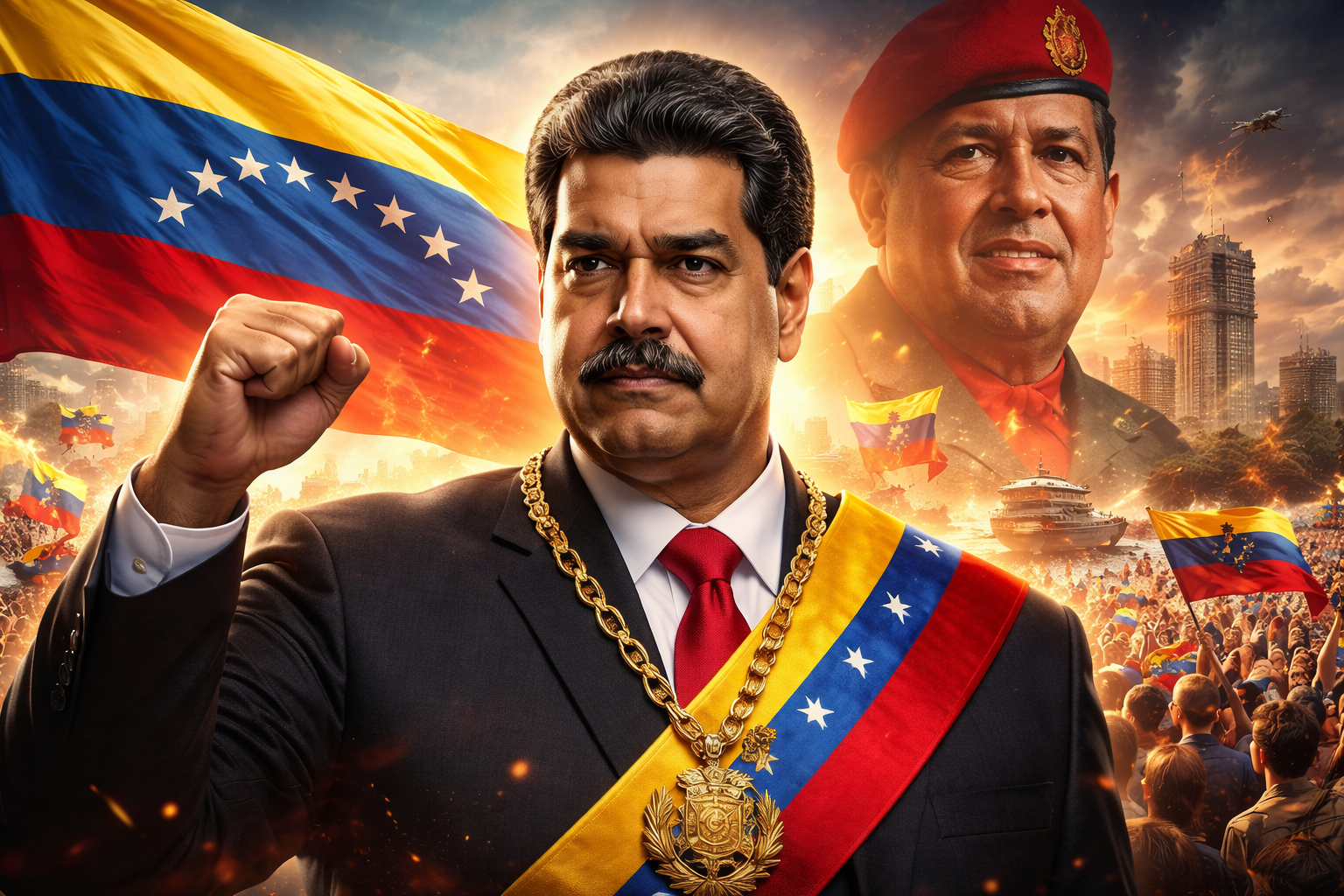
Thank you for reading this post, don’t forget to subscribe!Nicolás Maduro is one of the most controversial and consequential political figures in contemporary Latin American politics. As the successor to Hugo Chávez and President of Venezuela since 2013, Maduro has presided over a period marked by economic collapse, political polarization, international sanctions, and intense geopolitical confrontation—particularly with the United States.
To his supporters, Maduro is a symbol of resistance against imperialism and external interference. To his critics, he represents authoritarianism, mismanagement, and democratic erosion. Understanding Nicolás Maduro requires going beyond headlines to examine his background, ideology, leadership style, and the strategic calculations that shape his confrontation with global powers.
Early Life and Background
Nicolás Maduro Moros was born on 23 November 1962 in Caracas, Venezuela, into a working-class family. His upbringing was shaped by modest economic circumstances and exposure to trade union activism—an experience that deeply influenced his political worldview.
Unlike many Latin American leaders who come from elite or military backgrounds, Maduro’s political identity emerged from grassroots labour movements, particularly among public transport workers.
Educational Background
Maduro did not follow a conventional academic path. He completed his basic schooling in Venezuela but did not pursue a university degree. Instead, his political education was largely experiential:
- Training in trade union organizing
- Exposure to leftist political movements
- Informal ideological formation through Marxist and socialist literature
- Political mentorship under Hugo Chávez
This non-elite background later became both a political asset and a criticism point—praised by supporters as “man of the people” credentials and criticized by opponents as a lack of technocratic competence.
Entry into Politics and Rise Under Hugo Chávez
Maduro’s political rise is inseparable from Hugo Chávez, the architect of Venezuela’s Bolivarian Revolution.
Key Milestones:
- 1990s: Active in the Bolivarian movement supporting Chávez
- 2000: Elected to the National Assembly
- 2005–2006: President of the National Assembly
- 2006–2013: Foreign Minister of Venezuela
As Foreign Minister, Maduro became the international face of Chávez’s anti-imperialist diplomacy, strengthening ties with:
- Cuba
- Russia
- China
- Iran
- Left-leaning Latin American governments
In 2013, shortly before his death, Chávez publicly named Maduro as his political successor.
Presidency: Consolidation of Power
Maduro won the 2013 presidential election by a narrow margin. His presidency has since been defined by:
- Economic crisis
- Political unrest
- International isolation
- Institutional centralization of power
Governance Characteristics:
- Strong executive control
- Reduced independence of state institutions
- Frequent use of emergency powers
- Reliance on security forces and loyal political cadres
Maduro governs in a highly polarized environment, where legitimacy is continuously contested both domestically and internationally.
Ideology: Bolivarian Socialism
Maduro identifies as a socialist, deeply aligned with Chávez’s Bolivarian ideology, which blends:
- Marxist thought
- Anti-imperialism
- Latin American nationalism
- Social welfare populism
Core Ideological Beliefs:
- State control over strategic resources (especially oil)
- Redistribution through social programs
- Rejection of U.S. dominance in global affairs
- Advocacy of a multipolar world order
Maduro sees Venezuela’s struggle as part of a broader global resistance against Western political and economic dominance.
Leadership and Working Style
Maduro’s leadership style differs significantly from Chávez’s charismatic populism.
Key Traits:
- Bureaucratic and institutional control rather than mass charisma
- Heavy reliance on the military and security apparatus
- Emphasis on loyalty over dissent within the ruling party
- Frequent nationalist and anti-foreign rhetoric
Critics argue that this style has deepened authoritarian tendencies, while supporters see it as necessary for survival under pressure.
Economic Crisis and Governance Challenges
Under Maduro, Venezuela experienced one of the worst economic collapses in modern history, characterized by:
- Hyperinflation
- Collapse of oil production
- Mass migration
- Decline in living standards
Maduro attributes much of the crisis to U.S. and Western sanctions, while critics cite mismanagement, corruption, and policy failures.
Why Maduro Confronts the United States
Maduro’s confrontation with the U.S. is driven by multiple factors:
1. Ideological Opposition
The U.S. is viewed as the principal adversary of socialist governance and Latin American sovereignty.
2. Sanctions and Political Pressure
Washington has imposed:
- Financial sanctions
- Oil export restrictions
- Diplomatic isolation
Maduro views resistance as essential to regime survival.
3. Domestic Legitimacy
External confrontation helps consolidate internal support by framing opposition as foreign-backed.
4. Geopolitical Alliances
Partnerships with China, Russia, Iran, and Cuba provide strategic alternatives to Western systems.
Maduro’s Approach to Current Global Geopolitics
Maduro positions Venezuela within a multipolar global order, emphasizing:
- Support for BRICS-aligned worldviews
- Opposition to Western interventionism
- Advocacy of South-South cooperation
- Strategic balancing among global powers
He has openly supported:
- Russia’s resistance to NATO expansion
- China’s global economic initiatives
- Regional Latin American autonomy
International Perception and Influence
Globally, Maduro’s influence is limited but symbolically significant:
- Seen as a symbol of resistance among anti-Western governments
- Viewed skeptically by democratic institutions
- Central figure in debates over sovereignty vs. human rights
Despite isolation, Maduro has demonstrated political resilience, remaining in power longer than many analysts predicted.
Evaluation: A Polarizing Legacy
Nicolás Maduro’s legacy is complex and deeply divisive.
Strengths (Supporters’ View):
- Defiance against foreign intervention
- Preservation of state sovereignty
- Continuation of social-justice rhetoric
Criticisms:
- Democratic erosion
- Economic mismanagement
- Human rights concerns
- Emigration crisis
Conclusion
Nicolás Maduro is not merely a national leader but a product of Venezuela’s historical struggle between sovereignty, socialism, and global power politics. His confrontation with the United States reflects not only personal ideology but also structural tensions in the international system.
Whether history judges him as a defender of national independence or a leader who presided over national decline will depend on how Venezuela navigates its economic recovery, political reconciliation, and reintegration into the global community.
Leave a Reply