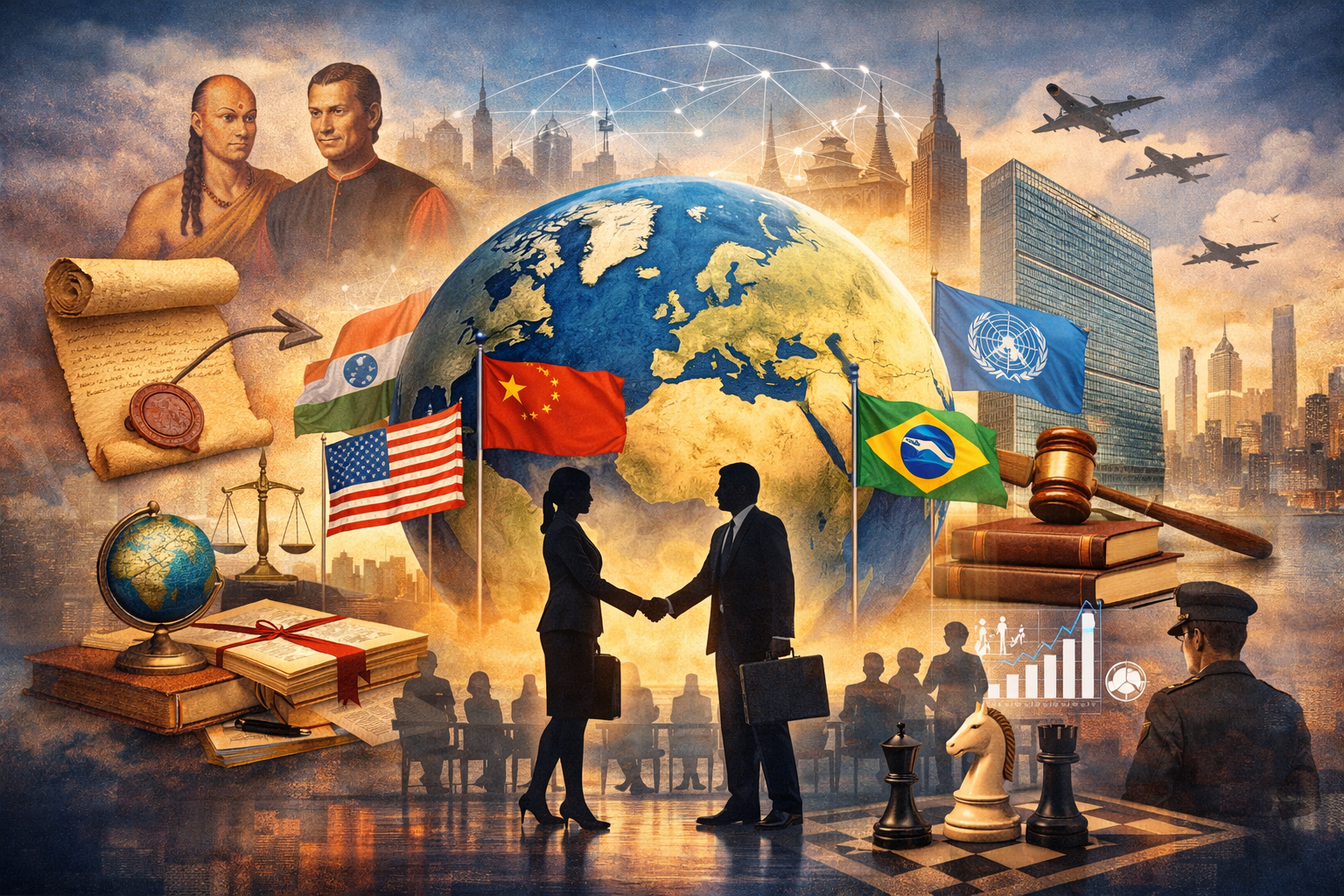
Diplomacy: The Art, Science, and Strategy of Managing International Relations
Thank you for reading this post, don’t forget to subscribe!Introduction
In an increasingly interconnected and conflict-prone world, diplomacy remains one of humanity’s most enduring and essential tools for managing relations among states. Long before modern nation-states emerged, societies relied on dialogue, negotiation, and emissaries to avoid war, form alliances, and protect collective interests. Today, diplomacy stands at the intersection of power, persuasion, ethics, and strategy, shaping how countries coexist, compete, and cooperate on the global stage.
What Is Diplomacy?
Diplomacy refers to the practice of conducting relations between states or international actors through peaceful means, primarily negotiation, dialogue, representation, and communication.
Classical Definitions
- Harold Nicolson defined diplomacy as “the management of international relations by negotiation.”
- Ernest Satow described it as “the application of intelligence and tact to the conduct of official relations between governments.”
- Hedley Bull viewed diplomacy as a core institution of international society that helps maintain order among states.
In essence, diplomacy is the civilized alternative to conflict, enabling states to pursue national interests without resorting to force.
Epistemology and Etymology of the Word ‘Diplomacy’
The term diplomacy originates from the Greek word “diplōma”, meaning a folded document—often an official paper granting privileges or authority.
- In ancient Rome, diplomata referred to official state documents.
- By the 18th century, the term evolved in Europe to describe the systematic conduct of international negotiations.
Epistemologically, diplomacy is grounded in:
- Knowledge of power relations
- Understanding of cultures and interests
- Interpretation of intent, symbols, and communication
Thus, diplomacy is both an intellectual discipline and a practical art.
Fundamentals of Diplomacy
The core principles that underpin effective diplomacy include:
- National Interest – Protecting sovereignty, security, and development priorities
- Peaceful Engagement – Preference for dialogue over coercion
- Mutual Respect and Sovereign Equality
- Negotiation and Compromise
- Confidentiality and Trust
- Continuity and Consistency in Policy
These fundamentals ensure diplomacy remains credible, stable, and effective.
Key Components of Diplomacy
Modern diplomacy is multi-dimensional and includes:
1. Bilateral Diplomacy
Engagement between two countries through embassies, high-level visits, and agreements.
2. Multilateral Diplomacy
Conducted through international institutions like the United Nations, WTO, G20, BRICS, and regional groupings.
3. Public Diplomacy
Shaping foreign public opinion through culture, media, education, and soft power.
4. Economic Diplomacy
Trade negotiations, investment promotion, development cooperation, and aid diplomacy.
5. Strategic and Security Diplomacy
Arms control, defence partnerships, confidence-building measures.
6. Digital Diplomacy
Use of digital platforms, social media, and technology in foreign policy engagement.
History and Evolution of Diplomacy as a Discipline
Ancient and Classical Period
- Diplomacy existed in Mesopotamia, Egypt, India, and China
- Kautilya’s Arthashastra (India) outlined sophisticated diplomatic strategies such as Saam, Daam, Dand, Bhed
Medieval Period
- Diplomacy was influenced by religious authority and imperial courts
- Envoys were temporary and issue-specific
Renaissance and Early Modern Europe
- Birth of permanent embassies (Italian city-states)
- Development of diplomatic protocol and immunity
19th–20th Century
- Congress of Vienna (1815) institutionalized diplomacy
- Professional foreign services emerged
- Multilateral diplomacy expanded after World War I and II
Contemporary Era
- Rise of global governance
- Non-state actors, climate diplomacy, health diplomacy, and SDG-linked diplomacy
Diplomacy has evolved from elite negotiations to a complex, multi-actor global system.
How Diplomacy Helps in Running a Country
Effective diplomacy is critical for national governance because it:
- Ensures national security without war
- Facilitates trade, investment, and economic growth
- Attracts technology, capital, and knowledge
- Builds global partnerships for climate action, health, and development
- Enhances a country’s global standing and credibility
For developing countries, diplomacy is a key instrument for development cooperation and capacity building.
Protecting National Rights Through Diplomacy
Countries safeguard their interests through:
- International Treaties and Agreements
- Multilateral Forums and Legal Mechanisms
- Strategic Alliances and Coalitions
- Issue-based Negotiations (trade, water, borders, climate)
- Norm-setting and agenda shaping
A strong diplomatic apparatus allows a country to assert its rights without isolation or escalation.
Challenges of Diplomacy in the Modern World
Despite its importance, diplomacy faces several challenges:
- Geopolitical rivalries and power politics
- Erosion of multilateralism
- Misinformation and digital manipulation
- Climate change and transnational crises
- Declining trust between states
- Balancing national interest with global responsibility
The speed of global communication has also reduced the space for quiet, patient negotiation.
Diplomacy as an Art and a Science
Diplomacy combines:
- Science: analysis, strategy, international law, political economy
- Art: persuasion, empathy, cultural sensitivity, timing
Successful diplomats master both.
Conclusion
Diplomacy is not merely about foreign policy—it is about civilization itself. It reflects humanity’s collective effort to replace violence with dialogue, domination with negotiation, and isolation with cooperation. In an era marked by uncertainty and transformation, diplomacy remains indispensable for peace, development, and global stability.
As long as nations exist, diplomacy will remain the backbone of international order.
Leave a Reply