Introduction
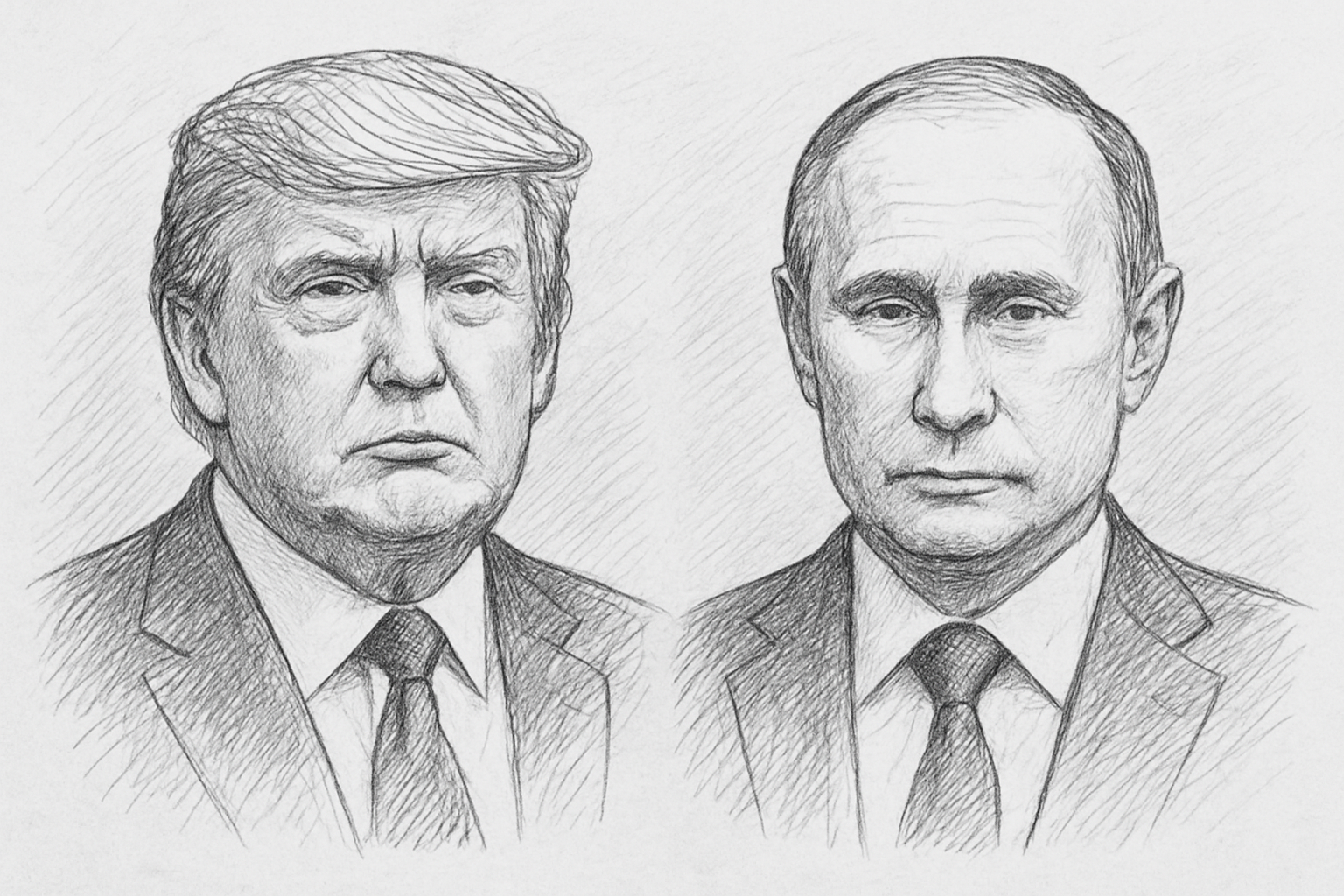
Thank you for reading this post, don’t forget to subscribe!Donald Trump and Vladimir Putin remain two of the most controversial and influential leaders in modern global politics. While one rose from the glitz of American capitalism and reality television, the other was forged in the shadows of the Soviet KGB. Despite their vastly different beginnings, they’ve dominated headlines with their unorthodox leadership, nationalist ideologies, and complicated global interactions.
As of August 2025, Trump is serving his second term as U.S. President, and Putin remains firmly in control of Russia. This blog provides a combined comparative biography and analysis of their careers, leadership styles, ideologies, and the latest developments affecting their global standing.
Early Life and Rise to Power
| Category | Donald Trump | Vladimir Putin |
| Born | June 14, 1946, Queens, New York, USA | October 7, 1952, Leningrad (St. Petersburg), USSR |
| Background | Privileged upbringing, real estate family | Working-class Soviet family |
| Education | Economics, Wharton School, UPenn | Law, Leningrad State University |
| Career Path | Real estate developer, TV personality | KGB officer, then politician |
| Political Entry | Republican outsider, won 2016 election | Deputy Mayor of St. Petersburg, rose under Yeltsin |
Trump took the U.S. political scene by storm in 2016 as a populist disruptor and was elected again in 2024. Putin has led Russia since 2000 in various roles, with near-total control cemented by constitutional reforms.
Leadership Style and Ideology
| Trait | Donald Trump | Vladimir Putin |
| Leadership Style | Populist, media-driven, transactional | Authoritarian, calculated, strategic |
| Communication | Social media, public rallies, television | State-controlled media, scripted speeches |
| Public Persona | Billionaire outsider, provocative | Strongman, patriot, former spy |
| Ideological Focus | Nationalism, economic protectionism | Russian nationalism, anti-Western worldview |
Trump’s governing style emphasizes spectacle, deregulation, and direct confrontation, whereas Putin prefers calculated moves behind a veil of controlled messaging. Both, however, centralize power and appeal to nationalist sentiment.
Major Events and Developments
Domestic Politics
Trump’s second term has been marked by sweeping executive actions, the most controversial being his federal takeover of the Washington D.C. police department in August 2025. Despite crime rates hitting a 30-year low, Trump declared a “Crime Emergency,” deploying federal agents and National Guard. The move was partially rolled back after intense legal and political backlash.
Putin continues to consolidate power through legal reforms, media control, and elimination of political rivals. His 2020 constitutional reforms allow him to potentially remain in power until 2036. Opposition leaders have been jailed or exiled, most notably Alexei Navalny.
Foreign Policy
In 2025, Trump held a high-profile summit with Putin in Anchorage, Alaska. The meeting focused on de-escalation in Ukraine and expanding U.S.-Russia cooperation. Critics saw it as a bid for a Nobel Peace Prize, while supporters viewed it as statesmanship.
Earlier that year, Trump’s diplomacy also yielded a U.S.-brokered peace between Armenia and Azerbaijan, with the U.S. controlling a key transit corridor in the Caucasus. He also secured massive defence and tech agreements during a Middle East tour.
Putin, meanwhile, faces ongoing global isolation over his invasion of Ukraine, though he continues to deepen ties with China, Iran, and other authoritarian regimes.
Economic Strategy
Trump’s economic nationalism has intensified in his second term. Tariffs remain central to his strategy, despite public opposition (61% disapproval). His “One Big Beautiful Bill” of tax reforms and spending packages faces divided opinion.
However, under Trump’s administration, the U.S. has attracted over $2 trillion in tech and industrial investments from firms like Apple, NVIDIA, and OpenAI. Trump also signed executive orders deregulating the U.S. space industry in August 2025.
Putin’s economy remains under sanctions. While Russia survives through alternative markets and resource exports, its growth is restricted. The Kremlin has focused on military tech, domestic manufacturing, and oil diplomacy.
Personal Wealth and Ethics
Trump’s presidency continues to fuel his financial empire. Reports in 2025 estimated profits of $3.4 billion from PACs, real estate, licensing, and foreign deals. Allegations of conflicts of interest persist.
Putin’s personal wealth remains opaque, though widely believed to be immense. He reportedly controls assets through proxies, shell companies, and favoured oligarchs.
Public Sentiment and Legacy
| Factor | Donald Trump (as of August 2025) | Vladimir Putin (as of August 2025) |
| Job Approval | Around 38%, slipping due to economic strain and crises | Controlled polling, real sentiment hard to gauge |
| Support Base | Rural, conservative, working-class | Older, nationalist, military-linked |
| Criticism | Authoritarianism, conflict of interest, divisiveness | Human rights abuses, war crimes, autocracy |
| Global Legacy | Disruption, polarization, populism | Geopolitical reshaping, authoritarian resurgence |
Trump has redefined the Republican Party and remains a polarizing global figure. His second term’s theatrical elements—like possibly hosting a UFC match at the White House in 2026—blur the lines between politics and entertainment.
Putin remains a symbol of post-Soviet authoritarianism. His decisions, particularly the war in Ukraine, have changed global alliances and reawakened Cold War-era tensions.
Conclusion
Donald Trump and Vladimir Putin, though rooted in different worlds, mirror each other in their pursuit of power, dominance over institutions, and disdain for traditional democratic norms. In 2025, their complex relationship, strategic diplomacy, and contrasting public images continue to shape a rapidly evolving geopolitical landscape.
As Trump’s second term unfolds and Putin extends his reign, the world watches two of the most controversial leaders in modern history—each playing his game of power, spectacle, and survival on a global chessboard.
Leave a Reply