Blog

  • Rajendra Chola I: The Conqueror of Oceans and Architect of a Golden Age

    “Like his father, he ruled the land; unlike his father, he ruled the seas too.”

    When we speak of ancient Indian empires that truly projected power beyond their borders, one name stands tall: Rajendra Chola I. The son of the illustrious Rajaraja Chola I, Rajendra was not just a worthy successor—he was a world-class strategist, administrator, and naval conqueror who took the Chola Empire to its greatest territorial extent.

    In this blog, we dive deep into the legacy of Rajendra Chola I—his early life, military campaigns, administration, contributions to culture and architecture, and why he remains one of India’s greatest rulers.

    Early Life and Ascension

    • Full Name: Rajendra Chola I (Rajaraja Cholan II Rajendra)
    • Born: circa 971 CE
    • Father: Rajaraja Chola I
    • Dynasty: Chola Dynasty
    • Coronation: Circa 1014 CE (co-regent earlier from 1012 CE)

    Rajendra was born into the golden era of the Cholas, under his father’s visionary leadership. Trained in warfare, administration, and Vedic studies, Rajendra emerged as a natural leader and took over the throne after Rajaraja’s death.

    Military Conquests: Expanding a Maritime Empire

    1 Conquest of Sri Lanka

    Following his father’s unfinished mission, Rajendra completed the conquest of Anuradhapura and southern Sri Lanka, effectively bringing the island under Chola control.

    2. Victories in the Deccan

    • Defeated the Western Chalukyas, Yadavas, and Gangas.
    • Took over vast stretches of Andhra Pradesh, Karnataka, and Maharashtra.

    3. Northern Expedition: The Gangaikonda Campaign

    • A historic northward march known as the Gangaikonda Chola campaign.
    • Rajendra’s army marched up to the Ganges River, defeated multiple kingdoms including the Pala Empire of Bengal.
    • He brought back sacred Ganges water and earned the title “Gangaikonda Cholan” (the Chola who brought the Ganges).

    4. Naval Campaigns in Southeast Asia

    This was a landmark achievement in Indian history:

    • Rajendra launched a naval expedition to modern-day Thailand, Malaysia, Sumatra, Java, and Cambodia.
    • Defeated the powerful Srivijaya Empire, showcasing India’s first overseas military intervention.
    • This earned him global prestige and control over key maritime trade routes in the Indian Ocean and Southeast Asia.

    Cultural and Administrative Contributions

    1. Founding Gangaikonda Cholapuram

    • Established a new capital at Gangaikonda Cholapuram after his victorious northern campaign.
    • Built the majestic Brihadisvara Temple, rivalling his father’s temple at Thanjavur.
    • The city became a flourishing centre of art, learning, and trade.

    2. Administrative Efficiency

    • Divided the empire into efficient mandalams (provinces).
    • Maintained records in Tamil and Sanskrit—promoting a dual-language administration.
    • Encouraged local self-government in villages through elected sabhas and organizations.

    3. Patronage of Art & Religion

    • Promoted Shaivism, but also tolerant of other sects.
    • Commissioned temple construction across the empire—Tamil Nadu, Andhra, Odisha, and Sri Lanka.
    • Supported Tamil literature, temple inscriptions, and scholarly works.

    Titles and Honors

    Rajendra Chola I earned numerous titles, such as:

    • Gangaikonda Cholan (Bringer of the Ganges)
    • Kadaramkondan (Conqueror of Kedah)
    • Mummudi Cholan (Wielder of the three crowns—Chola, Chera, Pandya)

    His name appears in Tamil, Sanskrit, and even Southeast Asian inscriptions, a testament to his global influence.

    Global Legacy and Modern Recognition

    • UNESCO Heritage: His temple at Gangaikonda Cholapuram is part of the “Great Living Chola Temples”, a UNESCO World Heritage Site.
    • Naval Power Precursor: Recognized by historians as the first Indian monarch to lead naval expeditions beyond South Asia.
    • Cultural Diplomacy: Strengthened maritime trade, religious exchange, and cultural diplomacy across the Indian Ocean.

    Timeline Highlights

    YearEvent
    1012 CEBecame co-regent under Rajaraja Chola I
    1014 CEOfficially crowned emperor
    1017–1020 CENorthern campaign to the Ganges
    1025 CENaval campaign against Srivijaya Empire
    1033 CEGangaikonda Cholapuram completed
    1044 CEDeath of Rajendra Chola I

    Why Rajendra Chola Matters Today

    In an era dominated by land-based empires, Rajendra Chola built a maritime empire that spread Tamil influence across Southeast Asia. His model of governance, infrastructure, religious patronage, and global vision offer lessons for modern India in:

    • Strategic expansion with cultural respect,
    • Efficient decentralized governance,
    • International trade and diplomacy rooted in soft power.

    Final Thoughts: The Ocean King Who Conquered Without Colonizing

    Rajendra Chola I wasn’t just a conqueror—he was a visionary builder, administrator, and diplomat. His campaigns were bold but also infused with cultural respect, unlike colonial invaders centuries later. From the Ganges to Sumatra, his empire was bound not just by territory, but by shared culture, architecture, and trade.

    His story reminds us that the Indian subcontinent once led the world—not just with swords, but with ships, scriptures, and sacred stones.

  • Golden Legacy: Tracing Gold’s Value from 1901 to 2025 & What Lies Ahead for Investors

    “Gold is not just a metal—it’s a mirror to the world’s economic soul.”

    For over a century, gold has stood as the ultimate symbol of wealth, security, and timeless value. From powering the gold standard era to becoming a hedge against inflation and geopolitical instability, gold’s journey from 1901 to 2025 is as glittering as the metal itself.

    In this blog, we’ll explore:

    • The historical valuation of gold over 120+ years,
    • The factors driving its price over time,
    • The current investment landscape,
    • And the future prospects for investors.

    A Brief Timeline: Gold Price from 1901 to 2025

    YearPrice (USD/oz)Key Events
    1901$20.67U.S. on gold standard; stability era
    1933$35.00U.S. ends gold standard for citizens
    1971$42.22Bretton Woods ends; gold unpegged from USD
    1980$850Inflation + Iran crisis peak
    2000$279Dot-com bubble burst
    2011$1,900Post-2008 crisis hedge
    2020$2,070COVID-19 uncertainty
    2023$1,920Inflation + global recession fears
    2025$2,450 (est.)Central bank buying, de-dollarisation, geopolitical risk

    Note: Figures beyond 2023 are estimates based on market trends and expert projections.

    What Drives Gold Prices?

    1. Inflation & Monetary Policy
      When inflation rises or currencies weaken, investors flock to gold as a store of value.
    2. Geopolitical Uncertainty
      Wars, trade tensions, and pandemics increase gold’s appeal as a safe haven asset.
    3. Central Bank Activity
      Many central banks, especially in emerging markets, are increasing gold reserves to reduce dependence on the U.S. dollar.
    4. Dollar Value Inverse Relation
      Gold typically moves opposite to the U.S. dollar—as the dollar weakens, gold strengthens.
    5. Jewellery Demand & Industrial Use
      While not the biggest driver, consumer demand (especially in India and China) still impacts long-term valuation.

    Gold as an Investment: Performance Over Time

    • Average annual return (1971–2023): ~8.4%
    • Beats inflation: Gold has outpaced U.S. CPI inflation over the long run.
    • Portfolio diversification: Ideal for hedging against equity market volatility.

    If you invested $10,000 in gold in 2000, it would be worth over $85,000 in 2025. Currently 1 USD is equal to Rs. 86.46.

    India’s Relationship with Gold

    India is not just a top consumer of gold but has deep cultural, religious, and economic ties with the metal.

    • 60% of Indian gold demand comes from jewellery.
    • Indians hold over 25,000 tonnes of gold—among the highest private holdings globally.
    • Gold acts as a family asset and informal collateral in rural India.

    Gold’s Future Outlook (2025–2035)

    Bullish Trends:

    • De-dollarisation: Nations like China and Russia diversifying away from USD.
    • Digital Gold & Tokenization: Tech is democratizing gold investing.
    • Increased central bank demand: BRICS+ nations boosting reserves.
    • Persistent geopolitical risks: Middle East, Taiwan, Eastern Europe, etc.

    Risks to Watch:

    • Rising interest rates: Can make bonds more attractive than gold.
    • Crypto alternatives: Younger investors may prefer Bitcoin or tokenized assets.
    • Regulatory shifts: Taxes or curbs on imports/holdings can impact gold’s demand.

    Gold Investment Strategies for 2025 & Beyond

    1. Sovereign Gold Bonds (SGBs)

    • Offered by RBI, with 2.5% annual interest.
    • Tax-free maturity gains after 8 years.
    • Ideal for long-term investors.

    2. Digital Gold & ETFs

    • Small ticket size, high liquidity.
    • No risk of theft or storage cost.

    3. Physical Gold (Coins, Bars, Jewellery)

    • Sentimental value + resale options.
    • But comes with making charges and purity concerns.

    4. Gold Mining Stocks & Mutual Funds

    • Indirect gold exposure; tied to company performance.
    • High volatility but potential for higher returns.

    Gold vs Other Assets (2000–2025)

    Asset ClassAverage ReturnRisk LevelLiquidityInflation Hedge
    Gold~8.4%MediumHighYes
    Equity (Nifty)~12%HighHighNot always
    Real Estate~9%Medium-HighLowPartial
    FD/Savings~5–6%LowHighNo

    Final Thoughts: Is Gold Still Worth It in 2025?

    Absolutely—but with strategy.
    Gold is no longer just a wedding gift or retirement nest. In 2025, it is a geopolitical hedge, portfolio diversifier, and wealth preserver.

    “When all else loses value, gold finds its moment to shine.”

    If you’re planning for long-term stability, protection from inflation, or just want peace of mind in turbulent markets, gold should continue to hold a core place in your investment mix.

  • “Wasted Harvest: The Silent Catastrophe on Our Plates”

    “Wasted Harvest: The Silent Catastrophe on Our Plates”

    Imagine this: a farmer in Punjab carefully tends to rows of golden wheat. After months of toil, he finally harvests a bumper crop—but before it ever reaches a plate, a third of it is lost in transport, spoiled by heat and poor storage. Meanwhile, in a high-rise kitchen thousands of miles away, perfectly good spinach wilts in the fridge before it’s tossed in the bin. In another scenario somewhere in an urban India, quintals of onion produce gets destroyed in the hope of good price while people in metropolis buying onions costing more than Rs 100 per kg. These two moments—one rural, one urban—are worlds apart, yet stitched together by a shared thread: food loss and waste, one of the planet’s most overlooked environmental emergencies.

     The Scale of the Problem: A Global Gluttony of Waste

    According to the UNEP Food Waste Index Report 2024 in 2022 alone, the world wasted 1.05 billion tons of food, precisely about 132 kg per person per year or about one-fifth of all food available to consumers (UNEP, 2024).
    • Households generated 60% of the total food waste, followed by food services (28%) and retail (12%).
    • This translates to over 1 billion meals wasted every single day, while 783 million people globally go hungry (UN News, 2024).

    The Environmental Toll: Wasting More Than Just Food

    Food waste is not just about what’s scraped off our plates—it’s about everything that went into producing it:

    • Water: Agriculture consumes 70% of global freshwater. Wasting food wastes the water used to grow it (FAO, 2013).
    • Energy: Food production and transport require large amounts of fossil fuels and electricity.
    • Land: Nearly 30% of global agricultural land is used to produce food that is never eaten (FAO, 2013).
    • Climate: Decomposing food in landfills emits methane, a greenhouse gas 25 times more potent than carbon dioxide over a 100-year period (IPCC, 2014). Food waste contributes to 8–10% of global greenhouse gas emissions, which is nearly five times more than the entire aviation industry (UNEP, 2024).With a growing global population and rising demand for food, reducing waste is not just a choice—it’s a climate imperative. If food waste were a country, it would be the third-largest emitter of greenhouse gases, after China and the United States (FAO, 2013).

     Behind the Scenes: The Science of Spoilage and Loss

    Food waste is generally classified into two categories:

    1. Food Loss (Pre-consumer)

    Occurs during production, harvest, storage, and transport—especially in low and middle-income countries. For example, India loses up to 30-40% of fruits and vegetables post-harvest, largely due to poor cold storage infrastructure (FSSAI, 2021).

    2. Food Waste (Post-consumer)

    Happens at retail and consumer levels, driven by:

    • Overbuying and poor planning
    • Misunderstood expiry labels
    • Aesthetic standards that reject “ugly” produce

    In richer countries, per capita waste at household level is as high as 80–110 kg/year, compared to 6–11 kg/year in sub-Saharan Africa and South Asia (FAO, 2011).

     From Waste to Wisdom: What Can Be Done?

    For Governments & Industries:

    • Invest in cold chains, silos, and rural roads to reduce pre-consumer loss.
    • Enforce “ugly produce” acceptance in supermarkets.
    • Scale digital solutions for inventory management and food redistribution (e.g., Zomato Feeding India, OLIO app).
    • Launch public-private partnerships for measurement and reporting, as seen in the UK and Japan (UNEP, 2024).

    For Individuals:

    • Learn the difference between “best before” and “use by” dates.
    • Plan meals and buy only what you need.
    • Store food properly and use leftovers creatively.
    • Compost kitchen waste instead of sending it to landfills.
    • Support food banks and rescue organizations.

    A Future Where Every Grain Counts

    The challenge of food waste may seem massive, but it’s one of the few global crises that is entirely preventable. The UNEP emphasizes that with just moderate effort, countries can cut food waste in half by 2030, fulfilling UN SDG 12.3 (UNEP, 2024). It will take a recalibration of our relationship with food—from something cheap and disposable to something deeply valuable. Because when we waste food, we’re not just throwing away calories.
    We’re throwing away land, labor, water, hope and the Earth’s future.

    For more information

    UNEP Food Waste Index Report 2024: https://www.unep.org/resources/publication/food-waste-index-report-2024.

    FAO (2013). Food Wastage Footprint: Impacts on Natural Resources https://openknowledge.fao.org/server/api/core/bitstreams/1694038d-98f7-40f6-be4b-98782544b9f9/content.

    IPCC (2014). AR5 Climate Change Report: IPCC Summary. https://www.ipcc.ch/report/ar5/syr/

  • Beautiful Waterfalls of Kaimur Hills, Bihar

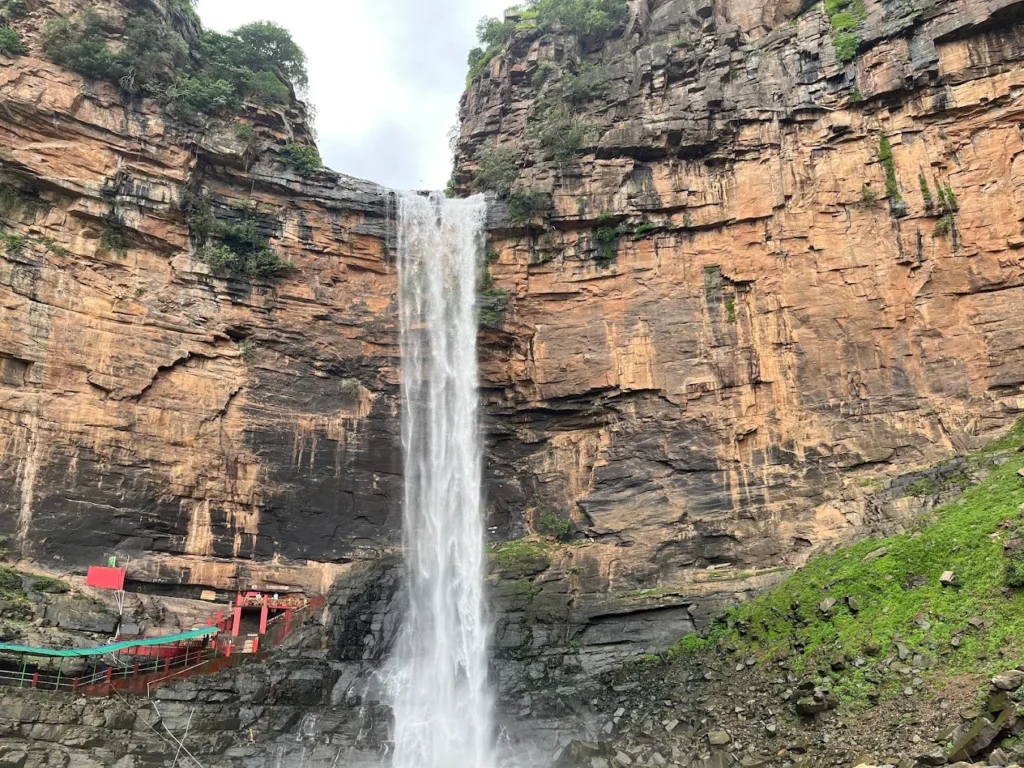
    The Kaimur Hills in Bihar form part of the eastern extension of the Vindhya Range and are known for their breathtaking natural beauty—especially their waterfalls, which come alive during and after the monsoon season. There are more than 200 hundreds of water falls come alive during monsoon season across the stretch of Kaimur hills which spread in South west Bihar and South Easterns part of Uttar Pradesh.  Rich in biodiversity, tribal culture, and ancient rock art, this region is a hidden gem for nature lovers and explorers.

    1. Karkat Waterfall (कर्कट जलप्रपात)

    • Location: Karkatgarh, near Kaimur Wildlife Sanctuary
    • Distance from Bhabua City: 42 Km
    • Highlights: One of the most famous waterfalls in Bihar, set amidst dense forest; popular for picnics and eco-tourism.
    • Best Time to Visit: July to February

    2. Telhar Kund (टेल्हर कुंड)

    • Location: Near Bhabua, on the Rohtas-Kaimur border
    • Distance from Bhabua City: 31 Km
    • Highlights: A scenic waterfall surrounded by hills; excellent spot for trekking and photography.
    • Nearby Attraction: Durgavati River

    3. Dhuan Kund (धुआँ कुंड)

    • Location: Near Chainpur in Kaimur district
    • Distance from Sasaram City: 15 Km
    • Highlights: Named for its misty, smoky appearance as the water gushes down and creates vapors.
    • Special Feature: Sacred among locals

    4. Karamchat Waterfall (करमचट जलप्रपात)

    • Location: Near Bhagwanpur village
    • Distance from Bhabua City: 32 Km
    • Highlights: Relatively lesser-known; serene atmosphere and thick forest surroundings.
    • Ideal For: Offbeat nature lovers

    5. Manjhar Kund (मंझर कुंड)

    • Location: Sasaram-Rohtas (technically close to Kaimur Hills)
    • Distance from Sasaram City: 17 Km
    • Highlights: A twin waterfall with Dhuaan Kund nearby; ideal for short treks.
    • Best Time: Post-monsoon season

    6. Tutla Bhawani Waterfall (तुतला भवानी जलप्रपात)

    • Location: Rohtas district, near Kaimur Hill range
    • Distance from Sasaram City: 30 Km
    • Highlights: Famous for a natural cave and religious significance; has a temple of Goddess Tutla Bhawani.
    • Experience: Sacred + scenic
    • Photo Credit: Anand Sagar, Google.com

    Travel Guidance:

    • Best Season: July to February (after monsoon for best water flow)
    • Nearby Base Towns well connected with Rail, Road and Airport: Bhabua, Mohania, Sasaram
    • Precautions: Avoid solo trekking in remote areas, check with locals or forest officials
    • Recommended Gear: Trekking shoes, water bottles, mosquito repellent

    Why Visit Kaimur Hills Waterfalls?

    • Untouched natural beauty
    • Spiritual and cultural significance
    • Opportunities for ecotourism, trekking, and photography
    • Peaceful alternative to overcrowded hill stations