यदा यदा हि धर्मस्य ग्लानिर्भवति भारत।
Thank you for reading this post, don’t forget to subscribe!अभ्युत्थानमधर्मस्य तदाऽआत्मानं सृजाम्यहम्॥
परित्राणाय साधूनां विनाशाय च दुष्कृताम्।
धर्मसंस्थापनार्थाय सम्भवामि युगे युगे॥
Introduction
Every year, millions across the globe come together to celebrate Krishna Janmashtami, the divine birth anniversary of Lord Shri Krishna—the eighth avatar of Lord Vishnu and one of the most loved figures in Indian spiritual tradition. His birth is not just a religious event but a celebration of hope, dharma (righteousness), and divine joy.
Krishna Janmashtami marks more than just the birth of a deity—it’s the arrival of a guiding light in a time of darkness, a symbol of love and wisdom whose teachings in the Bhagavad Gita still inspire humanity.
The Legend of Lord Krishna’s Birth
1. The Dark Age and a Divine Promise
Over 5,000 years ago, the kingdom of Mathura was under the tyranny of King Kansa, a cruel ruler who had imprisoned his sister Devaki and her husband Vasudeva. A prophecy had warned Kansa that Devaki’s eighth child would be his destroyer. Out of fear, he killed each of Devaki’s first seven newborns.
But the divine plan was greater than any tyrant’s fear. Lord Vishnu promised to incarnate as Krishna to restore dharma and free the people from oppression.
2. The Midnight Miracle
On the eighth day (Ashtami) of the Krishna Paksha (dark fortnight) in the month of Bhadrapada (August–September), Krishna was born at midnight in Devaki’s prison cell. The moment was marked by peace—the guards fell into a magical sleep, the prison gates opened on their own, and Vasudeva carried the newborn across the Yamuna River to Gokul, where he was raised by Yashoda and Nanda.
3. The Childhood Full of Divine Play (Leelas)
Krishna’s early life in Vrindavan is filled with enchanting leelas—stealing butter (Makhan Chor), playing the flute under the Kadamba tree, dancing with the Gopis in the moonlight (Raas Leela), and protecting the villagers by lifting Govardhan Hill. These stories symbolize innocence, joy, and divine love.
🕉 Spiritual Significance of Janmashtami
Krishna’s birth represents victory of good over evil and the arrival of divine consciousness in human life. His life teaches us:
- Fearlessness in the face of injustice (slaying Kansa).
- Playfulness and joy even amid challenges (childhood leelas).
- Wisdom and duty in the most difficult times (Bhagavad Gita).
The midnight birth reminds us that light is born in the deepest darkness.
How Janmashtami is Celebrated
- Fasting and Night Vigil (Nishita Puja): Devotees fast until midnight, singing bhajans and chanting mantras like “Hare Krishna, Hare Rama”.
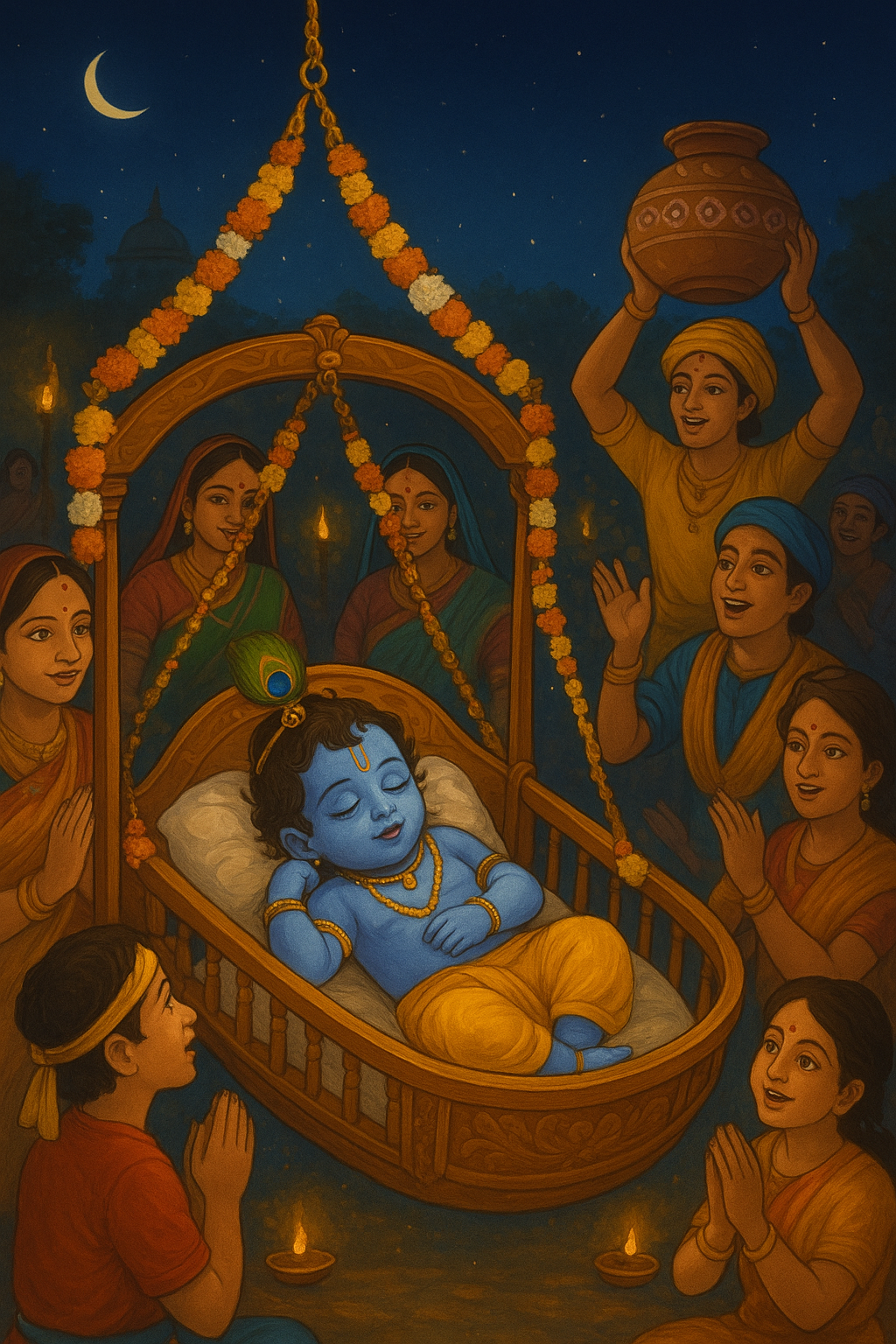
- Jhanki (Tableau) of Krishna’s Life: Temples and homes recreate scenes from Krishna’s birth and childhood.
- Dahi Handi: Inspired by Krishna’s butter-stealing, groups form human pyramids to break a pot of curd tied high above the ground.
- Decorated Cradles: Idols of baby Krishna (Bal Gopal) are placed in cradles and gently rocked at midnight.
- Special Sweets: Makhan mishri, panjiri, and kheer are prepared as offerings.
Krishna’s Eternal Teachings
The Bhagavad Gita, delivered by Krishna to Arjuna on the battlefield of Kurukshetra, is one of the greatest spiritual texts. Key messages include:
- Do your duty without attachment to results (Karmayoga).
कर्मण्येवाधिकारस्ते मा फलेषु कदाचन।
मा कर्मफलहेतुर्भूर्मा ते सङ्गोऽस्त्वकर्मणि॥
- Stay balanced in success and failure.
योगस्थः कुरु कर्माणि सङ्गं त्यक्त्वा धनञ्जय।
सिद्ध्यसिद्ध्योः समो भूत्वा समत्वं योग उच्यते॥
- Surrender to the Divine for ultimate peace.
सर्वधर्मान्परित्यज्य मामेकं शरणं व्रज।
अहं त्वां सर्वपापेभ्यो मोक्षयिष्यामि मा शुचः॥
Krishna’s Global Influence
Krishna is not just a revered deity in India; his influence extends worldwide. Movements like ISKCON have brought his message of bhakti (devotion) and kirtan to millions globally. His life’s philosophy resonates beyond religion—appealing to seekers of truth, love, and joy.
Conclusion – Living the Krishna Way
Krishna Janmashtami is more than a festival—it’s an invitation to live with joy, courage, and devotion. In Krishna’s smile, we see hope; in his flute, we hear the call of divine love; in his teachings, we find timeless wisdom.
As we celebrate his birth, let’s also awaken the Krishna consciousness within us—a state of living with love, playfulness, and awareness in every moment.
Leave a Reply