Introduction
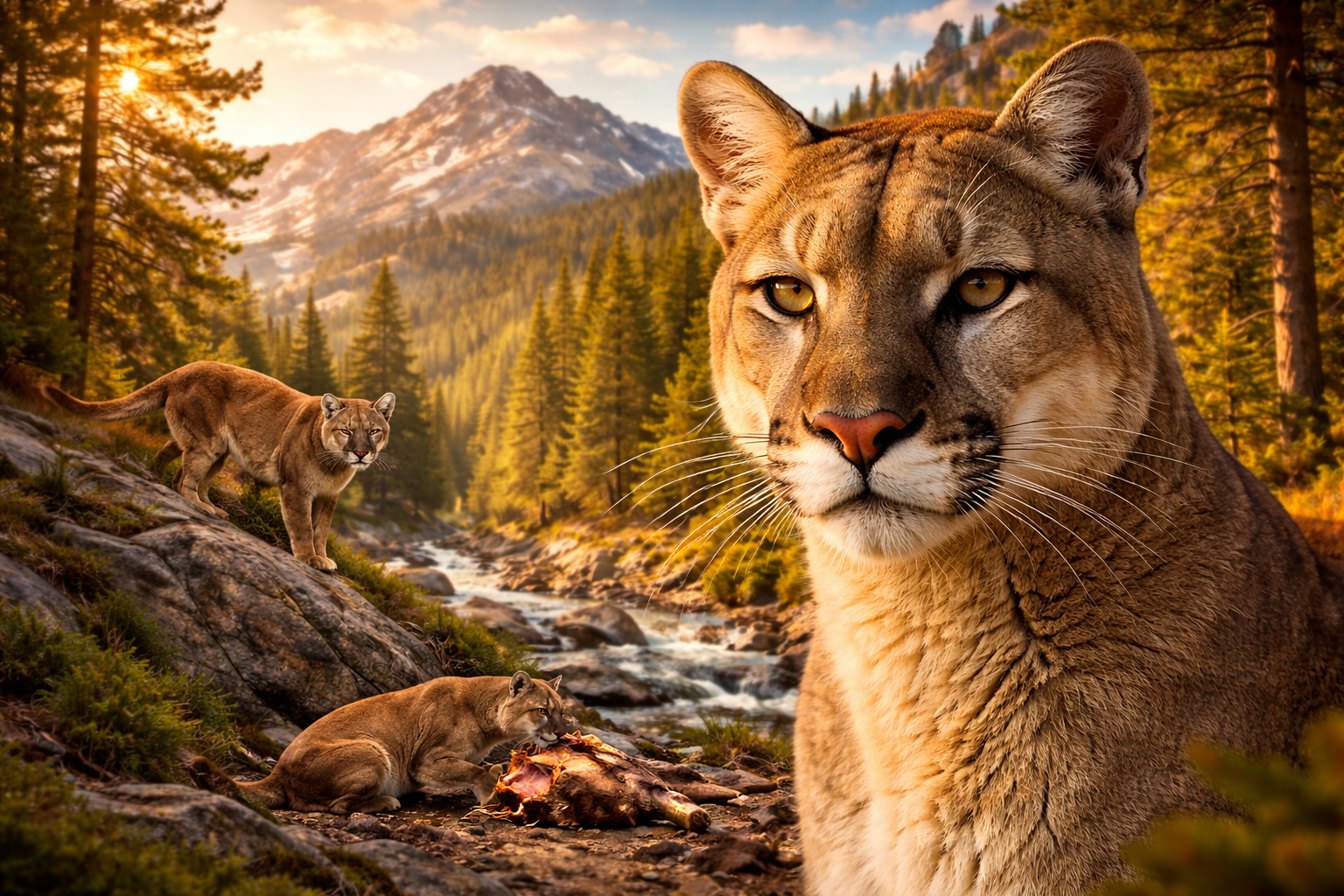
Thank you for reading this post, don’t forget to subscribe!Quiet, powerful, and rarely seen, the mountain lion is one of the most mysterious predators on Earth. Known by many names—cougar, puma, panther, or catamount—this majestic big cat has inspired awe, fear, and folklore across the Americas. Despite its wide range, it remains a master of invisibility, often living close to humans without ever being noticed.
Scientific Identity
- Common Name: Mountain Lion
- Scientific Name: Puma concolor
- Family: Felidae
The name Puma concolor literally means “cat of one colour,” referring to its sleek, uniform coat that helps it blend seamlessly into its surroundings.
Physical Specialties: What Makes the Mountain Lion Unique
The mountain lion is built for stealth and speed rather than brute strength.
Key Special Features
- Powerful hind legs capable of leaping up to 18 feet vertically and over 40 feet horizontally
- Flexible spine for rapid acceleration
- Sharp retractable claws for gripping prey
- Excellent night vision, nearly six times better than humans
- Long tail used for balance while running or climbing
Unlike lions, mountain lions do not roar. Instead, they communicate through growls, hisses, whistles, and haunting screams—often mistaken for human cries.
Geographical Distribution: Where Do Mountain Lions Live?
Mountain lions have the widest range of any wild land mammal in the Western Hemisphere.
They are found in:
- North America (western United States, Canada, Florida)
- Central America
- South America (from Colombia to southern Chile)
They once ranged across most of North America but were eliminated from many eastern regions due to hunting and habitat loss. Today, conservation efforts are helping some populations slowly recover.
Preferred Habitat
Mountain lions are highly adaptable, but they prefer environments that offer cover and prey.
Ideal Habitats Include:
- Mountain ranges
- Dense forests
- Grasslands
- Deserts
- Swamps (notably the Florida panther)
Their key requirement is seclusion and prey availability, not a specific climate.
Diet: What Is the Mountain Lion’s Favourite Meal?
Mountain lions are obligate carnivores and apex predators.
Primary Prey
- Deer (their most favoured and frequent prey)
- Elk
- Moose calves
Secondary Prey
- Raccoons
- Rabbits
- Porcupines
- Coyotes
- Livestock (occasionally)
They typically hunt alone, stalking prey silently before delivering a powerful bite to the neck or skull.
Hunting Behaviour and Lifestyle
- Solitary animals, except mothers with cubs
- Mostly crepuscular and nocturnal
- Territories can range from 50 to 1,000 square kilometres
- They often cache food, covering kills with leaves and soil to return later
A single mountain lion can help regulate deer populations, making it a crucial species for ecosystem balance.
Reproduction and Life Cycle
- Females give birth every 2–3 years
- Litter size: 1–6 cubs
- Cubs stay with their mother for up to two years
- Lifespan:
- 8–13 years in the wild
- Up to 20 years in captivity
Mother mountain lions are highly protective and teach cubs hunting skills through observation and practice.
How Dangerous Is a Mountain Lion to Humans?
Despite their fearsome reputation, mountain lion attacks on humans are extremely rare.
Key Facts
- Fewer than 30 fatal attacks in North America in over 100 years
- Most encounters occur during hiking or jogging
- Children and solitary individuals are more vulnerable
Safety Tips
- Maintain eye contact
- Do not run
- Appear larger
- Back away slowly
Mountain lions generally avoid humans and attack only when threatened, starving, or protecting cubs.
Role in Ecosystem and Contribution to Nature
Mountain lions are a keystone species.
Their Ecological Importance
- Control herbivore populations
- Prevent overgrazing
- Maintain biodiversity
- Support healthier forests and grasslands
Regions with mountain lions often show improved ecological balance compared to areas where they are absent.
Conservation Status and Threats
- IUCN Status: Least Concern (globally)
- Major Threats:
- Habitat fragmentation
- Road accidents
- Illegal hunting
- Human-wildlife conflict
Some subspecies, like the Florida panther, remain endangered and require ongoing protection.
Mountain Lion in Culture and Myth
Mountain lions feature prominently in:
- Native American mythology
- Folklore and legends
- Modern wildlife symbolism
They often represent strength, independence, and guardianship.
Conclusion
The mountain lion is not just a predator—it is a symbol of wilderness resilience. Silent yet powerful, elusive yet influential, it plays a vital role in maintaining ecological harmony. Understanding this magnificent animal helps replace fear with respect and highlights the importance of conserving wild spaces where both humans and mountain lions can coexist.
Leave a Reply