Introduction
Thank you for reading this post, don’t forget to subscribe!Hanukkah, also spelled Chanukah, is one of the most cherished festivals in Jewish tradition. Known as the Festival of Lights, Hanukkah commemorates a historic victory of faith, religious freedom, and spiritual resilience. Celebrated over eight nights, the festival holds deep religious, cultural, and moral significance for Jewish communities across the world.
More than a historical remembrance, Hanukkah conveys a timeless message to humanity—that light can overcome darkness, faith can endure oppression, and hope can survive against overwhelming odds.
Historical Background of Hanukkah
Hanukkah dates back to the 2nd century BCE during the period of Hellenistic rule over Judea. At that time, King Antiochus IV Epiphanes of the Seleucid Empire imposed restrictions on Jewish religious practices and desecrated the Second Temple in Jerusalem.
In response, a group of Jewish rebels known as the Maccabees, led by Judah Maccabee, rose in revolt. Despite being vastly outnumbered, they reclaimed Jerusalem and restored the Temple.
The Miracle of the Oil
When the Temple was rededicated, there was only enough consecrated oil to keep the sacred menorah burning for one day. Miraculously, the oil burned for eight days, until more could be prepared. This divine event became the spiritual foundation of Hanukkah.
Meaning and Religious Significance
Hanukkah symbolizes:
- Religious freedom
- Spiritual perseverance
- Divine presence in daily life
- The victory of faith over forced assimilation
Unlike many Jewish festivals, Hanukkah is not directly mentioned in the Hebrew Bible but is deeply rooted in Jewish law, tradition, and collective memory.
Hanukkah Traditions and Rituals
Lighting the Hanukkiah (Menorah)
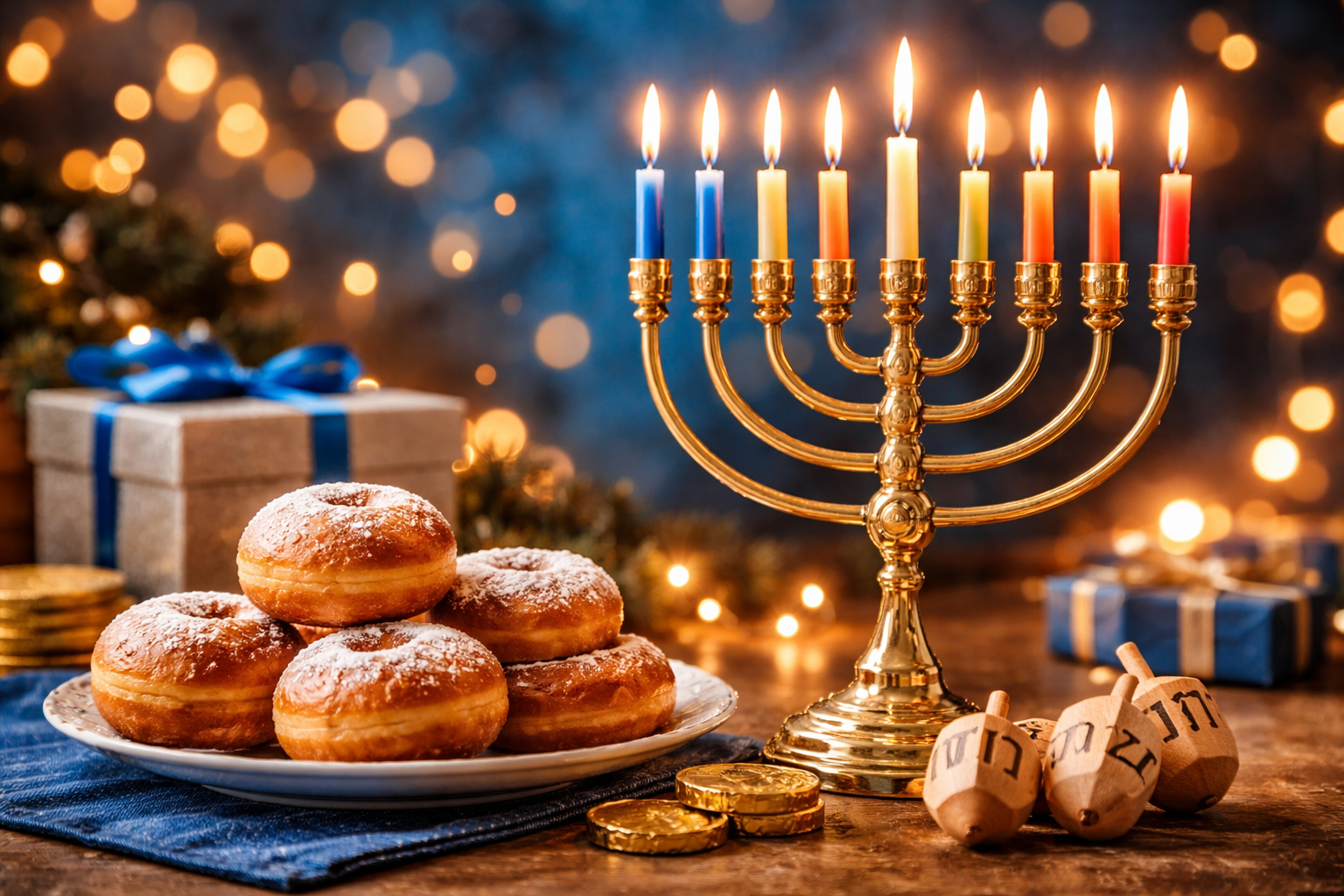
The central ritual of Hanukkah is lighting the Hanukkiah, a nine-branched menorah:
- Eight branches represent the eight days of the miracle
- The ninth candle, called the Shamash, is used to light the others
Each night, one additional candle is lit, accompanied by blessings and hymns.
Prayers and Songs
Special prayers such as Hallel and Al HaNissim are recited, expressing gratitude and remembrance. Traditional songs like “Ma’oz Tzur” (Rock of Ages) are sung in homes and synagogues.
Food Traditions: Remembering the Miracle
Foods cooked in oil are central to Hanukkah, symbolizing the miracle of the oil:
- Latkes (potato pancakes)
- Sufganiyot (jelly-filled doughnuts)
These dishes connect everyday life with sacred memory.
Games and Family Customs
The Dreidel Game
A traditional spinning top called the dreidel is played during Hanukkah. Each side bears a Hebrew letter forming the phrase:
“Nes Gadol Haya Sham”
(A great miracle happened there)
Hanukkah Gelt
Children often receive gelt (chocolate coins or money), reinforcing lessons of generosity, charity (tzedakah), and joy.
Hanukkah in the Modern World
Today, Hanukkah is celebrated across Israel and the global Jewish diaspora. Public menorah lightings, interfaith gatherings, and cultural programs reflect its universal appeal.
In pluralistic societies, Hanukkah has also become a symbol of:
- Respect for religious diversity
- Cultural coexistence
- Freedom of belief
Message of Hanukkah to Humanity
The message of Hanukkah transcends religion:
- Light over Darkness: Even a small flame can dispel immense darkness.
- Faith and Courage: Standing firm in belief can change the course of history.
- Freedom of Conscience: Every individual has the right to practice their faith.
- Hope and Resilience: Miracles are born from perseverance and unity.
In a world facing conflict, intolerance, and despair, Hanukkah reminds humanity that moral courage and spiritual integrity can illuminate even the darkest times.
Why Hanukkah Matters Today
Hanukkah is not merely a festival of remembrance—it is a celebration of enduring values:
- Resistance against oppression
- Preservation of cultural identity
- Peaceful coexistence rooted in mutual respect
Its teachings resonate deeply in contemporary global discourse on freedom, human dignity, and inclusiveness.
Conclusion
Hanukkah stands as a powerful testament to the enduring strength of faith, hope, and light. Through its rituals, history, and message, the festival invites not only Jewish communities but all of humanity to believe in the power of righteousness and the promise of light beyond darkness.
As the menorah glows brighter each night, Hanukkah gently reminds us that even the smallest act of faith can ignite a lasting flame of hope for the world.
Leave a Reply