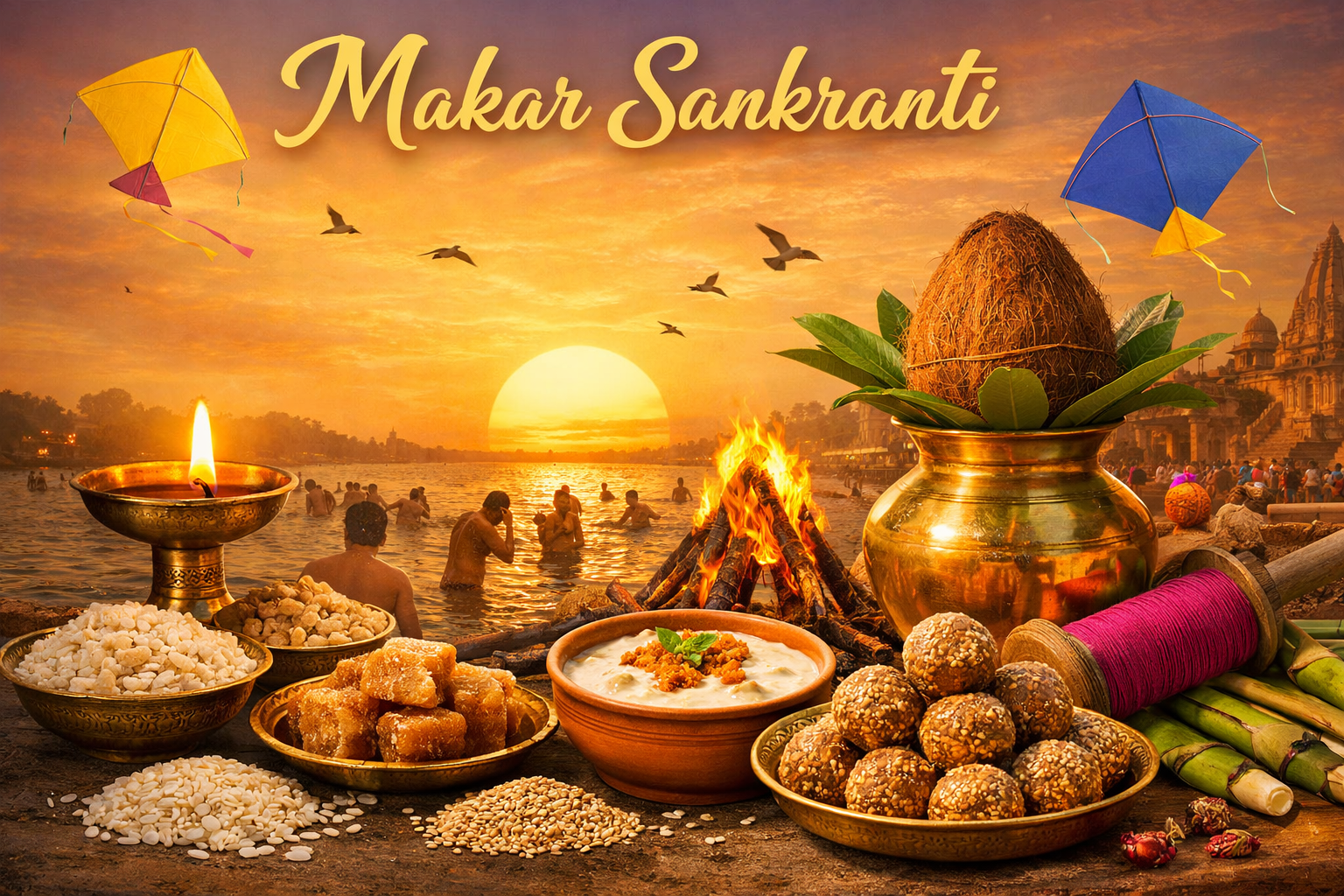
Makar Sankranti is one of the most ancient Hindu festivals that celebrates the Sun’s transition (Sankranti) into the zodiac sign of Capricorn (Makara), marking the beginning of the Sun’s northward journey (Uttarayan). Unlike many Hindu festivals which follow a lunar calendar, this festival is based on the solar calendar, falling almost on the same date each year — mostly January 14 (with some rare variations).
Thank you for reading this post, don’t forget to subscribe!In 2026, Makar Sankranti will be celebrated on 14 January.
History & Origin
The term Makar Sankranti comes from:
- Makara — the astrological name for the zodiac sign Capricorn (a mythic crocodile-like creature)
- Sankranti — meaning a solar transition from one sign to another.
This celestial event is mentioned in ancient texts and epics including the Mahabharata. It is said that Bhishma Pitamah, lying on the battlefield of Kurukshetra, waited for the auspicious time of Uttarayan (when the Sun moves northward) to leave his mortal body. This signifies the soul’s liberation and auspicious transition.
Solar festivals like Makar Sankranti reflect ancient India’s sophisticated sky and calendar knowledge, and the close relationship between nature cycles, agriculture and spirituality.
Spiritual & Scientific Significance
Solar Significance
Makar Sankranti marks the end of the winter solstice period and the beginning of longer days, symbolizing renewal, warmth, and hope. Sun is worshiped as Surya Dev, the life-giver, bringing energy to crops, people and animals.
Spiritual Significance
Hindu/Sanatan Dharma considers this an auspicious time for spiritual practices such as meditation, prayers, chanting mantras, and holy bathe — as this period is energetically considered pure and full of Uttarayan Shakti.
Scientific Angle
In winter months, especially in North India, temperatures are low. Taking a holy dip in rivers at sunrise when UV-index rises helps stimulate strong circulation, vitamin-D production and metabolism. From ancient times, observing this practice is believed beneficial for immunity and detoxification.
Regional Names & Celebrations Across India & Beyond
Makar Sankranti is celebrated across the Indian subcontinent with different names and customs — yet the core essence remains gratitude for harvest, worship of the Sun, communal joy and charity.
Some Regional Names
| Region / State | Festival Name | Key Tradition |
| Tamil Nadu | Pongal | Cooking rice with milk & jaggery until it boils over (sign of prosperity). |
| Punjab, Haryana | Lohri / Maghi Sangrand | Bonfire, songs, community thanksgiving. |
| Andhra Pradesh, Telangana | Sankranti / Sankranthi | Rituals, gifting, kite flying. |
| Bihar, Jharkhand | Dahi Chura / Til Sakraat | Eating flattened rice with curd and jaggery. |
| Uttar Pradesh | Khichdi Sankranti | Preparation and sharing of khichdi. |
| Assam | Magh Bihu | Harvest feast & community bonfires. |
| West Bengal | Poush Sankranti / Mokor Sonkranti | Sweet delicacies from nolen gur (date-palm jaggery). |
| Nepal | Maghe Sankranti | Similar solar festival celebrated nationwide. |
| Kerala | Makaravilakku (in pilgrimage tradition). | |
| Maharashtra | Tilgul Sankranti | Exchange of til-gud sweets. |
Across South East Asia, similar solar festivals also exist: Songkran in Thailand, Thingyan in Myanmar, reflecting ancient Indic solar traditions.
Traditions & Rituals
1. Holy Bath (Snan)
Taking a dip in sacred rivers — especially in Ganga, Yamuna, Godavari, Krishna, Kaveri and other holy waters — is considered highly auspicious as it symbolizes purification and removal of sins.
Auspicious Timings for 2026
- Punya Kaal: Around 14 January ~3:13 PM onwards
- Mahapunya Kaal: Until early evening ~4:58 PM
- Snan Timing: Morning approx 9:03 AM to 10:48 AM — ideal for holy bath rituals.
Some traditions hold that if the Sankranti astrological moment occurs during the night, but the next day falls under auspicious planetary positions, then the holy bath and charity are best done the next day.
2. Charity (Daan)
Offering charity during Makar Sankranti is considered one of the highest merits (Punya). Objects traditionally donated include:
- Sesame seeds (Til)
- Jaggery (Gur)
- Blankets, woolens
- Food grains and ghee
This act of giving symbolizes warmth, compassion and sharing blessings with others.
Food Customs & Their Significance
Food is a central part of the celebrations — rooted in local agriculture, seasonal necessity and spiritual symbolism.
Chuda-Dahi with Jaggery
In states like Bihar and Jharkhand, people eat flattened rice (chuda) with curd (dahi) and jaggery/gur — a wholesome mix of carbohydrates, probiotics and iron-rich sweet, which nourishes the body in cold weather and reflects unity of opposites (sour + sweet + energy).
Til-Gul & Til Laddus
Til (sesame) is rich in calcium and heat-producing elements, perfect for winter.
Til + Gur sweets are symbolic of:
- Warmth and nourishment
- Spiritually it’s believed til purifies and removes negativity.
Other regional delicacies include:
- Pongal (South India)
- Khichdi (North India)
- Pithe, Patishapta (Bengal)
- Gajak/Pheeni (Rajasthan)
Other Traditions
Kite Flying
Especially in Gujarat and Rajasthan, flying kites on Makar Sankranti is more than a pastime — it’s a metaphor for joy, freedom and social gathering during the day.
Lohri Bonfire
In Punjab, the Lohri bonfire on the eve of Sankranti celebrates winter harvest with music, dance and offering of peanuts, popcorn and rewri into the fire — thanking the Sun and nature.
Hindu/Sanatan Dharma Perspective
In Sanatan Dharma, Makar Sankranti signifies a transition from darkness to light, ignorance to knowledge, cold to warmth — a cosmic rebirth.
Sun (Surya) is worshiped as a deity of life force, health and prosperity.
Holi bathing, prayers to ancestors (Tarpan), chanting Gayatri Mantra, and distributing food/clothes to the needy embody the Rta — cosmic order and righteousness.
Why is Holy Bath Important Even in Winter?
From both spiritual and practical viewpoints:
✔Spiritual cleansing — water, fire and sun combined are deeply purifying.
✔ Boosts circulation & immunity — water immersion triggers physiological responses that strengthen circulation, especially beneficial in cold seasons.
✔ Psychological ritual renewal — cold bath at sunrise symbolizes letting go of past impurities and rising to new light.
Final Thought
Makar Sankranti is more than a festival — it’s a renewal of life, gratitude for harvest, ancestral respect, cosmic harmony and communal joy. Whether you call it Pongal, Lohri, Khichdi, Magh Bihu, Dahi Chura, Tilgul or Sankranti, the spirit is one: to receive the sun’s blessing, share joy, and embrace nature’s cycles with humility and hope.
Leave a Reply