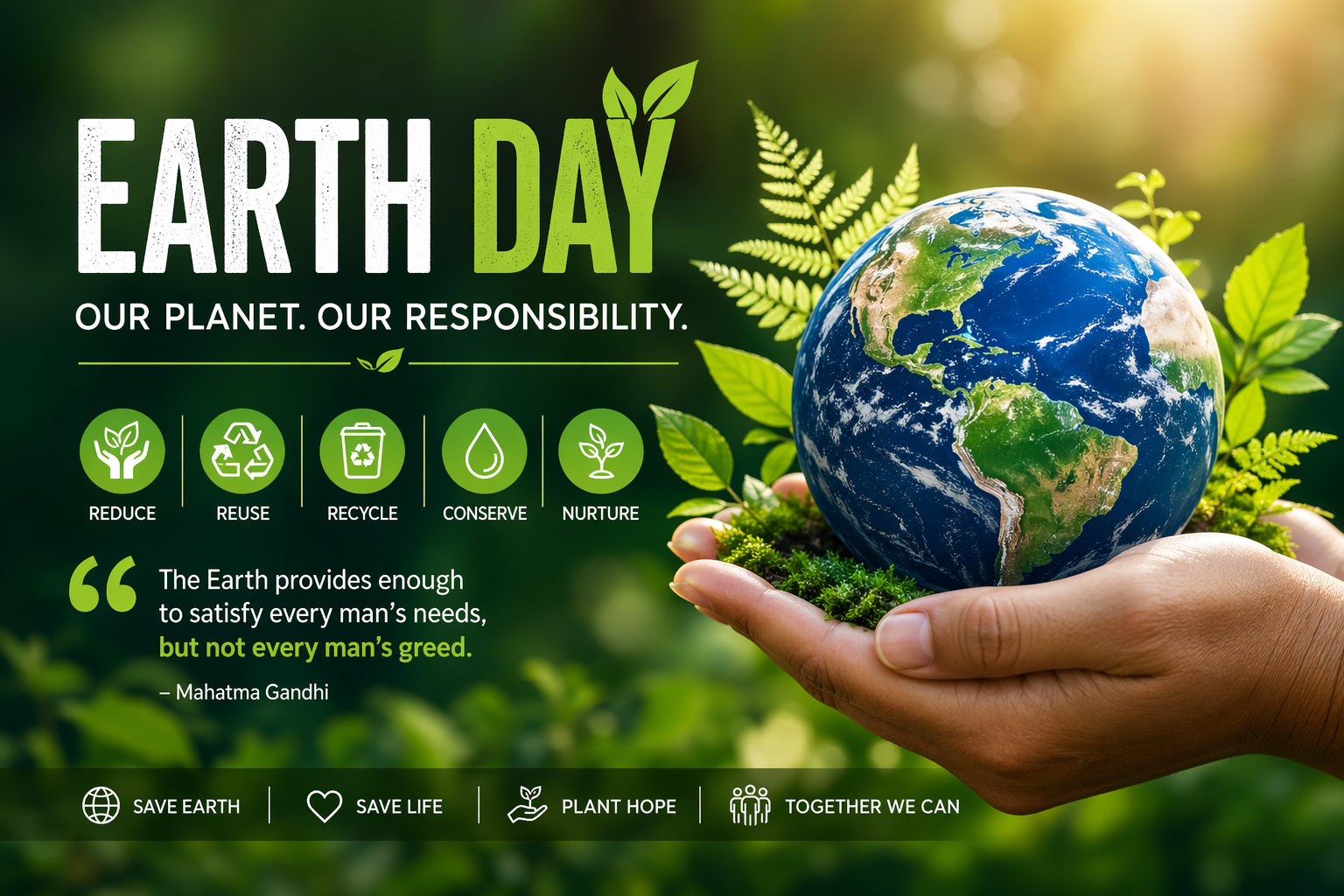
What is Earth Day?
Thank you for reading this post, don’t forget to subscribe!Earth Day is a global environmental movement observed every year on April 22, dedicated to raising awareness about environmental protection and promoting sustainable practices. It unites over a billion people across more than 190 countries to take action for the health of our planet.
When and Who Started Earth Day?
Earth Day was first celebrated in 1970, initiated by Gaylord Nelson, a U.S. Senator. Inspired by growing concerns about pollution and environmental degradation, he mobilized students, activists, and citizens.
The first Earth Day saw participation from 20 million Americans, making it one of the largest civic events in history. It eventually led to the creation of key environmental laws and institutions like the United States Environmental Protection Agency.
Why is Earth Day Celebrated?
Earth Day is celebrated to:
- Raise awareness about environmental crises
- Promote conservation of natural resources
- Encourage sustainable living practices
- Mobilize global action against climate change
It serves as a reminder that Earth is not inherited from our ancestors, but borrowed from our children.
Why Must We Care for Our Only Living Planet?
Earth is unique—it is the only known planet that supports life. It provides:
- Air to breathe
- Water to drink
- Soil to grow food
- Ecosystems that sustain biodiversity
However, human activities are pushing Earth towards ecological imbalance. Climate change, deforestation, and pollution threaten not only nature but human survival itself.
Caring for Earth is not optional—it is existential necessity.
How Can We Make Earth More Livable and Lovable?
Making Earth better requires both individual and collective action:
Individual Actions
- Reduce, reuse, recycle
- Conserve water and electricity
- Avoid single-use plastics
- Adopt sustainable diets
Collective Actions
- Transition to renewable energy
- Promote green policies
- Protect forests and biodiversity
- Strengthen environmental governance
Dharti Maa (Mother Earth) in Indian Sanatan Dharma
In Sanatan Dharma, Earth is revered as Dharti Maa (Mother Earth). She is not merely a resource but a living, nurturing entity deserving respect and gratitude.
The Earth is personified as Bhumi Devi, symbolizing patience, nourishment, and resilience.
Core Philosophy:
- Humans are custodians, not owners of Earth
- Nature and humanity are interconnected
- Exploitation of nature is considered adharma (unrighteous)
Vedic Mantras on Earth (Prithvi)
The Atharva Veda contains the famous Prithvi Sukta, which glorifies Earth:
“Mata Bhumih Putro Aham Prithivyah”
(Earth is my mother, I am her son)
Another reverential expression:
“Om Prithvi Devyai Namah”
(Salutations to the Earth Goddess)
These mantras reflect deep ecological consciousness rooted in ancient Indian thought.
Gandhi’s Vision on Sustainability
The famous quote by Mahatma Gandhi is:
“The Earth provides enough to satisfy every man’s needs, but not every man’s greed.”
Interpretation:
- Nature has sufficient resources for survival
- Overconsumption leads to imbalance and destruction
- Ethical restraint is key to sustainability
Gandhi’s philosophy promotes minimalism, self-discipline, and harmony with nature, which are highly relevant today.
Consumer Culture and Environmental Damage
Modern consumerism is one of the biggest threats to Earth:
Impacts:
- Over-extraction of natural resources
- Massive waste generation
- Increased carbon emissions
- Loss of biodiversity
“Use and throw” culture has turned Earth into a dumping ground, harming both living and non-living systems.
Types of Pollution Affecting Earth
Air Pollution
- Emissions from vehicles and industries
- Causes respiratory diseases and global warming
Water Pollution
- Industrial waste, sewage, plastics
- Harms marine life and human health
Soil Pollution
- Chemicals, pesticides, landfill waste
- Reduces fertility and contaminates food
Noise Pollution
- Urbanization, traffic
- Affects mental and physical health
Other Forms:
- Thermal pollution
- Radioactive pollution
How Can We Protect Earth from Pollution?
Practical Measures:
- Shift to renewable energy (solar, wind)
- Waste segregation and recycling
- Promote public transport
- Ban harmful chemicals and plastics
- Afforestation and conservation drives
Policy Measures:
- Strict environmental laws
- Global climate agreements
- Corporate accountability
- Sustainable urban planning
Way Forward: Building a Sustainable Future
The future depends on collective consciousness and action:
- Adopt circular economy models
- Integrate traditional ecological wisdom with modern science
- Promote environmental education
- Encourage green innovation and technology
Earth Day should not be just a celebration—it must become a way of life.
Conclusion
Earth is not just a planet—it is our home, our mother, and our responsibility. From ancient Vedic wisdom to modern environmental movements, the message is clear:
Live simply. Consume responsibly. Protect relentlessly.
As we celebrate Earth Day, let us move beyond symbolic gestures and commit to meaningful change—for ourselves and future generations.
Leave a Reply