Introduction
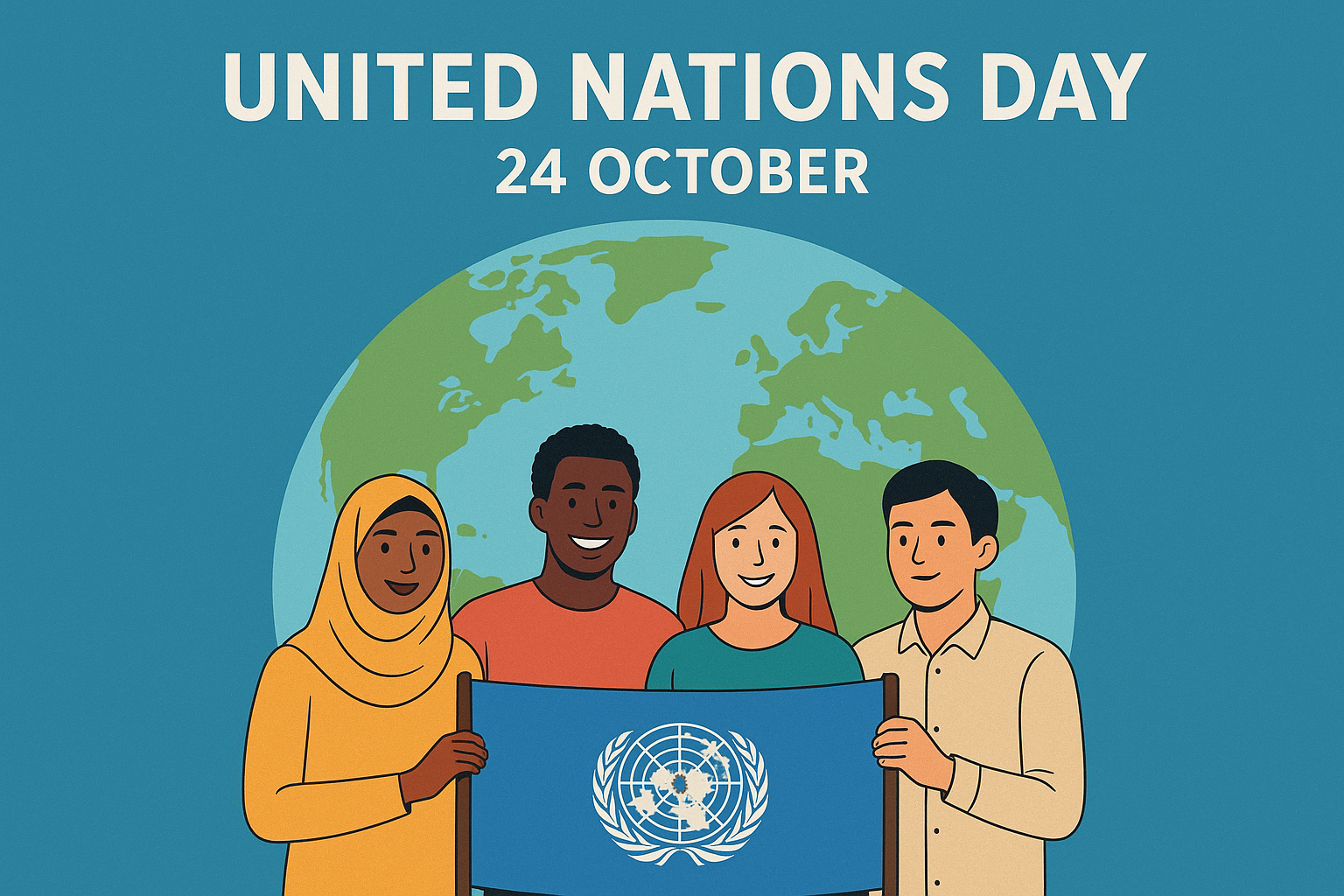
Thank you for reading this post, don’t forget to subscribe!Every year, October 24 is celebrated as United Nations Day, marking the anniversary of the official entry into force of the UN Charter in 1945. The day reminds humanity of the UN’s founding purpose — to save succeeding generations from the scourge of war and to promote global peace, security, and cooperation.
As the world faces new challenges like climate change, pandemics, and geopolitical tensions, the role and relevance of the UN have become more vital than ever. But has the United Nations truly fulfilled its founding mission? Let’s explore its journey from 1945 to 2025.
History and Background of the United Nations
The United Nations was born out of the ashes of World War II, one of the most devastating conflicts in human history. The failure of the League of Nations—established after World War I to prevent future wars—highlighted the need for a stronger, more inclusive international organization.
- In August 1941, U.S. President Franklin D. Roosevelt and British Prime Minister Winston Churchill signed the Atlantic Charter, outlining shared goals for peace and cooperation.
- By January 1, 1942, 26 nations had signed the Declaration by United Nations, pledging to fight against the Axis powers and uphold the principles of peace and justice.
- The United Nations Charter was drafted between April–June 1945 in San Francisco by 50 countries.
- It came into force on October 24, 1945, after ratification by major powers — the United States, the Soviet Union, the United Kingdom, China, and France — along with most signatories.
This date became known as United Nations Day, celebrating global unity and collective resolve.
Why the United Nations Was Formed
The UN was established with clear and ambitious purposes:
- To maintain international peace and security.
- To promote human rights and dignity.
- To foster social and economic development.
- To uphold international law.
- To coordinate humanitarian assistance and global cooperation.
At its core, the UN was designed to prevent the repetition of the horrors of world wars and to serve as a neutral platform for diplomacy and dialogue.
Administrative Structure: The UN System
The United Nations System is a complex network of organs, specialized agencies, and programs working across multiple fields. Its administrative structure can be summarized as follows:
1. Principal Organs (as per UN Charter):
- General Assembly (GA):
The main deliberative body where all 193 member states have equal representation. It discusses and makes recommendations on global issues. - Security Council (UNSC):
Responsible for maintaining international peace and security. It has 15 members — 5 permanent (P5): the USA, UK, Russia, China, and France — and 10 non-permanent members elected for two-year terms. - Economic and Social Council (ECOSOC):
Coordinates economic, social, and environmental activities and oversees specialized agencies like WHO, UNESCO, and IMF. - International Court of Justice (ICJ):
Based in The Hague, it settles legal disputes between states. - Secretariat:
Headed by the UN Secretary-General, currently António Guterres, who oversees day-to-day functions and implements the UN’s decisions. - Trusteeship Council:
Initially established to supervise trust territories, it suspended operations in 1994 when all trust territories gained independence.
2. Specialized Agencies and Programmes:
- UNESCO (Education, Science, and Culture)
- WHO (World Health Organization)
- UNICEF (Children’s Fund)
- FAO (Food and Agriculture Organization)
- UNDP (Development Programme)
- UNHCR (Refugee Agency)
- IMF & World Bank (Financial Institutions)
These agencies collectively form the UN System, addressing every dimension of human welfare and global cooperation.
UN Membership: How Many Countries Are There?
As of 2025, the United Nations has 193 member states.
The newest member is South Sudan, which joined in 2011.
Additionally, there are two observer states:
- The Holy See (Vatican City)
- The State of Palestine
Achievements and Role of the UN So Far
Over nearly eight decades, the United Nations has played a pivotal role in shaping the modern world. Its achievements span across peace, health, human rights, and development:
1. Peacekeeping and Conflict Resolution
- Deployed over 70 peacekeeping missions since 1948.
- Helped end major conflicts in places like Cambodia, Namibia, Liberia, and the Balkans.
2. Humanitarian Aid and Development
- The World Food Programme (WFP) feeds millions facing hunger.
- UNICEF improves children’s health and education globally.
- UNDP drives poverty reduction and governance reforms.
3. Human Rights and Global Justice
- Adopted the Universal Declaration of Human Rights (1948).
- Supported creation of International Criminal Tribunals (for Rwanda, Yugoslavia, etc.).
4. Sustainable Development Goals (SDGs)
- In 2015, the UN launched the 2030 Agenda for Sustainable Development, setting 17 SDGs to end poverty, protect the planet, and ensure prosperity for all.
5. Climate Action
- The UNFCCC and Paris Agreement (2015) are key UN-led global initiatives against climate change.
How Successful Has the UN Been in Its Mission?
The UN has partially succeeded in its mission:
- It has prevented a third world war, fostered global diplomacy, and promoted human rights.
- However, it faces criticism for bureaucracy, limited enforcement power, and P5 dominance in the Security Council.
- The UN often struggles to act decisively in crises (e.g., Syria, Ukraine, Gaza) due to veto politics.
Still, its presence remains indispensable as a platform for global dialogue and coordination on cross-border challenges.
Relevance of the UN in Today’s Geopolitical Context
In today’s complex world — marked by multipolarity, regional conflicts, climate change, AI ethics, and pandemics — the UN’s role is both challenged and crucial.
- As global power shifts toward Asia and the Global South, calls for democratization of global governance are growing.
- The UN remains the only truly universal forum where all nations can engage on equal footing, especially amid rising nationalism and geopolitical divides.
- Its agencies continue to shape global standards in human rights, health, and sustainability.
Future of the United Nations: Reform and Renewal
For the UN to stay relevant and effective in the 21st century, significant reforms are necessary:
1. Security Council Reform:
- Expand membership to include emerging powers like India, Brazil, Japan, and African nations.
- Limit or review the use of the veto power to ensure more equitable decision-making.
2. Financial and Bureaucratic Reform:
- Reduce dependency on a few major donors.
- Streamline agencies for greater efficiency and transparency.
3. Enhanced Role for Global South:
- Increase participation of developing countries in policy formulation and leadership roles.
4. Digital and Climate Governance:
- Create stronger frameworks for AI ethics, cybersecurity, and climate accountability.
5. Strengthen Multilateralism:
- Reaffirm faith in international cooperation over unilateralism and protectionism.
Conclusion: A Symbol of Hope and Collective Responsibility
The United Nations stands as humanity’s best attempt at creating a rules-based, cooperative global order. While imperfect, it embodies our shared aspiration for peace, justice, and progress.
As the world navigates unprecedented challenges — from wars to climate crises — the spirit of the UN Charter remains a guiding light:
“We the peoples of the United Nations, determined to save succeeding generations from the scourge of war…”
United Nations Day is not just a commemoration — it’s a reminder that peace, cooperation, and solidarity are the only paths to a sustainable future for all.
Leave a Reply