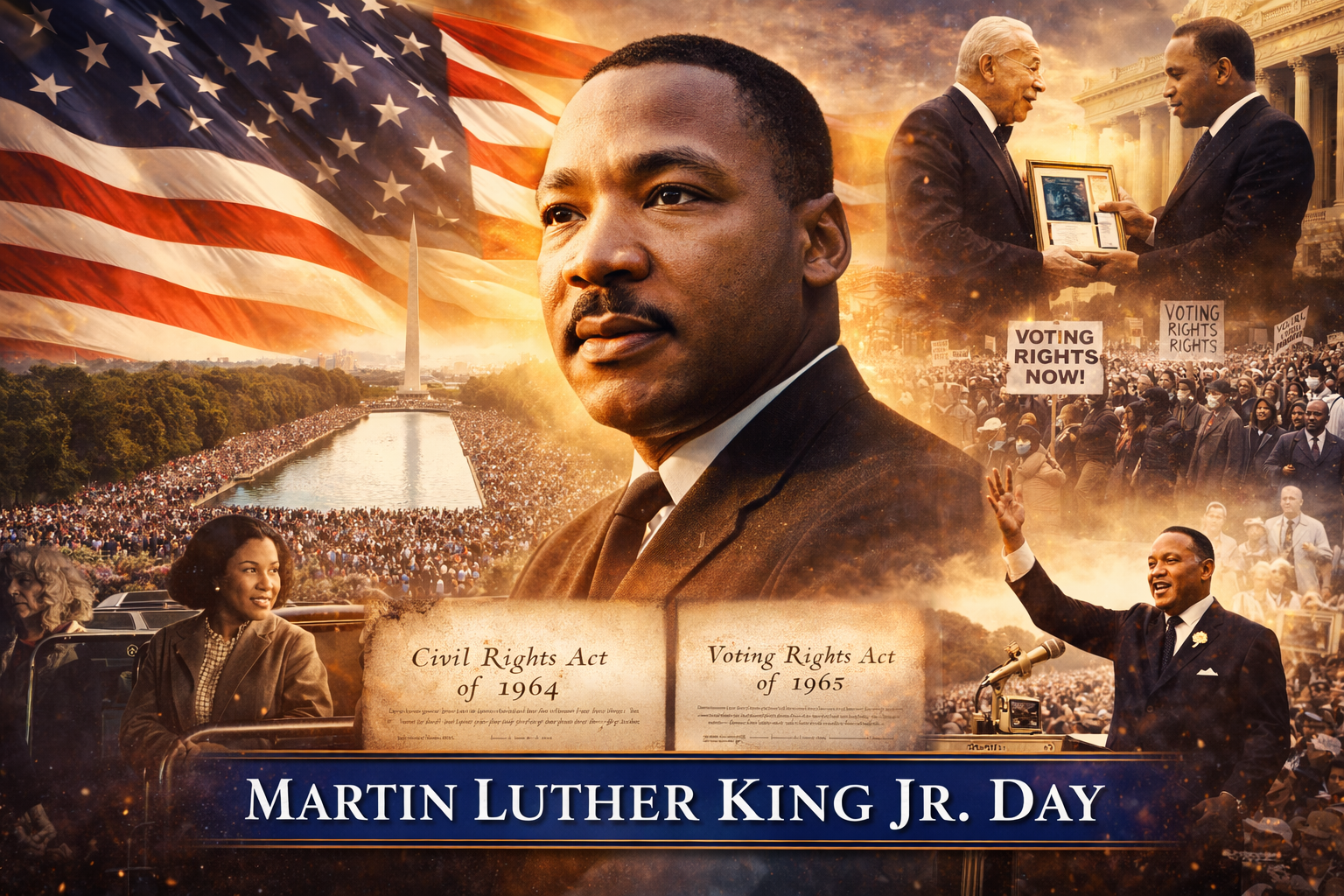
Introduction
Thank you for reading this post, don’t forget to subscribe!Dr. Martin Luther King Jr. stands as one of the most influential leaders in American and world history. A Baptist minister, civil rights activist, and moral philosopher, he transformed the struggle for racial equality in the United States through nonviolence, courage, and moral clarity. His leadership reshaped laws, awakened consciences, and inspired global movements for justice and human dignity.
Early Life and Formation of a Leader
Martin Luther King Jr. was born on January 15, 1929, in Atlanta, Georgia, into a deeply religious African American family. His father was a Baptist preacher, and faith played a central role in shaping King’s worldview.
He excelled academically, earning:
- A degree in Sociology
- A Bachelor of Divinity
- A PhD in Systematic Theology
King was profoundly influenced by:
- Christian teachings of love and forgiveness
- Mahatma Gandhi’s philosophy of nonviolent resistance
These ideas would later define his leadership style and moral framework.
Role of Dr. Martin Luther King Jr. in American History
Dr. King emerged as the most prominent leader of the American Civil Rights Movement (1950s–1960s). At a time when African Americans faced legal segregation, discrimination, and violence, King became the voice of peaceful resistance.
Montgomery Bus Boycott
King rose to national prominence in 1955 during the Montgomery Bus Boycott, sparked by Rosa Parks’ arrest. The boycott lasted over a year and ended with the Supreme Court ruling segregation on public buses unconstitutional.
This victory proved that organized, nonviolent protest could dismantle institutional racism.
Major Contributions to Civil Rights
Dr. King’s contributions reshaped American society:
1. Nonviolent Civil Disobedience
King led marches, sit-ins, and protests grounded in nonviolence. Even when faced with arrests, threats, and brutality, he insisted on peaceful resistance.
2. Landmark Legislation
His activism directly influenced the passage of:
- Civil Rights Act of 1964 – outlawed racial segregation and discrimination
- Voting Rights Act of 1965 – protected voting rights for African Americans
These laws remain pillars of American democracy.
3. The “I Have a Dream” Speech
Delivered during the 1963 March on Washington, this speech became one of the most powerful orations in history. King envisioned a nation where people would be judged “not by the colour of their skin, but by the content of their character.”
4. Global Impact
King’s philosophy inspired movements against apartheid, colonialism, and injustice across the world. He became a universal symbol of peaceful resistance.
Martin Luther King Jr. Day: Celebration and Meaning
Martin Luther King Jr. Day is observed on the third Monday of January every year in the United States, close to his birthday.
What MLK Day Means
- A federal holiday honouring equality and civil rights
- A “Day of Service”, encouraging citizens to volunteer and help communities
- A reminder that freedom and justice require continuous effort
It is not merely a holiday—it is a call to action.
Lessons from Dr. Martin Luther King Jr. for Society
Dr. King’s teachings remain deeply relevant today:
1. Power of Nonviolence
True strength lies in moral courage, not physical force. Nonviolence can dismantle injustice without destroying humanity.
2. Equality and Human Dignity
Every human being deserves respect, regardless of race, religion, or background.
3. Courage to Speak Truth
King taught that silence in the face of injustice is complicity. Speaking up—even at personal cost—is a moral duty.
4. Unity Over Hatred
He warned that hatred only multiplies hatred. Love and understanding are the foundations of lasting peace.
5. Social Responsibility
King believed injustice anywhere is a threat to justice everywhere. Societies flourish only when citizens care for one another.
Challenges, Sacrifices, and Assassination
Dr. King faced:
- Arrests and imprisonment
- Surveillance and threats
- Opposition from extremists and political institutions
Despite this, he remained committed to peace.
On April 4, 1968, Dr. King was assassinated in Memphis, Tennessee. His death shocked the world but strengthened the movement he led.
Legacy and Importance Today
Dr. Martin Luther King Jr.’s legacy lives on through:
- Civil rights protections
- Global peace movements
- Educational curricula
- Social justice advocacy
His ideas are invoked in struggles against racism, inequality, economic injustice, and authoritarianism worldwide.
Conclusion
Dr. Martin Luther King Jr. was not just a leader of African Americans—he was a leader of humanity. His life teaches us that justice requires action, courage requires sacrifice, and peace requires love.
In a divided world, his words continue to guide us:
“The time is always right to do what is right.”
Leave a Reply