Blog

  • Jane Goodall: Know about World’s Most Famous Primatologist

    Jane Goodall: Know about World’s Most Famous Primatologist

    Who is Jane Goodall?

    Jane Goodall was one of the most influential primatologists, anthropologists, and conservationists in the world. Known for her groundbreaking research on wild chimpanzees in Gombe Stream National Park, Tanzania, she revolutionized the scientific understanding of primates and their behaviour. Goodall was not just a scientist—she was also a tireless advocate for wildlife conservation, environmental protection, and youth empowerment. Her passing on October 1, 2025, at the age of 91 marks the end of an extraordinary life devoted to science, conservation, and advocacy for the planet.

    Biography: Early Life of Jane Goodall

    • Birth: Jane Goodall was born on April 3, 1934, in London, England.
    • From an early age, she showed a deep curiosity about animals. At just over a year old, she was given a toy chimpanzee named Jubilee, sparking a lifelong fascination with primates.
    • Without formal higher education at first, she worked as a secretary and waitress to save money for her dream—to visit Africa.

    Journey into Science: Struggles and Determination

    In 1957, Goodall travelled to Kenya, where she met the renowned archaeologist and anthropologist Louis Leakey. Impressed by her passion and patience, Leakey hired her as his secretary and later sent her to study chimpanzees in Tanzania.

    Her path was not easy:

    • She lacked formal training, so many scientists doubted her observations.
    • As a young woman in the 1960s, she faced gender biases in a male-dominated field.
    • Living in the forests of Gombe was often dangerous, with isolation, illnesses, and logistical challenges.

    Yet, her determination and keen eye for detail helped her persevere.

    Groundbreaking Work and Discoveries

    Jane Goodall’s research completely reshaped how humans view primates:

    1. Tool Use in Chimpanzees (1960):

    She was the first to observe chimpanzees making and using tools—a skill once believed unique to humans.

    1. Complex Social Structures:

    She revealed that chimpanzees have strong family bonds, social hierarchies, and emotional connections.

    1. Aggression and Warfare:

    Goodall also discovered darker behaviours, including territorial conflicts and violence among chimpanzee groups.

    1. Close Human-Animal Connection:

    She emphasized that chimpanzees share more than 98% of human DNA, challenging long-standing ideas about the separation between humans and animals.

    Her research was published in several landmark books and scientific papers, making her one of the most respected scientists of her generation.

    Life Work and Achievements

    • The Jane Goodall Institute (1977): Founded to promote wildlife research, community-led conservation, and sustainable development.
    • Roots & Shoots (1991): A youth-led program inspiring young people to engage in conservation, humanitarian work, and environmental stewardship.
    • UN Messenger of Peace (2002): Recognized globally for her tireless advocacy.
    • Books: Author of many influential works such as In the Shadow of Man, The Chimpanzees of Gombe, and Reason for Hope.
    • Awards: Goodall has received over 40 honorary degrees and numerous awards, including the Kyoto Prize, the Hubbard Medal of the National Geographic Society, and the Templeton Prize.

    Quotes by Jane Goodall

    • “What you do makes a difference, and you have to decide what kind of difference you want to make.”
    • “The least I can do is speak out for those who cannot speak for themselves.”
    • “Change happens by listening and then starting a dialogue with the people who are doing something you don’t believe is right.”

    Inspirations and Lessons from Jane Goodall’s Life

    Jane Goodall’s journey is full of valuable lessons for everyone:

    1. Follow Your Passion Relentlessly: Despite lacking money or degrees, she followed her dream and became a world icon.
    2. Patience and Observation Lead to Breakthroughs: Her quiet patience in the forest led to discoveries that changed science.
    3. Never Stop Learning: She pursued her Ph.D. in ethology at Cambridge University despite having no prior degree.
    4. Advocacy Beyond Science: She transformed her role from scientist to global advocate, proving that knowledge must be used to create change.
    5. Youth Empowerment: Her Roots & Shoots program teaches that young people can be powerful changemakers.

    Legacy

    Jane Goodall was more than a scientist—she was a symbol of hope for conservation and the environment. Her life’s work has inspired generations to care for animals, protect the planet, and act with compassion.

    Even in her 90s, she continues to travel, give talks, and inspire the world with her unwavering dedication.

    Conclusion

    Jane Goodall’s death is a profound loss to the global community, but her life remains an enduring symbol of courage, compassion, and conviction. From her childhood fascination with animals to becoming the most celebrated primatologist in history, she proved that one person’s determination can change the world.

    Her words, “What you do makes a difference,” will echo forever, urging us all to carry forward her mission of protecting life on Earth.

    She was a living reminder that one individual, with courage and determination, can change the world.

  • How the U.S. Government Works: Federal and State Roles

    Introduction

    The United States government is one of the most influential democratic systems in the world. It operates under the principle of federalism, where power is shared between the national (federal) government and the individual state governments. This structure ensures a balance between unity and regional autonomy, preventing either level of government from becoming too powerful. Understanding how this system functions is crucial for appreciating the political, legal, and administrative framework of the United States.

    The Federal Government Structure

    At the national level, the U.S. government is divided into three co-equal branches:

    1. Legislative Branch (Congress)

    • Composition: The U.S. Congress is bicameral, consisting of the Senate (100 members, two per state) and the House of Representatives (435 members, based on population).
    • Role: Congress makes federal laws, approves budgets, regulates commerce, declares war, and provides checks on the executive branch.

    2. Executive Branch

    • Headed by: The President of the United States, who serves as both Head of State and Commander-in-Chief of the Armed Forces.
    • Key Responsibilities: Enforcing laws, conducting foreign policy, managing national defence, and overseeing federal agencies.
    • Hierarchy:
      • President
      • Vice President
      • Cabinet Members (Heads of federal departments like State, Defence, Treasury, etc.)
      • Federal agencies and independent commissions

    3. Judicial Branch

    • Composition: Led by the Supreme Court of the United States, supported by lower federal courts.
    • Role: Interprets laws, ensures constitutional compliance, and resolves disputes between states or between states and the federal government.

    State Government Structure

    Each of the 50 states in the U.S. has its own constitution and government modelled on the federal structure.

    1. State Legislature

    • Usually bicameral (Senate and House/Assembly), though Nebraska has a unicameral legislature.
    • Makes state laws, controls budgets, and represents citizens at the state level.

    2. State Executive

    • Headed by the Governor, who is the chief executive officer of the state.
    • Supported by a Lieutenant Governor, state secretaries, attorney generals, and department heads.

    3. State Judiciary

    • Comprises state supreme courts, appellate courts, and local trial courts.
    • Handles cases under state law, while federal courts handle federal issues.

    Distribution of Powers: Federal vs. State

    The U.S. Constitution clearly outlines power distribution through the Tenth Amendment, which reserves powers not delegated to the federal government for the states.

    • Federal Powers (Enumerated): National defence, foreign relations, regulating interstate commerce, printing money.
    • State Powers (Reserved): Education, healthcare, policing, local governance, marriage and family laws.
    • Shared (Concurrent) Powers: Taxation, transportation, law enforcement.

    This system ensures that while the federal government manages national affairs, states retain autonomy over local matters.

    Hierarchy of Officials in the U.S. Government

    Federal Level:

    1. President
    2. Vice President
    3. Cabinet Secretaries
    4. Federal Agency Heads
    5. Members of Congress
    6. Federal Judges (Supreme Court and lower courts)

    State Level:

    1. Governor
    2. Lieutenant Governor
    3. State Cabinet / Department Heads
    4. State Legislators
    5. State Judges
    6. Local Officials (mayors, county commissioners, sheriffs, etc.)

    Coordination Between Federal and State Governments

    Coordination occurs through multiple channels:

    • Federal Funding & Grants: States receive funds for healthcare, infrastructure, education, etc.
    • Intergovernmental Agencies: Councils and commissions bridge cooperation.
    • Judicial Review: Courts resolve disputes between federal and state governments.
    • Federal Standards with State Implementation: Example: federal education laws set minimum standards, but states design curriculum.

    Role of the U.S. Constitution in Power Balance

    The U.S. Constitution (1789) is the foundation of American governance. Its built-in system of checks and balances ensures no branch or level of government becomes too dominant.

    • The Supremacy Clause ensures federal law overrides state law when conflicts arise.
    • The Bill of Rights protects citizens against both federal and state overreach.
    • The Tenth Amendment safeguards state sovereignty.

    This constitutional framework guarantees flexibility, unity, and democratic accountability.

    Conclusion

    The U.S. government is a carefully balanced system where powers are divided and shared between federal and state authorities. Through its unique structure of federalism, checks and balances, and constitutional safeguards, the U.S. ensures both a strong central government and robust state autonomy. For citizens and global observers alike, this model represents one of the most influential and enduring systems of governance in the modern world.

  • J.K. Rowling: An Inspiring Journey from Struggles to Global Success

    J.K. Rowling: An Inspiring Journey from Struggles to Global Success

    J.K. Rowling is one of the most celebrated authors in modern literary history. Known worldwide for creating the Harry Potter series, she has not only shaped popular culture but has also left a profound impact on literature, society, and generations of readers. Her journey is an inspiring tale of resilience, imagination, and determination.

    Birth and Early Life

    Joanne Rowling, popularly known as J.K. Rowling, was born on 31 July 1965 in Yate, Gloucestershire, England. She grew up in a middle-class family with her parents, Peter and Anne Rowling, and her younger sister, Dianne. From an early age, Rowling showed a deep interest in storytelling. She often wrote fantasy tales and shared them with her sister, planting the seeds of her future career.

    Education and Academic Life

    Rowling attended St Michael’s Primary School, followed by Wyedean School and College, where her teachers encouraged her to pursue her passion for literature. Later, she enrolled at the University of Exeter, where she studied French and Classics. After graduating in 1987, she moved to London to work as a researcher and bilingual secretary for Amnesty International.

    Struggles and Challenges

    Rowling’s journey to success was far from easy. In the early 1990s, she faced several personal and financial struggles:

    • The death of her mother from multiple sclerosis deeply affected her.
    • She endured a difficult marriage in Portugal, which ended in divorce.
    • She became a single mother, raising her daughter Jessica while living on state benefits.
    • During this time, she battled depression, which she later said inspired the concept of the soul-sucking Dementors in the Harry Potter series.

    Despite these challenges, Rowling continued to write. Often sitting in cafés in Edinburgh with her baby in a stroller, she worked tirelessly on her manuscript.

    Career Breakthrough: Harry Potter

    Rowling completed the first draft of Harry Potter and the Philosopher’s Stone in 1995. Initially, the manuscript was rejected by 12 publishers before finally being accepted by Bloomsbury Publishing in 1996. The book was published in 1997, and it immediately became a success, winning the Nestlé Smarties Book Prize.

    The Harry Potter series went on to become a global phenomenon, translated into more than 80 languages and selling over 500 million copies worldwide. The film adaptations further expanded Rowling’s reach, making her one of the most successful authors of all time.

    Major Publications

    Rowling’s important works include:

    1. Harry Potter Series (1997–2007)
      • Harry Potter and the Philosopher’s Stone (1997)
      • Harry Potter and the Chamber of Secrets (1998)
      • Harry Potter and the Prisoner of Azkaban (1999)
      • Harry Potter and the Goblet of Fire (2000)
      • Harry Potter and the Order of the Phoenix (2003)
      • Harry Potter and the Half-Blood Prince (2005)
      • Harry Potter and the Deathly Hallows (2007)
    2. Companion Works
      • Fantastic Beasts and Where to Find Them (2001)
      • Quidditch Through the Ages (2001)
      • The Tales of Beedle the Bard (2007)
    3. The Casual Vacancy (2012) – A novel for adults.
    4. Cormoran Strike Series (as Robert Galbraith)
      • The Cuckoo’s Calling (2013)
      • The Silkworm (2014)
      • Career of Evil (2015)
      • Lethal White (2018)
      • Troubled Blood (2020)

    Contribution to Society

    Beyond her literary achievements, Rowling has made significant contributions to society:

    • Philanthropy: She established the Volant Charitable Trust, which supports causes related to poverty, social inequality, and multiple sclerosis research.
    • Lumos Foundation: Founded in 2005, this organization works to improve the lives of disadvantaged children and end institutionalization.
    • Advocacy: Rowling has consistently used her platform to speak about social justice, literacy, and child welfare.

    Lessons and Inspiration from J.K. Rowling

    J.K. Rowling’s life story is filled with powerful lessons that inspire millions:

    • Perseverance: Despite rejections and hardships, she never gave up on her dream.
    • Imagination: Her creativity transformed children’s literature and sparked a reading revolution.
    • Resilience: She turned her struggles into stories that resonate with people across the world.
    • Generosity: Her philanthropic efforts remind us that success should also uplift others.

    Her famous quote, “Rock bottom became the solid foundation on which I rebuilt my life,” captures the essence of her journey.

    Conclusion

    J.K. Rowling’s life is more than the story of a successful author—it is a testament to resilience, imagination, and the power of storytelling. From her early struggles to her monumental success and contributions to society, her journey continues to inspire readers, writers, and dreamers worldwide.

    She teaches us that no matter how difficult life becomes, perseverance and belief in one’s vision can transform not only individual lives but also the world.

  • Why Do Crowds Turn Peaceful Gatherings Into Chaos?

    Why Do Crowds Turn Peaceful Gatherings Into Chaos?

    Crowds are powerful. They can be joyous, dangerous, inspiring, or destructive. From stadium celebrations to sudden stampedes, from peaceful protests to violent riots, the behaviour of a crowd often surprises us because it defies the way individuals normally act alone. To truly understand this paradox, we need to look deeper into the psychology of crowds.

    What Exactly is a Crowd?

    A crowd is not just a collection of people standing together—it is a temporary social organism with its own mood, energy, and dynamics. Crowds may be:

    • Casual – people gathered by chance, like at a bus stop.
    • Conventional – audiences in theatres, rallies, or stadiums.
    • Expressive – gatherings celebrating or mourning.
    • Acting – groups taking direct action, which may turn into protests or riots.

    In each case, the psychological shift from “I” to “we” is what makes crowd behaviour unique.

    Why People Behave Differently in Crowds

    French social psychologist Gustave Le Bon was among the first to argue that in crowds, individuals lose their sense of self and take on a “collective mind.” Later research expanded on this, pointing to several forces at play:

    • Deindividuation: Anonymity makes people feel less accountable, leading to riskier actions.
    • Emotional Contagion: Emotions—whether joy, anger, or fear—spread like wildfire in a crowd.
    • Group Polarization: Shared ideas tend to grow more extreme when reinforced by others.

    This explains why otherwise calm individuals might panic during a stampede or join aggressive behaviour during riots.

    Stampedes: Panic in Motion

    Stampedes are tragic examples of how fear overtakes reason. They usually happen during concerts, political rallies, religious pilgrimages, or sports events. Once panic begins, survival instincts dominate. People push, not out of malice, but because they feel they have no choice. Ironically, most deaths occur from suffocation due to crowd pressure, not from being trampled.

    Proper crowd design—wide exits, controlled entry, and clear instructions—can save lives, but history shows these precautions are often neglected.

    Riots and Unrest: When Crowds Turn Violent

    Unlike stampedes, which are fuelled by fear, riots are driven by anger, injustice, and collective frustration. They often start with a trigger event—a rumour, an arrest, or a controversial incident—and escalate rapidly.

    In riots, mob mentality takes over:

    • Anonymity lowers fear of punishment.
    • Unity creates courage, even in destructive acts.
    • Absence of trusted authority leads to chaos.

    While riots are destructive, they also highlight underlying grievances—economic inequality, political repression, or social injustice—that need addressing.

    The Positive Side of Crowds

    Crowds are not always dangerous. In fact, they are the driving force behind many of humanity’s greatest achievements:

    • Social Movements: Civil rights marches, independence struggles, and climate rallies show how crowds can demand justice.
    • Celebrations and Festivals: From World Cup parades to cultural festivals, crowds generate joy and unity.
    • Healing Together: Vigils after tragedies provide comfort and resilience through collective mourning.

    Crowds are a mirror—reflecting both the fragility and strength of human society.

    Managing Crowds: The Key to Safety

    Disasters in crowds are rarely due to individuals, but to poor planning and lack of psychological insight. Safer crowds require:

    • Clear Communication: Calm, accurate information prevents rumours and panic.
    • Smart Infrastructure: Well-designed exits, controlled pathways, and barriers reduce chaos.
    • Understanding Emotions: Security and organizers trained in psychology can de-escalate tensions.
    • Building Trust: When people trust authorities, they are more likely to remain calm.

    Final Thoughts: The Double Edge of Collective Energy

    Crowds amplify human behaviour. They can create beauty, solidarity, and change—or destruction, violence, and tragedy. Whether a gathering becomes a celebration or a crisis depends on leadership, planning, and the emotions fuelling it.

    The psychology of crowds reminds us of one truth: when individuals merge into a collective, they gain power—but also face the danger of losing themselves. Harnessing that energy wisely is one of the greatest challenges of modern societies.

  • National Daughters Day: Where we reached now?

    National Daughters Day: Where we reached now?

    Every year, National Daughters Day is celebrated to recognize the role of daughters in our families, communities, and society at large. It is not just a day of affection and appreciation but also a reminder of the ongoing struggle for gender equality, dignity, and safety for girls and women worldwide.

    Origin and Background of National Daughters Day

    The exact origin of National Daughters Day varies across countries. In the United States, it is observed on the fourth Sunday of September, while in India, it is also widely recognized in September. The day was initiated as a way to challenge the bias and preference for sons over daughters, which historically prevailed in many cultures.

    The celebration gained momentum with social activists, women’s organizations, and awareness campaigns highlighting the need to honour daughters, break stereotypes, and reaffirm their rightful place in society.

    Why Is National Daughters Day Celebrated?

    1. To Celebrate the Role of Daughters – It acknowledges the love, care, and strength daughters bring to families.
    2. To Break Gender Bias – It raises awareness against son preference and harmful practices like female foeticide and child marriage.
    3. To Promote Equality – The day reinforces the principle that daughters deserve the same opportunities, education, and rights as sons.
    4. To Strengthen Family Bonds – Families use this occasion to show affection, gift, and spend time with daughters, strengthening emotional bonds.

    Importance of National Daughters Day

    • Symbol of Empowerment: The celebration symbolizes empowerment and gives society a chance to reflect on how it treats its girls.
    • Changing Narratives: It challenges stereotypes about gender roles.
    • Awareness Campaigns: NGOs, schools, and governments use the day to highlight issues like education for girls, women’s health, and safety.
    • Policy Focus: It helps push governments and communities to introduce reforms for girls’ welfare.

    Where Are We Now in Gender Equality?

    Globally, there has been significant progress in women’s education, representation in leadership roles, and access to employment. In India:

    • Education: Girls’ enrolment in schools has increased substantially, thanks to initiatives like Beti Bachao, Beti Padhao.
    • Employment & Politics: More women are entering the workforce, corporate leadership, and political representation.
    • Legal Reforms: Laws against dowry, child marriage, and domestic violence have improved protection frameworks.

    Yet, disparities persist:

    • Gender Pay Gap: Women earn less than men for the same work.
    • Representation: Women are still underrepresented in higher leadership and policymaking positions.
    • Social Norms: Patriarchal mindsets and stereotypes continue to affect decision-making in households and workplaces.

    Are Our Daughters Safe in Contemporary Times?

    Despite progress, safety remains a critical concern.

    • Crimes Against Women: Rising cases of sexual harassment, domestic violence, cyberbullying, and trafficking highlight vulnerabilities.
    • Digital Age Challenges: Young girls face online threats, trolling, and exploitation.
    • Public Safety: Inadequate infrastructure (street lighting, safe transport) continues to compromise women’s safety.

    This makes gender-sensitive education, stricter law enforcement, and societal change more urgent than ever.

    Challenges and Issues That Need Attention

    1. Ending Discrimination at Birth – Continued action against female foeticide and son preference.
    2. Access to Education & Skills – Ensuring equal access to quality education and vocational training.
    3. Workplace Equality – Closing the gender pay gap and creating supportive policies like maternity and childcare benefits.
    4. Safety and Security – Stronger law enforcement, safer public spaces, and effective redressal mechanisms.
    5. Health and Nutrition – Equal access to healthcare and nutrition for girls, especially in rural areas.
    6. Awareness & Mindset Change – Campaigns to challenge patriarchal attitudes and promote shared responsibilities.

    Where Government Policy Should Focus

    • Strengthening Girl Child Schemes: Expand programs like Beti Bachao, Beti Padhao, Sukanya Samriddhi Yojana, and scholarships for girls.
    • Legal Enforcement: Strict implementation of anti-trafficking, anti-harassment, and child protection laws.
    • Digital Safety Policies: Ensuring strong cyber laws to protect young girls from online abuse.
    • Workplace Inclusion: Policies to ensure equal pay, representation, and safe working environments.
    • Community Engagement: Programs encouraging families and communities to become partners in daughters’ progress.

    Conclusion

    National Daughters Day is not just a celebration, it’s a responsibility. It reminds us of the importance of respecting, empowering, and protecting daughters so that they grow with dignity, pride, and equal opportunities.

    While progress in gender equality is visible, much remains to be done to make society truly just and safe for daughters. With government initiatives, societal mindset change, and strong advocacy, the dream of a gender-equal and sensitive world for daughters can be achieved.

  • India’s Gold Price Journey (2000–2025): What Makes Gold So Valuable?

    India’s Gold Price Journey (2000–2025): What Makes Gold So Valuable?

    Quick summary

    Below is a concise, sourced table of annual / representative gold prices in India quoted as 24-karat gold per 10 grams (INR) for selected years between 2000 and 2025. After the table I explain why gold is prized, what drives its price (global + domestic factors), and how investors in India typically treat gold.

    Note on methodology & accuracy: different publishers report year-end, monthly averages or spot/closing prices; the figures below are taken from reputable public compilations (see sources under the table). They should be treated as representative annual figures (24K, per 10 g) rather than minute-by-minute spot quotes.

    Gold price (24K) — India — representative annual values (INR per 10 g)

    YearPrice (₹ / 10 g, 24K)
    20004,400
    20057,638
    201020,728
    201127,329
    201230,859
    201328,422
    201426,703
    201524,931
    201627,445
    201729,156
    201831,391
    201939,108
    202050,151
    202148,099
    202255,017
    202363,203
    202478,245
    2025 (snapshot, 24 Sep 2025)1,17,570

    Short interpretation of the table

    • From 2000 (≈ ₹4,400/10g) to 2025 (≈ ₹1,17,570/10g as of 24 Sep 2025), gold in India has recorded a very strong long-term rise in nominal rupees — roughly a 26x increase over 25 years (nominal terms).
    • There are periods of sharp runs (2009–2012; 2019–2020; 2024–2025) and corrections (2013–2015) — typical of an asset that is driven by macroeconomic shocks, currency moves, central-bank policy and safe-haven demand.

    Why is gold so precious?

    1. Physical and chemical reasons

    • Scarcity & non-renewability: Gold is naturally scarce — economically minable quantities are limited. Extracting new supply requires time, capital and infrastructure.
    • Durability & non-corrosive: Gold does not tarnish or corrode; it lasts indefinitely, which makes it an excellent store of value.
    • Malleability & purity: It’s easy to work into jewellery and coins; purity is easy to test — important historically for trade and value storage.

    2. Historical & monetary role

    • Store of value across civilizations: For millennia gold has been used as currency, a trust anchor in monetary systems (gold standard era), and a symbol of wealth.
    • Central bank reserves: Many central banks hold gold as part of reserves — that institutional demand supports its role as a financial asset. (World Gold Council / central bank buying is a recurring support for prices.)

    3. Economic & financial reasons that make it “precious”

    • Hedge against inflation and currency weakness: When fiat currencies weaken (or inflation rises), investors often turn to gold as a real-assets hedge.
    • Safe-haven demand: During geopolitical tensions, stock market volatility or banking stress, investors allocate to gold to reduce portfolio risk.
    • Low counterparty risk: Physical gold and allocated holdings don’t carry the counterparty risk of bank deposits or corporate bonds — attractive in crises.
    • Liquidity & universality: Gold can be bought/sold globally; it’s widely recognized and liquid — especially in markets like India, China and the Middle East.

    4. India-specific cultural & structural drivers

    • Cultural demand (jewellery & weddings): India has one of the highest cultural demands for gold (jewellery, gifts, weddings, festivals). This seasonal and structural demand influences domestic prices and premiums.
    • Festivals & wedding seasons: Demand surges around Diwali, Dussehra, Akha Teej, and wedding months push domestic premiums and purchasing activity.
    • Import duties & taxes: India imports most of its physical gold. Changes in import duty, GST and customs affect the final retail price and domestic premium.
    • Rupee strength/weakness: Since imports are priced in USD, a weaker rupee raises INR prices even if global USD gold prices are stable.

    Key factors that move gold prices (short checklist)

    1. US dollar strength / weakness (gold often moves inversely to USD).
    2. Global real interest rates (lower/negative real rates → higher gold demand).
    3. Inflation expectations (higher expected inflation → higher gold demand).
    4. Central bank buying/selling (notable driver in recent years).
    5. Jewellery demand (India/China) and seasonal buying.
    6. Geopolitical or financial crises (spike in safe-haven flows).
    7. Local supply constraints, premiums & taxes in India (import duty changes, stockist premiums).

    Recent context (2024–2025)

    • India saw record domestic price levels in 2024–2025 — driven by a combination of global gold strength, festival/wedding demand, premium expansion and rupee moves. Domestic futures on MCX and news reports recorded record or near-record levels in mid/late 2025.

    Investing in gold — options for Indians (brief)

    • Physical gold (jewellery, coins, bars): cultural + sentimental value, but includes making charges, GST and storage risk.
    • Sovereign Gold Bonds (SGBs): Govt.-issued, earn interest (fixed) and capital appreciation — tax benefits for capital gains if held to maturity.
    • Gold ETFs / Gold funds: Easy to trade on exchanges, represent allocated gold or futures exposure.
    • Digital gold platforms: Small ticket purchases, often backed by allocated gold. Check counterparty & storage.
    • Gold futures (MCX): For traders — leverage and marked-to-market margining. Requires high risk tolerance.

    Practical tips for readers

    • If buying for jewellery/wedding, think long-term and be prepared for making charges and taxes. Buy during price dips if possible.
    • If buying as an investment/hedge, compare SGBs vs ETFs vs physical — consider taxes, convenience and storage.
    • Diversify — gold is a hedge, not a total portfolio solution. Typical allocation recommendations vary (e.g., 5–15% depending on risk tolerance and macro-outlook).

    Closing / Takeaway

    Gold has been a powerful store of value in India — shaped by global macro, currency moves and deep cultural demand. The table above shows how prices moved from modest levels in 2000 to record highs in 2024–2025; the drivers are a mix of economic reasoning (hedge against inflation, real rates), structural factors (imports, rupee), and strong domestic consumption. If you plan to buy gold (for investment or jewellery), choose the form that best fits your objective — physical for tradition, SGBs/ETFs for financial exposure — and be mindful of timing, costs and diversification.

  • Cryptocurrencies: The Digital Revolution in Money

    Cryptocurrencies: The Digital Revolution in Money

    Cryptocurrencies are one of the most disruptive innovations of the 21st century. They challenge the traditional financial system, offering a decentralized form of money that exists entirely online. While they bring opportunities for investment and global trade, they also spark regulatory concerns, volatility issues, and debates about their legitimacy.

    This blog explores cryptocurrencies in detail – their origin, technology, working, controversies, benefits, risks, investment potential, and future.

    What Are Cryptocurrencies?

    A cryptocurrency is a digital or virtual currency secured by cryptography, making it nearly impossible to counterfeit or double-spend. Unlike traditional money, cryptocurrencies are:

    • Decentralized (not controlled by any government or central bank).
    • Borderless (usable globally).
    • Limited in supply (many coins have a maximum issuance cap).

    Some of the most popular cryptocurrencies include Bitcoin, Ethereum, Binance Coin, Ripple (XRP), Litecoin, and Tether.

    Origin and Background

    • Concept Birth: The idea of digital cash dates back to the 1980s–90s with experiments like Digi Cash.
    • Real Breakthrough: In 2008, an anonymous figure named Satoshi Nakamoto introduced Bitcoin – the first fully functional cryptocurrency.
    • Evolution: After Bitcoin’s success, thousands of other cryptocurrencies (called altcoins) emerged, offering different features like smart contracts, faster transactions, or privacy.

    Today, there are over 20,000 cryptocurrencies, though only a few have global recognition.

    How Do Cryptocurrencies Work?

    Cryptocurrencies run on blockchain technology – a decentralized ledger that records all transactions across a network of computers.

    Core Mechanism:

    1. Blockchain – Each transaction is added to a block and linked to the previous one.
    2. Mining / Validation – Transactions are verified through mechanisms like:
      • Proof of Work (PoW) – used in Bitcoin, requires heavy computation.
      • Proof of Stake (PoS) – used in Ethereum 2.0, more energy efficient.
    3. Wallets – Digital wallets store private keys that grant access to coins.
    4. Security – Cryptography ensures data integrity and transaction security.

    Controversies Around Cryptocurrencies

    Despite their innovation, cryptocurrencies face global controversies:

    1. Regulatory Uncertainty – Many governments hesitate to legalize crypto. Some ban it outright, citing risks to financial stability.
    2. Price Volatility – Sudden price crashes make it risky for small investors.
    3. Illicit Activities – Cryptocurrencies are linked to money laundering, tax evasion, and dark web transactions.
    4. Environmental Concerns – PoW-based mining consumes massive amounts of electricity.
    5. Lack of Universal Acceptance – Very few countries (e.g., El Salvador) recognize cryptocurrency as legal tender.

    Pros and Cons of Cryptocurrencies

    Pros:

    • Decentralized and independent of governments/banks
    • Lower transaction costs compared to traditional banking
    • Fast, borderless transactions
    • Potential hedge against inflation
    • Investment opportunities with high returns
    • Transparency due to blockchain

    Cons:

    • High volatility and investment risk
    • Not widely accepted for everyday payments
    • Vulnerable to hacking and scams on exchanges
    • Complex for beginners
    • Subject to regulatory bans/restrictions
    • Connection to illegal trade

    How Can People Invest in Cryptocurrencies?

    People invest in cryptocurrencies through:

    1. Crypto Exchanges (Binance, Coinbase, WazirX, Kraken)
    2. Crypto Wallets (software & hardware wallets for storage)
    3. Peer-to-Peer Platforms (direct trade between users)
    4. Crypto ETFs & Funds (regulated exposure for traditional investors)
    5. Mining & Staking (earning rewards by supporting blockchain networks)

    Is Cryptocurrency Investment Secure?

    Cryptocurrency itself is secure due to cryptography, but investment risks remain:

    • Exchange Hacks – Centralized platforms have been hacked.
    • Lost Keys – Losing your private keys means losing your coins forever.
    • Scams & Fraud – Fake coins and Ponzi schemes exist.
    • No Legal Protection – Unlike banks, deposits aren’t insured.

    Tips for Safer Investment:

    • Use hardware wallets (Ledger, Trezor).
    • Trade only on trusted exchanges.
    • Enable two-factor authentication.
    • Never share private keys.

    Do Cryptocurrencies Support Black Market Money?

    Yes, cryptocurrencies have been used in the dark web for:

    • Buying drugs, weapons, or illegal services.
    • Money laundering & tax evasion.

    However, contrary to popular belief, crypto is not fully anonymous. Blockchain transactions are traceable, and law enforcement agencies can track suspicious activity.

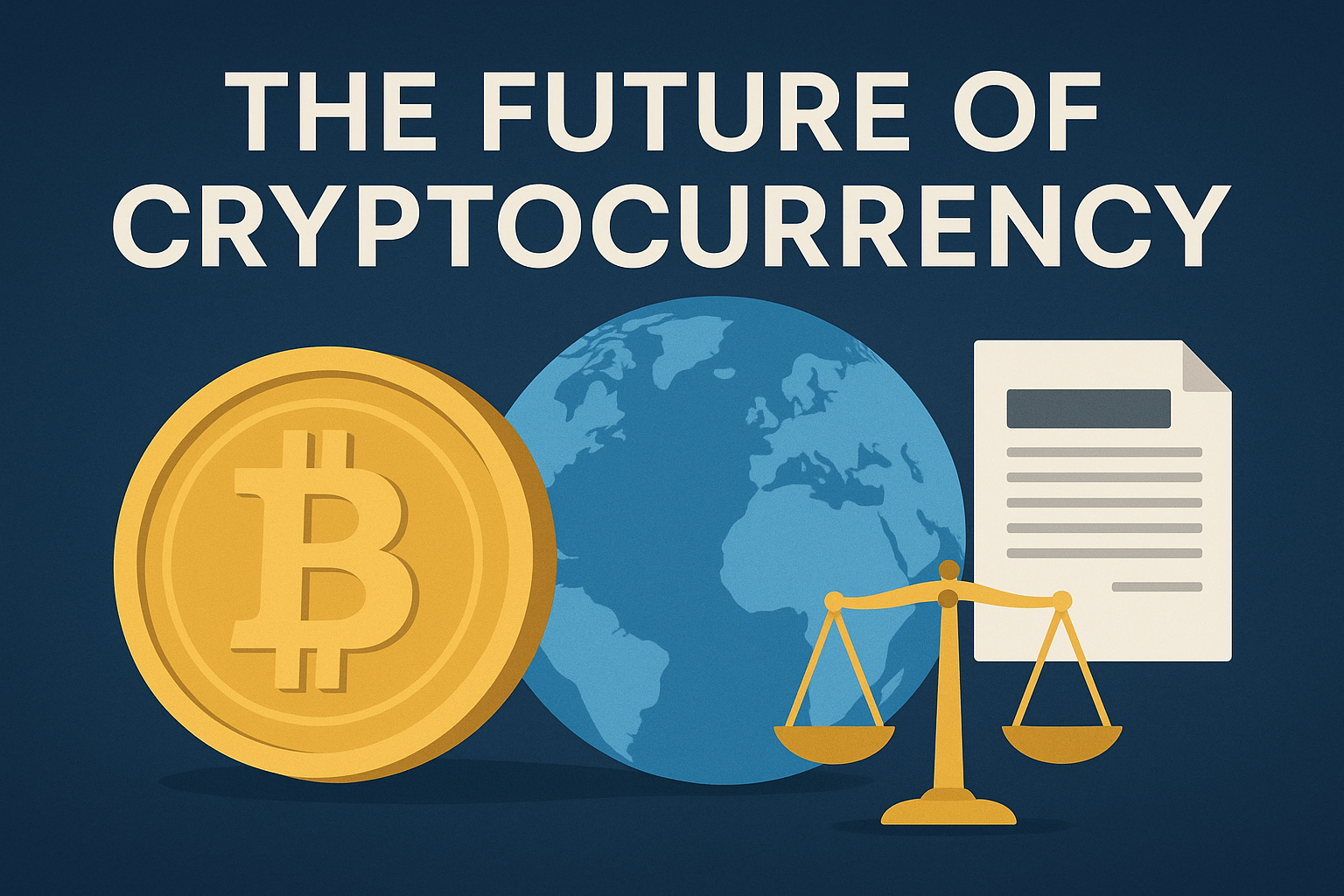
    The Future of Cryptocurrencies

    The future of cryptocurrencies remains uncertain yet promising:

    • Mainstream Adoption: More businesses and fintech platforms are accepting cryptocurrencies.
    • Government Regulations: Nations are working on legal frameworks and even Central Bank Digital Currencies (CBDCs) as alternatives.
    • Technology Growth: Innovations like the Lightning Network and DeFi (Decentralized Finance) will make crypto faster and more usable.
    • Environmental Shift: Move from energy-hungry PoW to eco-friendly PoS models.
    • Long-Term Outlook: Cryptocurrencies may evolve into digital assets similar to gold, or become widely used for payments and contracts.

    Conclusion

    Cryptocurrencies are more than just a financial trend – they represent a paradigm shift in how money works. They offer decentralization, transparency, and opportunities, but also come with volatility, risks, and regulatory challenges.

    For investors, crypto provides high returns but requires caution and awareness. For governments, it brings the challenge of regulation without stifling innovation.

    Whether cryptocurrencies become the backbone of global finance or remain speculative digital assets will depend on adoption, regulations, and technology in the coming decade.

  • Ukraine War – Causes, Sanctions, Leadership Failures & The Path to Peace

    Ukraine War – Causes, Sanctions, Leadership Failures & The Path to Peace

    Introduction

    The ongoing Ukraine war has shaken the very foundation of global peace and stability. It is not just a regional conflict but a struggle that has drawn in the world’s superpowers, caused economic disruptions, created humanitarian crises, and raised deep ethical questions about leadership, diplomacy, and the future of humanity. In this blog, we will explore how this war began, the reasons behind it, its immediate triggers, the role of sanctions, the failures of leadership, and most importantly, how peace can still be achieved.

    How Did the Ukraine War Start?

    The roots of the Ukraine war stretch back decades, largely tied to geopolitical rivalry. After the fall of the Soviet Union in 1991, Ukraine declared independence. Russia, however, continued to see Ukraine as part of its sphere of influence. Over the years, Ukraine’s increasing closeness with the European Union and NATO was perceived as a direct threat to Russia’s security.

    The situation escalated in 2014, when Russia annexed Crimea, following Ukraine’s pro-Western revolution. This marked the beginning of open hostilities. What finally triggered the war in February 2022 was Russia’s claim that NATO expansion into Ukraine was “unacceptable.” Moscow launched a large-scale invasion under the pretext of protecting Russian-speaking populations in Eastern Ukraine and ensuring its own security.

    The Immediate Factors Behind the War

    Several immediate factors accelerated the conflict:

    1. NATO Expansion: Russia strongly opposed NATO’s eastward expansion and Ukraine’s desire to join NATO.
    2. Security Concerns: Russia claimed Ukraine posed a military and strategic threat under Western influence.
    3. Internal Ukrainian Politics: President Volodymyr Zelensky pushed harder for integration with the West, which Russia interpreted as hostility.
    4. Proxy Rivalry: The U.S. and NATO saw Ukraine as a buffer state against Russian influence.

    Can Sanctions Stop a War?

    The West responded to Russia’s invasion with unprecedented financial sanctions—blocking Russian banks, freezing assets, cutting technology access, and reducing trade.

    But history shows sanctions rarely end wars directly:

    • Iran: Sanctions weakened its economy but did not stop nuclear ambitions.
    • Iraq (1990s): Sanctions devastated civilians but Saddam Hussein stayed in power until military action toppled him.
    • North Korea: Despite decades of sanctions, nuclear tests continue.

    Sanctions often hurt ordinary citizens more than ruling elites. In Russia’s case, while sanctions caused economic pain, they failed to stop the war. Instead, Russia deepened trade with countries like China, India, and Turkey, reducing Western leverage.

    Zelensky’s Leadership – Vision or Miscalculation?

    President Volodymyr Zelensky emerged as a symbol of resistance, celebrated globally for his courage. But within Ukraine and internationally, many question his decisions.

    • Did Zelensky overestimate Western support, believing NATO and the U.S. would directly intervene?
    • Has he sacrificed Ukraine’s wealth, infrastructure, and lives in a conflict where his country is caught between superpowers?
    • Could early direct talks with Russia, without interference from NATO or the U.S., have avoided years of destruction?

    The criticism is valid: wars are rarely won in battlefields, but often through diplomacy.

    The Futility of War – Who Really Wins?

    No side—neither Russia nor Ukraine—can claim a real “victory.” The destruction of cities, loss of lives, mass displacement, and economic collapse prove that in war, everybody loses.

    It is merely a narrative when leaders declare themselves winners. The truth is universal:

    “Vair se vair kabhi shant nahi ho sakta, vair sirf pyar se hi shant ho sakta hai.”
    (Hatred never ceases by hatred; hatred ceases only by love. – Lord Buddha, Dhammapada)

    This timeless wisdom reminds us that only compassion, not violence, can bring true peace.

    India’s Dilemma – The Oil Question

    India, now the most populous country in the world, faces a delicate balancing act. Its economy depends heavily on affordable energy imports.

    • Cheap Russian oil provides relief for India’s growing energy demands.
    • The U.S. criticizes India for buying oil from Russia, but China also buys, often in larger volumes, yet does not face equal punishment. Instead, India faces tariff taxes and political pressure.

    For India, energy security is not just economics—it is survival. Denying India access to affordable energy would harm not only its growth but also global supply chains and stability.

    The Path to Peace – A Way Forward

    How can this war be stopped?

    1. Direct Negotiations: Ukraine and Russia must return to the table without third-party domination.
    2. Security Guarantees: Ukraine may remain neutral, avoiding NATO membership, while Russia must respect its sovereignty.
    3. Gradual Sanctions Relief: If Russia agrees to ceasefire and troop withdrawal, sanctions could be lifted step by step.
    4. Humanitarian Focus: International aid should prioritize civilians, not weapons.
    5. Global Moral Pressure: Leaders must rise above power games and put humanity first.

    Conclusion – Humanity Is the Ultimate Victim

    The Ukraine war is not just a political battle; it is a human tragedy. The lives lost, cities destroyed, and generations traumatized will take decades to heal.

    History shows that wars end only when leaders set aside pride and listen to the voice of humanity. Russia, Ukraine, NATO, the U.S., China, and India—all must recognize that the real victory lies not in territory or influence, but in saving lives and restoring peace.

    Let this war teach the world one lesson: true leadership is not in waging war but in ending it.

  • James Van Der Beek Health Update & Life Journey

    James Van Der Beek Health Update & Life Journey

    Introduction

    James Van Der Beek may always be known to many as “Dawson Leery,” but behind the roles lies a multidimensional life that includes struggles, triumphs, creativity, family, and resilience. In recent years, his health has become a central chapter in his story—one that’s changing the way fans see him and inspiring new conversations about vulnerability, health, and the meaning of legacy.

    In this blog, I’ll Walk through his early life, rise to fame, career highlights, personal life, recent health developments, contributions beyond acting, and what the future might hold.

    Early Life & Beginnings

    • Birth & Family Background

    James David Van Der Beek was born on March 8, 1977, in Cheshire, Connecticut, USA.
    His mother, Melinda (née Weber), was a dancer and gymnastics teacher. His father, James William Van Der Beek, was formerly a minor-league baseball pitcher and later worked in telecommunications.

    Growing up, he had exposure to both athletic and artistic spheres—influences from both his mother’s creative side and his father’s sporting / business side.

    • Early Interests & Acting Spark

    As a teenager, he had a concussion during a football game which sidelined him from sports temporarily.

    During that recovery period, he turned more toward acting. By age 15, he asked his mother to take him into New York City to find an agent and try out for roles.

    His earliest professional acting experience came in off-Broadway theatre. At age 16, he was in Finding the Sun at Signature Theatre, which garnered positive reviews for him.

    These formative years laid the foundation not just for his craft, but for his willingness to take risks, adapt, and grow.

    Career: The Rise, Diversification & Reinvention

    Breakthrough with Dawson’s Creek

    • In 1997, Van Der Beek auditioned for several TV pilots; one of them was Dawson’s Creek, which he won, landing the title role of Dawson Leery.
    • Dawson’s Creek aired from 1998 to 2003 and became a cornerstone of youth and teen drama in that era. It significantly elevated his profile and made him a household name.
    • The show’s impact was not just in popularity, but in how it addressed adolescent issues—feelings, relationships, identity—which gave Van Der Beek a kind of emotional connection with many fans.

    Film and Other TV Work

    • In the late 1990s and early 2000s, he starred in films such as Varsity Blues (1998), Texas Rangers (2001), and The Rules of Attraction (2002).
    • He experimented across genres, doing both dramatic and comedic roles.
    • After Dawson’s Creek, he moved between TV guest roles, recurring characters, and sometimes self-satirical parts.
      • He appeared on Criminal Minds, How I Met Your Mother, One Tree Hill, CSI: Cyber, among others.
      • He also played a version of himself in Don’t Trust the B—- in Apartment 23, a comedic meta role that poked fun at his public persona.
      • In 2015, he took on a more serious procedural role in CSI: Cyber as Agent Elijah Mundo.
      • He joined Pose (FX) in its first season as Matt Bromley.

    Behind the Scenes: Writing, Producing & Speaking

    • Van Der Beek has not limited himself to acting. He co-created, wrote, produced, and starred in What Would Diplo Do? where he played DJ Diplo in a satirical comedic scenario. The show received favourable reviews for its humour and insight.
    • He is a keynote speaker on topics including acting, mental health, cancer survivorship, social activism, and more.

    This diversification indicates a person who doesn’t rest on past laurels, but seeks new avenues to express, challenge, and contribute.

    Personal Life & Milestones

    • Marriages & Family

    Van Der Beek first married actress Heather McComb in 2003; they divorced around 2010.

    In August 2010, he married Kimberly Brook in a small ceremony in Tel Aviv, Israel.
    Together, they have six children—four daughters and two sons.

    The Van Der Beeks have also been open about miscarriages and the emotional, physical toll that comes with fertility challenges.

    In 2020, the family moved from Los Angeles to Texas seeking a more balanced, grounded life.

    • Challenges, Vulnerability & Public Voice

    Over time, he’s become more public about mental health, personal struggle, and vulnerability. He has spoken about loss, self-worth beyond acting, identity, and mortality—all issues that resonate with many.

    • Home & Lifestyle

    He and his family have shifted toward a life less centred on Hollywood glamour, opting for more space, nature, and family time. This relocation was partly driven by health, well-being, and reconnecting to priorities.

    These facets of his personal journey show that he’s not just a celebrity avatar, but someone wrestling with the same complexities many do: love, loss, purpose, identity, and legacy.

    Health Journey & Recent Developments

    In recent years, James Van Der Beek’s health journey has become one of the most discussed chapters of his life. It’s a journey that’s painful, uncertain, but also rich with lessons and courage.

    Diagnosis & Public Revelation

    • In November 2024, Van Der Beek publicly revealed that he had colorectal cancer. He said he had been “privately dealing with this diagnosis” prior to the public disclosure.
    • In his statement, he emphasized that “there’s reason for optimism” and that he was feeling good in that moment.
    • From interviews and statements, it is clear he is undergoing treatment and actively managing his health.

    Recent Public Appearances & Health Signals

    • In September 2025, a Dawson’s Creek reunion event was organized in New York to benefit F Cancer, a cancer nonprofit group.
    • Van Der Beek had to cancel his in-person attendance due to illness—he contracted two stomach viruses.
    • Instead, he delivered a heartfelt pre-recorded video message to the audience, introducing Lin-Manuel Miranda as his “understudy” for the evening’s performance.
    • In that message, he thanked the cast, crew, and fans, expressing regret, love, and gratitude.
    • Some observers noted that in that video, he looked thinner and more fragile, triggering concern among fans over how much the disease and treatment are taking from him.

    Health Insights & Advocacy

    • In interviews, Van Der Beek has spoken about having to face mortality, reexamine identity, and lean on others. He has admitted that certain self-definitions (actor, father, husband) were stripped from him temporarily by illness, forcing a deeper reckoning.
    • His willingness to share his health struggles creates visibility for colorectal cancer, especially among younger or middle-aged men, a demographic often underrepresented in cancer awareness campaigns.
    • Through events like the reunion for F Cancer, he is contributing to fundraising, awareness, and solidarity for cancer patients and survivors.

    While we do not (and should not) have full access to his medical data or private condition, his public disclosures and appearances suggest a journey that is ongoing—fraught but attended by family, creativity, and community.

    Contributions, Influence & Legacy

    James Van Der Beek’s legacy extends beyond acting credits. Here are key areas of influence:

    1. Cultural Impact via Dawson’s Creek

    The show remains an iconic milestone in teen and youth television. Countless fans relate to its characters, storylines about identity and emotional intensities. His role as Dawson shaped how teen protagonists could express inner life, longing, and introspection.

    1. Adaptability & Reinvention

    Transitioning from a teen icon to more complex roles, self-parody, and behind-the-scenes work shows that he has resisted being typecast. His shift into producing, writing, speaking, and advocacy broadens his contributions to entertainment and public discourse.

    1. Advocacy & Vulnerability

    His openness about personal trauma, family struggles, and now health brings a human face to public discussions about mental health, masculinity, illness, and identity. Many fans resonate with seeing someone they admired not just as a perfect celebrity, but as a person navigating hardship.

    1. Support for Cancer Causes

    Through public events, collaborations, and fundraising efforts (e.g., involvement in F Cancer), he’s directing attention and resources to cancer causes. The 2025 Dawson’s Creek reunion was part of this philanthropic push.

    1. Mentorship & Public Speaking

    As a keynote speaker, he shares insights on creativity, health, resilience, identity, and belonging. His voice may inspire not just fans but aspiring actors and those facing adversity.

    His contributions lie not only in what he has done, but in how he has chosen to share himself—even in moments of fragility.

    Challenges, Fears & What We Don’t Know

    No journey is without shadows. Some of the challenges and open questions in Van Der Beek’s life include:

    • The uncertainty of a cancer prognosis is always formidable. We don’t know exactly how his body is responding to treatment, or what long-term side effects he might face.
    • Balancing family obligations and health is deeply taxing. As a husband, father of six, and public figure, the emotional and logistical pressures are enormous.
    • Emotional toll & mental health: coping with illness often brings grief, anxiety, identity loss, and stress. Van Der Beek has hinted at these struggles.
    • Sustaining a creative career amid health demands is hard. He will need to find ways to continue contributing on terms that respect his body and well-being.

    These uncertainties make his story relatable and poignant—it’s not a fairy tale, but a real confrontation with human limits and the question: how do we live meaningfully even when threatened?

    What the Future Might Hold

    While I cannot predict his future, here are some possibilities and hopes:

    • Recovery, remission, or ongoing management: If treatments go well, there’s hope for remission or long-term control.
    • Advocacy & awareness: He might intensify public roles in cancer awareness, research funding, and patient support.
    • Creative projects with adapted pace: He may continue writing, producing, or acting in projects that align with his health constraints.
    • Legacy building: He might capture his story in memoirs, documentaries, or speaking tours.
    • Mentorship & inspiration: As someone who’s lived success and struggle, he’s uniquely placed to mentor or inspire others confronting similar paths.

    Reflections & Takeaways

    James Van Der Beek’s life shows both brilliance and vulnerability. A few lessons emerge:

    • Fame is not immunity: Personal struggle can arrive even at the height of public success.
    • Identity is more than role: When titles (actor, provider) get disrupted, we must rediscover what defines us.
    • Vulnerability has power: Opening up about pain invites empathy, connection, and courage.
    • Contribution endures in many forms: Beyond credits, impact can come through raising awareness, helping others, being authentic.
    • The journey is ongoing: Health, life, art—they evolve, and the path is as important as any destination.

    Conclusion

    James Van Der Beek’s journey is one of evolution: from teenage heartthrob to multifaceted creative, from private successes to public trials. His health journey, particularly his battle with colorectal cancer, adds a deeply human chapter to a life already rich in art, love, and change.

    He remains more than a character—he’s a symbol of resilience, an advocate, a father, a husband, a creator still grappling with complexity. His story reminds us all: life is never just about the spotlight, but about how we stand in darkness, lean on others, and keep creating when the going is hardest.

  • What is a Bond and How to Invest in the Bond Market? A Beginner’s Guide

    What is a Bond and How to Invest in the Bond Market? A Beginner’s Guide

    Introduction

    When most people think about investing, the stock market comes to mind. But there is another equally powerful way to grow your money — the bond market. Unlike stocks, which represent ownership in a company, bonds are essentially loans that you, as an investor, give to governments or corporations in exchange for interest payments. Bonds are considered more stable, making them an attractive option for conservative investors, retirees, or anyone looking to diversify their portfolio.

    In this blog, we’ll break down:

    • What bonds are
    • What the bond market is
    • How people earn profit through bonds
    • The learning process for bond investing
    • Real-life examples to make things easy to understand

    What is a Bond?

    A bond is a financial instrument representing a loan made by an investor to a borrower — usually a government, municipality, or corporation.

    When you buy a bond, you are lending money to the issuer in return for:

    1. Interest payments (Coupon): Paid periodically (monthly, semi-annually, or annually).
    2. Principal repayment: Returned at the end of the bond’s maturity period.

    Example:

    If you buy a government bond worth ₹10,000 at 6% annual interest for 5 years, you’ll receive ₹600 each year as interest. After 5 years, you’ll also get back your ₹10,000 principal.

    What is the Bond Market?

    The bond market (also called the debt market or fixed-income market) is where bonds are issued and traded. It is larger than the stock market globally.

    • Primary Market: New bonds are issued here by governments or companies.
    • Secondary Market: Investors buy and sell existing bonds here, just like trading stocks.

    Types of Bonds:

    • Government Bonds (G-Secs): Issued by the central or state government, usually very safe.
    • Corporate Bonds: Issued by private or public companies; higher risk but often higher returns.
    • Municipal Bonds: Issued by local governments for infrastructure projects.
    • Zero-Coupon Bonds: Sold at a discount, pay no interest, but redeemed at full face value at maturity.

    How Do People Earn Profit from Bonds?

    There are two main ways to profit from bonds:

    1. Earning Interest Income

    The interest you receive (coupon) is fixed and predictable. For conservative investors, this is a reliable income stream.

    Example: If you buy a ₹1,00,000 bond at 7% interest, you’ll receive ₹7,000 every year until maturity.

    2. Capital Gains from Trading

    Bond prices fluctuate in the secondary market due to changes in interest rates and demand. If you sell a bond at a higher price than you bought it, you make a profit.

    Example: Suppose you buy a bond for ₹10,000. Later, interest rates in the economy fall, so your bond paying higher interest becomes attractive. Its price rises to ₹10,500, and you sell it, pocketing ₹500 as capital gain.

    How to Learn About Bonds and Bond Market Investing?

    Step 1: Understand the Basics

    • Learn terms like coupon, maturity, yield, par value, and credit rating.
    • Explore government websites like RBI (Reserve Bank of India) or SEBI for official resources.

    Step 2: Start with Safe Options

    • Government Bonds and Treasury Bills are beginner-friendly.
    • They have lower risk and help you understand how bond investing works.

    Step 3: Explore Mutual Funds and ETFs

    • If direct bond investing feels complex, you can invest in Debt Mutual Funds or Bond ETFs.
    • Professionals manage these funds, and you get exposure to a diversified bond portfolio.

    Step 4: Practice with Small Investments

    • In India, you can buy government bonds through the RBI Retail Direct platform or through brokers.
    • Start with smaller amounts to build confidence.

    Step 5: Track Market Trends

    • Bond prices move inversely with interest rates. When interest rates rise, bond prices fall and vice versa.
    • Keep an eye on central bank policies (like RBI or Federal Reserve decisions).

    Easy-to-Understand Example

    Let’s imagine:

    • You buy a 5-year government bond worth ₹50,000 at 6% interest.
    • Every year, you get ₹3,000 (6% of ₹50,000).
    • After 5 years, you also get back your original ₹50,000.

    Now, suppose after 2 years, interest rates in the economy fall to 4%. New bonds will only give 4% return. Your bond still pays 6%, so it becomes more valuable. If you decide to sell it, other investors may pay ₹55,000 for it. You earn:

    • ₹6,000 from two years of interest.
    • ₹5,000 from selling at a higher price.

    Total profit = ₹11,000 in just two years.

    Why Should You Invest in Bonds?

    • Stable Income: Regular interest payments.
    • Diversification: Balances the risk of stock market investments.
    • Safety: Government bonds are among the safest investments.
    • Flexibility: Options for both short-term and long-term goals.

    Conclusion

    The bond market might sound complex at first, but once you understand the basics, it becomes an excellent tool to grow and safeguard your wealth. Bonds are not just for the ultra-rich or financial experts — anyone can start learning and investing.

    Whether you aim for steady interest income, long-term security, or a balanced investment portfolio, bond investing can be your stepping stone towards financial stability.