Blog

  • How to Make Bihar a Developed State: Framework, Policies, Programmes, and Priorities

    How to Make Bihar a Developed State: Framework, Policies, Programmes, and Priorities

    Bihar, a land of rich culture, history, and fertile soil, has often been described as a state of paradoxes. On one hand, it was the cradle of ancient civilizations and learning hubs like Nalanda and Vikramshila; on the other, it faces persistent challenges in poverty, unemployment, infrastructure, and migration. The key question today is: How can Bihar become a developed state?

    The answer lies in a well-structured framework of reforms, policies, programmes, and priorities that align with the aspirations of its 125+ million (12.5 Crore+) people.

    The Framework for Development

    1. Vision-Oriented Governance
      • A 20-year long-term vision plan with measurable milestones.
      • Transparent, accountable, and participatory governance.
      • Decentralization of decision-making to Panchayats and Urban Local Bodies.
    2. Inclusive Growth Model
      • Focus on agriculture as the backbone.
      • Industrialization supported by MSMEs and startups.
      • Balanced regional development between rural and urban areas.
    3. Human Development Focus
      • High-quality education, healthcare, and skill training.
      • Social welfare schemes targeting women, youth, and marginalized groups.

    Policy Priorities

    1. Education and Skill Development

    • Revamp school infrastructure and teacher training.
    • Establish new universities and research hubs, reviving the legacy of Nalanda.
    • Align skill development programmes with industry demands—IT, AI, renewable energy, manufacturing.
    • Incentivize private institutions and EdTech to partner with government schools.

    2. Agriculture and Rural Economy

    • Invest in irrigation, cold storage, and agro-processing units.
    • Promote organic farming and cash crops (makhana, maize, litchi, vegetables).
    • Strengthen Farmer Producer Organizations (FPOs).
    • Digitize agriculture for better market linkages.

    3. Industrialization and Job Creation

    • Develop industrial corridors along NHs and freight corridors.
    • Prioritize textile, leather, food processing, and renewable energy sectors.
    • Establish Special Economic Zones (SEZs).
    • Ease of Doing Business reforms for startups and investors.

    4. Infrastructure Development

    • Expand road, rail, and air connectivity.
    • Invest in smart cities and digital infrastructure.
    • Strengthen flood management systems for disaster resilience.
    • Promote renewable energy to ensure 24×7 electricity.

    5. Healthcare and Social Development

    • Build medical colleges and district hospitals with advanced facilities.
    • Train more doctors, nurses, and paramedics.
    • Universal health insurance coverage for the poor.
    • Nutritional security programmes for children and women.

    Programmes and Schemes for Bihar’s Transformation

    1. “Skill Bihar Mission” – Skill-based vocational training for 10 million youth in 10 years.
    2. “Bihar Industrial Growth Fund” – State-supported credit and venture capital for MSMEs.
    3. “Agri-Tech Bihar” – Smart farming, irrigation, and e-marketplace integration.
    4. “Nalanda Knowledge City” – World-class university hub for global students and research.
    5. “Digital Bihar 2030” – Broadband connectivity in every village.
    6. “Healthcare for All” – Primary Health Centre (PHC) upgradation and AI-based telemedicine.
    7. “Green Bihar Movement” – Climate resilience, afforestation, and renewable energy expansion.

    Challenges to Overcome

    1. Unemployment and Migration – Large-scale outmigration of youth for jobs.
    2. Law and Order Concerns – Need for improved policing, judicial efficiency, and safety.
    3. Floods and Disasters – Frequent floods in North Bihar cause economic losses.
    4. Political Will and Continuity – Policies often get disrupted with political transitions.
    5. Brain Drain – Educated youth leaving for better opportunities in metro cities.
    6. Financial Constraints – Dependence on central funds limits independent action.

    The Path Forward

    • Public-Private Partnership (PPP): Encourage private investment in education, healthcare, and infrastructure.
    • Empowered Local Governance: Strengthen Panchayats and municipalities for decentralized growth.
    • Technology Integration: AI, IoT, and digital governance for transparency and efficiency.
    • Youth as Agents of Change: Engage young population in entrepreneurship, innovation, and civic participation.
    • Sustainable Development: Climate-smart agriculture, renewable energy, and eco-tourism.

    Conclusion

    The journey to transform Bihar into a developed state requires visionary leadership, robust policies, innovative programmes, and people’s participation. By prioritizing education, skill development, agriculture modernization, industrialization, healthcare, and infrastructure, Bihar can leverage its demographic dividend and historical strengths.

    If Bihar adopts a clear roadmap with accountability and inclusiveness, it has the potential not only to catch up with developed states but also to set an example of sustainable and inclusive growth for India.

  • How AI can Help India overtake USA and China in the Tech Race

    How AI can Help India overtake USA and China in the Tech Race

    Introduction

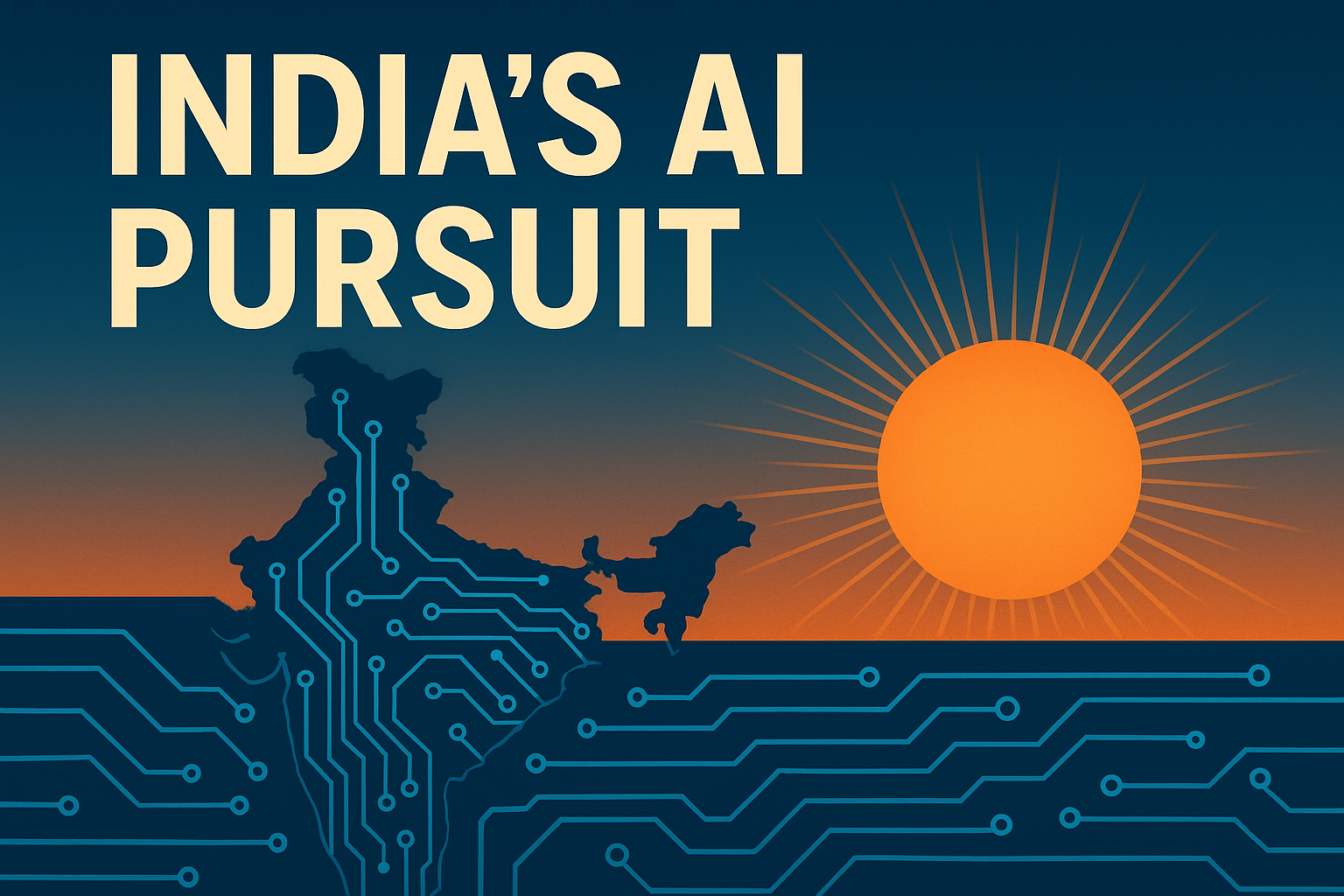
    India stands at a historic crossroads. Just as the country transformed into the software service capital of the world in the 1990s and early 2000s—fueling Silicon Valley with its IT talent—today, it has the opportunity to ride the Artificial Intelligence (AI) revolution.

    With the world’s largest young workforce, a booming digital economy, and a fast-expanding startup ecosystem, India has all the ingredients to become an AI powerhouse. Yet, unlike the USA and China, we still lag behind in critical areas like AI research, advanced computing hardware, and global product innovation.

    The big question is: Can India seize this moment, leverage AI to maximize its demographic dividend, and emerge as a world leader in technology? Let’s explore.

    Why AI Revolution Is the Need of the Hour for India

    1. Harnessing the Demographic Dividend

    India’s population is young—over 65% under the age of 35. But without meaningful employment and skill utilization, this dividend risks becoming a burden. AI offers opportunities across sectors: healthcare, education, agriculture, manufacturing, logistics, and governance.

    2. Catching Up with the Global AI Race

    • USA dominates AI with Big Tech companies like Google, Microsoft, OpenAI, and Nvidia leading the ecosystem.
    • China has made AI a national priority, investing heavily in semiconductors, surveillance tech, and AI research.
    • India is currently a consumer of AI, not yet a creator at scale. To catch up—or even surpass—India must innovate, not just serve.

    3. Driving Economic Growth

    According to PwC, AI could contribute $15.7 trillion to the global economy by 2030. For India, even a fraction of this could mean trillions in GDP gains, new jobs, and global influence.

    India’s Current AI Landscape: Achievements and Gaps

    Achievements

    • Digital Public Infrastructure (DPI): Aadhaar, UPI, ONDC—world-class platforms proving India can innovate at scale.
    • AI for Good: Startups working in AgriTech, HealthTech, and EdTech using AI for rural transformation.
    • Talent Pool: India produces 1.5M+ engineers annually, many working in AI labs globally.

    Gaps

    1. Infrastructure Deficit
      • No indigenous GPU manufacturing (Nvidia, AMD dominate globally).
      • Limited supercomputing clusters for AI training.
    2. Budget Constraints
      • USA & China invest tens of billions annually in AI R&D.
      • India’s AI allocation is only a fraction of this, spread across ministries and schemes.
    3. Research Orientation
      • Few dedicated AI research institutes.
      • Weak collaboration between academia, industry, and government.
    4. Industry Gap
      • No global AI hardware or software giants (like Nvidia, OpenAI, or DeepMind).
      • Indian startups often focus on service or applied AI, not foundational research.
    5. Policy & Execution
      • AI strategies exist but execution is fragmented.
      • Regulatory uncertainty slows innovation.

    Why India Has No Nvidia or OpenAI Yet

    • Capital and Risk Appetite: India’s ecosystem is service-driven; Venture capitalist (VCs) prefer proven models (FinTech, SaaS) over deeptech risk.
    • Hardware Weakness: Chipmaking requires massive capital, ecosystem depth, and government support—still lacking.
    • Brain Drain: India’s best AI talent often migrates to US universities and companies due to better funding and opportunities.
    • Short-Term Vision: Focus remains on IT services and BPO exports, not moonshot AI research.

    What India Needs to Do: Roadmap to Global AI Leadership

    1. Infrastructure Investment

    • Establish AI Supercomputing Hubs across India.
    • Invest in semiconductor fabs, GPU alternatives, and quantum computing.
    • Encourage Public-Private Partnerships for R&D labs.

    2. Massive AI Budget

    • Dedicate $10–15 billion annually for AI research, similar to what India did for space (ISRO) and digital public goods (UPI).
    • Offer tax incentives and grants for AI startups working on foundational models.

    3. Human Capital Development

    • Scale up AI & ML education through IITs, IIITs, Govt. and private universities.
    • Create National AI Fellowships to retain top talent.
    • Promote reskilling programs to equip the existing workforce with AI-ready skills.

    4. Build AI Champions

    • Support Indian equivalents of Nvidia, OpenAI, or DeepMind through strategic funding.
    • Encourage AI hardware startups with Make in India incentives.
    • Foster industry-academia collaboration like Stanford–Google or MIT–OpenAI ecosystems.

    5. Policy & Willpower

    • Clear AI regulatory framework encouraging innovation while ensuring ethics.
    • Appoint a National AI Mission Authority to coordinate all efforts.
    • Treat AI like a national priority—as vital as defence and space.

    Lessons from India’s IT Revolution

    In the 1990s, India became the backbone of Silicon Valley by supplying software engineers and IT services. That success story was built on talent, cost advantage, and government support for IT parks and exports.

    Similarly, if India wants to lead in AI:

    • It must go beyond being the world’s coding hub.
    • Instead, India must create AI-first products, hardware, and platforms for the world.

    Best Solutions to Overcome Challenges

    1. National AI Research Grid – A shared infrastructure of GPUs and compute resources accessible to universities and startups.
    2. India AI Fund – A sovereign fund to finance high-risk, high-reward AI research.
    3. Reverse Brain Drain Programs – Incentives for Indian AI scientists abroad to return and set up labs in India.
    4. AI Innovation Clusters – City-level hubs (like Bengaluru, Hyderabad, Pune) with dedicated AI infrastructure.
    5. Global Partnerships – Collaborations with US, EU, Japan for chip manufacturing and AI co-development.

    Conclusion: India’s AI Destiny

    India has missed some technological revolutions in the past—but AI is one it cannot afford to miss. With its talent advantage, digital public infrastructure, and entrepreneurial spirit, India can not only catch up with the USA and China but also define a unique AI model for the world: one focused on inclusion, accessibility, and societal good.

    The only missing ingredients are vision, scale, and willpower. If India acts decisively today—investing in infrastructure, fostering research, and building AI champions—it can replicate its IT success and even surpass it.

    The AI revolution is not just about technology. For India, it’s about shaping the future of its youth, economy, and global leadership. The time to act is now.

  • Going Offline in 2025: Why ‘Dumb Phones’ and Digital Detox are the New Wellness Essentials

    Going Offline in 2025: Why ‘Dumb Phones’ and Digital Detox are the New Wellness Essentials

    Introduction

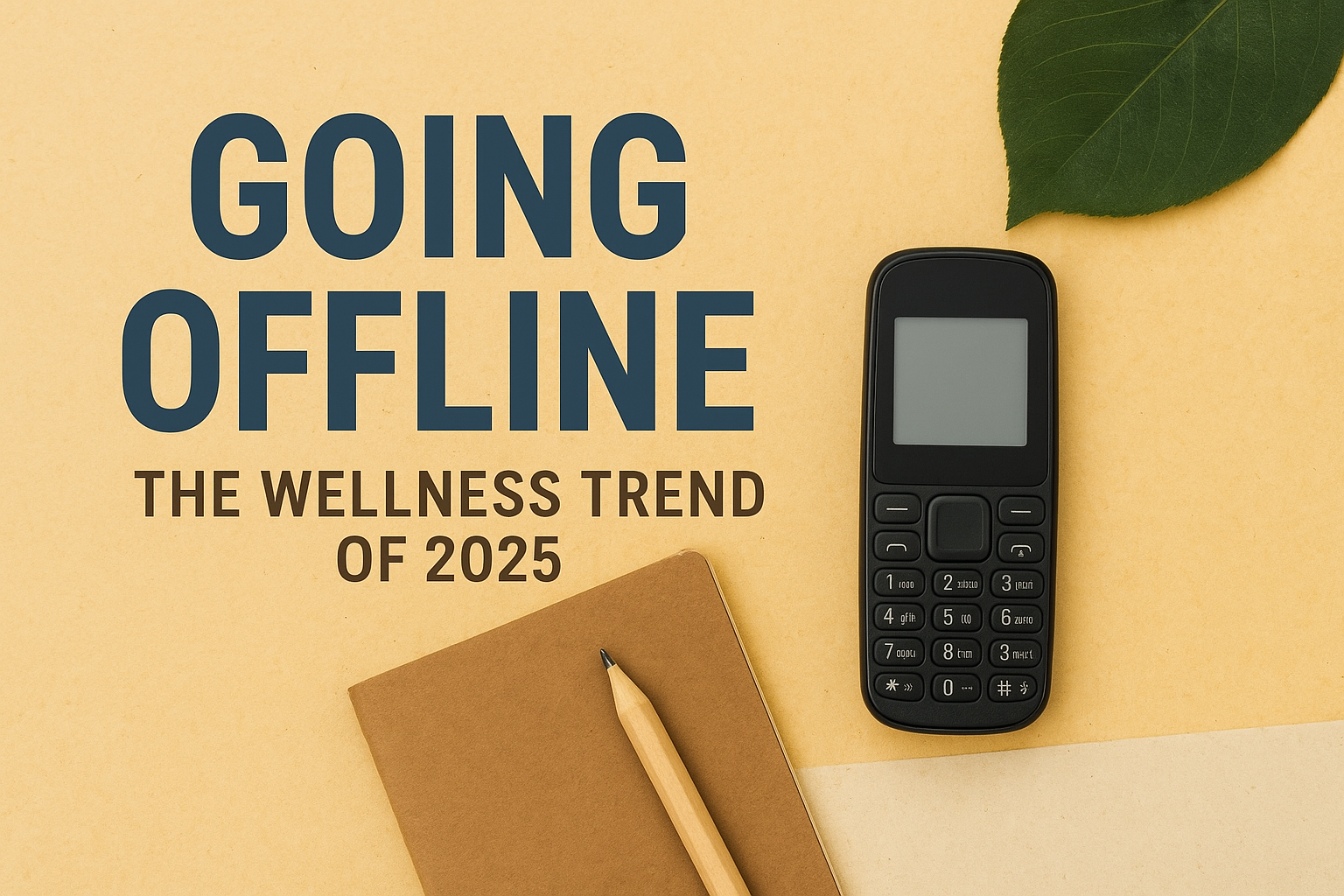
    In a hyper-connected world where every buzz, ping, and notification demands our attention, the boldest act of rebellion in 2025 is surprisingly simple: going offline. From celebrities like Ed Sheeran and Kate Beckinsale switching to old-school flip phones, to young professionals signing up for “screen-free retreats,” offline living is no longer nostalgia—it’s a full-blown wellness trend.

    Mental health experts are warning that excessive screen time is fueling anxiety, poor sleep, and even lower self-esteem across generations. As the digital noise grows louder, many are choosing to step back—embracing dumb phones, journaling, and real-world connections. This blog explores why unplugging is the new self-care, the benefits it brings, and how you can start your own offline journey in 2025.

    Why Going Offline Hits Different in 2025

    Digital detox is not a new concept, but its urgency in 2025 is unprecedented. With work, entertainment, and even social interactions glued to screens, the average person spends 7+ hours a day online. Doctors warn this is directly linked to:

    • Higher levels of stress and anxiety
    • Sleep disorders caused by blue light exposure
    • Declining focus and attention spans
    • Feelings of loneliness despite constant connectivity

    The offline movement is about reclaiming control—choosing when and how technology enters our lives, instead of being at its mercy.

    Benefits of Disconnecting

    Switching off—even for a few hours a day—has significant mind-body benefits:

    • Improved sleep: Logging off before bed helps restore natural circadian rhythms.
    • Lower stress: Disconnecting reduces mental fatigue and sensory overload.
    • Better focus & productivity: Less scrolling means more time for meaningful work.
    • Deeper relationships: Offline moments encourage genuine, face-to-face connections.
    • Mental clarity: Screen-free time fosters creativity and mindful reflection.

    Experts recommend introducing small offline rituals like screen-free meals or device-free commutes to experience these benefits without drastic lifestyle shifts.

    How to Start Your Offline Wellness Journey

    Going offline doesn’t mean becoming a hermit. It’s about balance. Here are some practical ways to begin:

    • Swap your smartphone for a dumb phone (or use both). Dumb phones allow calls and texts but eliminate constant notifications and app addiction.
    • Schedule screen-free blocks: Start with 30 minutes daily—at meals, before bed, or during morning routines.
    • Try analog hobbies: Journaling, sketching, gardening, or reading printed books.
    • Reclaim weekends: Dedicate one day (or evening) a week to offline activities like hiking, board games, or cooking with family.
    • Digital-free social gatherings: Encourage friends to leave phones in a basket at meetups.

    Spotlight: Dumb Phones—Minimalism Meets Wellness

    Once dismissed as outdated, dumb phones are making a comeback. These minimalist devices offer calling, texting, and sometimes basic maps or music—without addictive social media apps.

    Why people love them:

    • Reduce distraction and dopamine-driven scrolling.
    • Improve focus and intentional communication.
    • Offer a sense of freedom: no buzzing notifications, no endless feeds.

    Even tech enthusiasts are adopting dumb phones as a “second phone”—keeping one for work, and one for personal peace of mind.

    Common Concerns (and Solutions)

    • “I’ll miss urgent messages” → Use dual setups: keep a smartphone at home for work apps, and carry a dumb phone on weekends.
    • “What about emergencies?” → Dumb phones still allow calls and SMS, ensuring safety.
    • “I need my calendar & maps” → Many dumb phones now come with basic utilities, or use a hybrid setup (smartphone in airplane mode).
    • “Will I lose touch with friends?” → Going offline isn’t isolation—it’s about intentional connection on your terms.

    FAQs

    Q1. What is a dumb phone and why are people choosing it?

    A dumb phone is a simple mobile device offering basic functions like calling and texting. People are choosing them to reduce distractions, regain focus, and support mental well-being.

    Q2. How does digital detox improve mental health?

    Digital detox reduces exposure to constant stimuli, helping to lower stress, improve sleep, and restore attention spans.

    Q3. Can I realistically use a dumb phone in 2025?

    Yes—many users carry dumb phones as primary or secondary devices. With growing popularity, manufacturers now design sleek, modern versions that balance minimalism and functionality.

    Q4. How long before I see benefits of going offline?

    Even a week of reduced screen time can improve sleep and focus. Long-term habits amplify benefits, creating sustainable lifestyle change.

    Final Thoughts

    In 2025, going offline is more than nostalgia—it’s a wellness revolution. From dumb phones to screen-free weekends, millions are discovering that less tech often means more life.

    If you feel drained by constant scrolling, maybe it’s time to try a small detox. Start with one screen-free meal, or experiment with a dumb phone weekend. You might just rediscover mental clarity, stronger relationships, and real freedom.

  • India’s Online Gaming Revolution: What the Online Gaming Act, 2025 Means for You

    India’s Online Gaming Revolution: What the Online Gaming Act, 2025 Means for You

    Introduction: A Game-Changing Move for India’s Digital Future

    India’s online gaming industry has transformed into one of the fastest-growing digital sectors, powered by cheap internet, a young population, and the rise of mobile-first experiences. From fantasy sports to eSports tournaments and casual gaming apps, this sector has not only created entertainment but also new economic opportunities.

    But until recently, the industry was tangled in fragmented state laws, inconsistent rules, and concerns around addiction, betting, and consumer protection.

    The launch of the Promotion and Regulation of Online Gaming Act, 2025 (effective August 21, 2025) changes everything. For the first time, India has a unified national framework to regulate, promote, and safeguard the online gaming ecosystem.

    Why This Act Matters Now

    • Explosive Growth: India is home to over 450 million gamers, making it the world’s second-largest online gaming market.
    • Cultural Shift: Gaming is no longer just fun—it’s part of youth identity, socializing, and even careers.
    • Policy Urgency: Without regulation, risks of unregulated betting, misleading ads, and underage addiction were rising.

    The Act seeks to balance innovation with responsibility, ensuring India becomes a global leader in safe, skill-based gaming.

    Key Features of the Online Gaming Act, 2025

    The law introduces sweeping changes designed to build a transparent, safe, and innovative ecosystem:

    1. National Online Gaming Commission (NOGC)

    • The NOGC is the new regulatory body responsible for licensing and oversight of gaming platforms.
    • It ensures platforms meet safety, transparency, and fairness standards.

    2. Classification of Games

    • Skill-Based (Permissible): Fantasy sports, eSports, competitive strategy games.
    • Chance-Based (Prohibited): Games of pure gambling or betting.
    • Hybrid Games: Evaluated case by case by NOGC.

    3. Consumer Protection

    • Strict age-gating and responsible gaming practices mandated.
    • Influencers and celebrities face penalties if they promote illegal or unlicensed games.
    • Clear disclosures and advertising guidelines introduced.

    4. Accountability for Platforms

    • Licensing is mandatory.
    • Heavy penalties for violations, including platform bans.

    Implications Across Multiple Dimensions

    🔹 Technology & Innovation

    • Encourages development of AI-driven platforms, immersive AR/VR games, and professional eSports leagues.
    • India could position itself as a global gaming innovation hub.

    🔹 Economy & Industry

    • The sector could attract billions in investments thanks to legal clarity.
    • Boosts startups, developers, and global gaming companies entering India.
    • Estimated to add $10 billion to GDP by 2030.

    🔹 Social & Cultural Impact

    • Gaming becomes a mainstream cultural identity, similar to cricket.
    • Regulation ensures games remain healthy, skill-oriented, and family-safe.
    • Tackles addiction, misinformation, and unethical monetization.

    🔹 Legal & Policy Framework

    • Provides uniform rules across states, ending confusion from multiple regulations.
    • Influencers, platforms, and advertisers are now clearly accountable.
    • India joins countries like the US, UK, and South Korea in formalizing gaming policy.

    Opportunities & Challenges Ahead

    Opportunities:

    • Growth of eSports leagues at par with IPL.
    • More secure jobs in game development, streaming, and professional gaming.
    • International partnerships and tournaments.

    Challenges:

    • Balancing innovation with over-regulation.
    • Addressing grey areas in hybrid gaming.
    • Preventing misuse of platforms for illegal betting.

    Conclusion: A New Era for India’s Gamers and Industry

    The Online Gaming Act, 2025 is a watershed moment. It transforms India’s gaming industry from a chaotic, fragmented space into a regulated, investor-friendly, and consumer-safe ecosystem.

    For gamers, it means safer play.

    For businesses, it means clear rules and bigger opportunities.

    For policymakers, it means striking the right balance between growth and responsibility.

    Final Thought: India is not just playing games—it’s shaping the future of the global gaming industry.

  • Untitled post 583

    AI Tools in Agriculture (2025): Precision, Prediction & Prosperity

    AI is no longer just in trials—it’s becoming part of everyday farming. From apps that spot crop diseases with a photo, to sprayers that only hit weeds, to hyperlocal weather forecasts guiding irrigation—farmers now have practical tools at hand. This guide explains what’s real in 2025, who’s building it, and how smallholders in particular can benefit.

    Why AI now?

    • Better data + cheaper compute: Satellites, drones, and field IoT sensors now feed AI systems with detailed soil, crop, and weather data.
    • Policy boost (India): India’s Digital Agriculture Mission (DAM) is creating platforms like AgriStack and the Krishi Decision Support System (KDSS) to deliver advisories, surveys, and soil maps at scale. Expect more AI services to build on this foundation.

    AI Toolkit: Tools Farmers Can Use Today

    1. Crop diagnostics on your phone
      • Snap a leaf photo to get instant advice on diseases, pests, or nutrient deficiencies.
      • Example: Plantix, widely used in India.
    2. Precision spraying with computer vision
      • Smart sprayers use cameras + AI to detect weeds in real time and spray only where needed.
      • Example: John Deere See & Spray Ultimate.
    3. Aerial crop intelligence (drones & satellites)
      • High-resolution imagery highlights crop stress spots (water, nutrients, pests) for targeted action.
      • Example: Taranis and others.
    4. Hyperlocal weather for sowing/irrigation
      • AI-enhanced forecasts help farmers time sowing, watering, and harvesting.
      • Example: Skymet + IMD data.
    5. Yield prediction & market intelligence
      • AI models forecast yield and prices, helping plan inputs, storage, and sales.

    What’s New in 2025 (India & Beyond)

    • Field-ready disease AI: Indian researchers achieve real-time disease detection with deep learning and farm sensors.
    • Smarter spraying: Learnings from 2024 (nozzle grouping, speed, savings) improve 2025 deployments.
    • Policy acceleration: India’s DAM is fueling nationwide AI-based advisories.
    • Specialty crops focus: ICAR and startups push AI/IoT irrigation and disease alerts for bananas, grapes, and high-value crops.

    Mini-Case: Phone-first Disease Diagnosis

    A smallholder takes a photo of a leaf lesion; the app identifies a likely fungal issue, recommends copper-based treatment, and suggests irrigation tweaks. Tools like Plantix show how fast, image-based workflows improve recovery.

    How to Choose & Deploy AI on the Farm

    • Start with one pain point: Pick the highest ROI—weed spraying, disease diagnosis, irrigation timing, or yield forecasts.
    • Use devices you already own: Begin with apps, then add sensors later.
    • Validate locally: Test on 1–2 plots for a few weeks; compare with your usual practice.
    • Make data work for you: Use AgriStack/KDSS (India) for localized advisories.
    • Mind the last mile: Many farmers still lack consistent access—co-ops, FPOs, and KVKs can bridge the gap.

    Risks & Best Practices

    • Over-reliance: Always cross-check AI with local agronomy.
    • Data privacy: Prefer tools with on-device or federated learning.
    • Herbicide resistance: AI spraying saves chemicals but still needs integrated weed management.
    • Inclusivity: Global bodies stress open standards and gender-aware design to ensure benefits for all.

    The Bottom Line

    AI isn’t replacing farmers—it’s strengthening their decision-making. Start small with disease-diagnosis apps or AI-driven weather forecasts, then add precision spraying or drone analytics. With India’s digital infrastructure maturing, more localized, trusted AI advisories will soon reach every farm gate.

    References & Further Reading
    1. FAO: Digital agriculture can transform agrifood systems 
    2. Government of India: Digital Agriculture Mission—overview & operational guidelines 
    3. John Deere: See & Spray Ultimate—product page and field insights 
    4. Plantix: AI disease detection—GSMA overview and studies 
    5. Skymet: Hyperlocal weather access in India 
    6. ITU: Digital Agriculture—A Standards Snapshot 
    7. Taranis: AI crop intelligence 
    8. ICAR-NRCB: Smart farming push for banana farmers 

  • What is the Hemifusome? The New Organelle Scientists Just Discovered in Human Cells

    What is the Hemifusome? The New Organelle Scientists Just Discovered in Human Cells

    In 2025, science delivered a surprise that has shaken the very foundations of biology textbooks: the discovery of a new organelle inside human cells, named the hemifusome.

    For decades, we thought we had mapped every component of a cell—from the nucleus and mitochondria to the endoplasmic reticulum. Yet, hidden within our microscopic universe, this new structure managed to remain unseen until now. The finding not only rewrites our understanding of human biology but also opens up thrilling possibilities for medicine and research.

    What Is the Hemifusome?

    The hemifusome is a newly identified organelle—a specialized compartment inside cells that performs unique tasks. Just as mitochondria generate energy and ribosomes build proteins, the hemifusome appears to have its own vital role.

    Though research is still in early stages, initial studies suggest it may be involved in cellular communication and molecular transport, helping cells exchange signals and adapt to their environment. Its elusive nature meant that for years, traditional microscopes and staining techniques couldn’t detect it.

    The breakthrough came in June 2025, when advanced imaging technologies finally revealed its existence.

    Why Did It Take So Long to Discover?

    One of the most fascinating aspects of the hemifusome is how it hid in plain sight. The reasons include:

    • Limitations of past technology: Until recently, microscopes lacked the precision to capture organelles at this scale.
    • Complexity of cellular structures: Cells are dense environments, filled with overlapping organelles, making small and unusual ones difficult to spot.
    • New imaging tools: With breakthroughs in optical computing and high-resolution microscopy, scientists could finally visualize this new compartment with clarity.

    In essence, the hemifusome is a reminder that biology is still full of mysteries waiting to be uncovered.

    Why the Hemifusome Discovery Matters

    This isn’t just another academic curiosity—it could reshape science and medicine.

    1. Medical Advances

    By understanding the hemifusome’s function, researchers may uncover new pathways for treating diseases linked to cellular miscommunication, such as:

    • Neurodegenerative disorders
    • Cancer cell signaling
    • Immune system dysfunction

    2. Scientific Breakthroughs

    The discovery forces scientists to redraw the map of the human cell. Biology students may soon learn about hemifusomes alongside mitochondria and lysosomes.

    3. Technology & Research Tools

    This breakthrough also highlights how emerging technologies—like AI-assisted imaging and optical computing—are accelerating discoveries that were once impossible.

    Why You Should Care

    Even if you’re not a scientist, the hemifusome represents something universally human: our endless capacity to discover the unknown. Just when we thought we had biology figured out, the cell—our most basic unit of life—reveals a hidden surprise.

    It’s a humbling reminder that science isn’t static; it’s a living, evolving journey. And who knows? Tomorrow’s discoveries may redefine our understanding of life even further.

    Conclusion

    The hemifusome is more than a new organelle—it’s a symbol of human curiosity and scientific progress. Its discovery proves that our world, even at the tiniest scale, still holds secrets waiting to be unveiled.

    So, next time you look at a biology diagram, remember: the picture isn’t complete. The hemifusome has taken its place in the story of life, and it’s only the beginning of what we’ll learn from it.

    Stay tuned—the next hidden treasure in our cells could be right around the corner.

  • What is Fibermaxxing? The viral TikTok trend—and How to do it safely

    What is Fibermaxxing? The viral TikTok trend—and How to do it safely

    In 2025, TikTok isn’t just a place for dance challenges and memes—it’s also the birthplace of the latest wellness trend: fibermaxxing. Across social media, users are boasting about massive boosts to their fiber intake with chia seeds, beans, and high-fiber smoothies.

    The hashtag #fibermaxxing is racking up views, and the supplement industry is riding the wave—fiber supplements have ballooned into an $8.8 billion market, growing 15% in just two years.

    But as exciting (and funny) as the trend might look online, experts warn: fiber is fantastic—but not if you max out overnight. So, what exactly is fibermaxxing, why is it so popular, and how can you do it in a healthy, sustainable way?

    What Is Fibermaxxing?

    Simply put, fibermaxxing is when people dramatically increase their fiber intake—often from whole foods like beans, lentils, oats, chia seeds, or fiber powders and supplements.

    The idea is rooted in a genuine health gap: most adults don’t come close to meeting the recommended 25–38 grams of fiber per day. TikTok influencers claim fibermaxxing can:

    • Improve digestion
    • Support weight management by keeping you full longer
    • Feed your gut microbiome for better health

    While there’s science to back up these benefits, the trend exaggerates the “more is better” philosophy—sometimes leading to unintended side effects.

    The Benefits (and Risks) of Fibermaxxing

    The Pros

    • Better gut health: Fiber feeds beneficial gut bacteria, which boosts immunity and digestion.
    • Improved satiety: High-fiber meals help control appetite, reducing overeating.
    • Heart health: Soluble fiber helps lower cholesterol levels.
    • Stable energy: Fiber-rich foods prevent blood sugar spikes.

    The Cons

    Sudden, extreme increases in fiber can backfire. Common complaints include:

    • Bloating and gas
    • Abdominal cramps
    • Constipation (ironically, if water intake is too low)
    • Nutrient absorption issues if supplements are overused

    Nutritionists caution that fiber should be added gradually—jumping from 10g to 50g in a week can leave your digestive system struggling.

    How to Fibermaxx Safely: A Step-by-Step Guide

    Instead of going from zero to max, follow a slow-and-steady fiber ramp-up:

    1. Week 1: Track your current fiber intake. Add one serving of vegetables or legumes per day.
    2. Week 2: Introduce high-fiber snacks—like apples, pears, or a handful of nuts.
    3. Week 3: Add soluble fiber sources such as oats, chia pudding, or flaxseed.
    4. Week 4: Incorporate more beans, lentils, and whole grains into main meals.

    Pro Tip: Always drink plenty of water. Fiber works best when paired with hydration.

    Fibermaxxing Foods to Try

    Here’s a quick list of high-fiber foods (per serving) you can feature in meals:

    • Chia seeds (10g) – Add to smoothies or overnight oats
    • Lentils (15g) – Great for soups and dals
    • Black beans (12g) – Perfect in salads or burrito bowls
    • Oats (8g) – Breakfast staple
    • Broccoli (5g) – Easy side dish
    • Apples (4g) – Snack with natural sweetness

    (Values are approximate per 100g.)

    The TikTok Buzz: Why Fibermaxxing Went Viral

    TikTok thrives on simple, dramatic health hacks—and fibermaxxing fits perfectly. Videos often show:

    • “Day 1 vs. Day 7 of fibermaxxing” with side-by-side transformations
    • Mega “gut health smoothies” loaded with chia, oats, and beans
    • Meme-style humor around bloating or bathroom trips

    Like many TikTok health trends (remember chlorophyll water or proffee?), fibermaxxing blends real science with viral exaggeration. The challenge is separating hype from healthy habit.

    Beyond the Trend: Why Fiber Matters

    Whether you call it fibermaxxing or just “eating more plants,” the truth remains: fiber is one of the most under-consumed nutrients worldwide.

    Its benefits go far beyond TikTok clout: supporting long-term weight management, reducing chronic disease risk, and improving overall well-being.

    So even if the trend fades, the message sticks—we could all use more fiber, done right.

    Conclusion

    Fibermaxxing may be TikTok’s latest buzzword, but at its core, it’s a reminder of something timeless: our diets need more natural, fiber-rich foods.

    The key is balance—don’t max out overnight, but build fiber gradually into daily meals. That way, you will enjoy the benefits without the bloat.

    So, the next time you see #fibermaxxing on your feed, take inspiration—but keep it real. Your gut will thank you.

  • Climate Change and Green Technology in 2025: Solutions, Innovations, and Global Impact

    Climate Change and Green Technology in 2025: Solutions, Innovations, and Global Impact

    Introduction

    Climate change is the defining challenge of the 21st century. Rising temperatures, melting glaciers, extreme weather events, and biodiversity loss are no longer distant warnings—they are daily realities. The urgency to act has never been greater. In 2025, green technology has emerged as the most powerful weapon in humanity’s fight against climate change, offering sustainable solutions that combine science, innovation, and policy.

    This blog explores how green technology is reshaping industries, protecting the planet, and redefining the way we live.

    Historical Background of Climate Change Awareness

    • 1970s–1980s: Scientific research identifies global warming as a major concern.
    • 1992: Earth Summit leads to the first global climate agreements.
    • 1997: Kyoto Protocol sets emission reduction targets.
    • 2015: Paris Agreement unites nations in climate action.
    • 2020s: Climate change accelerates, but green technologies mature rapidly.

    Causes of Climate Change

    1. Fossil Fuel Dependence: Coal, oil, and gas burning for energy.
    2. Deforestation: Reduced carbon absorption due to loss of forests.
    3. Industrial Emissions: Greenhouse gases from factories and vehicles.
    4. Agriculture: Methane and nitrous oxide emissions from livestock and farming.
    5. Urbanization: Increased energy use, waste, and pollution.

    Green Technology: The Game Changer

    Green technology refers to innovations designed to reduce environmental impact and promote sustainability. Key areas include:

    1. Renewable Energy: Solar, wind, hydropower, and geothermal replacing fossil fuels.
    2. Green Buildings: Smart homes with energy-efficient materials and designs.
    3. Electric Vehicles (EVs): Transition from petrol/diesel cars to EVs and hydrogen-powered transport.
    4. Carbon Capture Technology: Machines and natural methods to absorb CO₂.
    5. Sustainable Agriculture: Precision farming, vertical farms, and organic practices.
    6. Waste-to-Energy Systems: Recycling and converting waste into usable resources.

    Opportunities of Green Technology

    • Job Creation: Millions of new jobs in renewable energy and sustainability.
    • Economic Growth: Green startups and innovation hubs expanding rapidly.
    • Health Benefits: Cleaner air, water, and reduced disease risks.
    • Energy Independence: Reduced reliance on imported fossil fuels.
    • Global Leadership: Countries leading in green tech gain political and economic influence.

    Challenges and Barriers

    1. High Initial Costs: Renewable technologies need heavy investment.
    2. Technology Gaps: Developing countries lag in adoption.
    3. Political Resistance: Powerful fossil fuel lobbies slow progress.
    4. Consumer Habits: Reluctance to shift from conventional lifestyles.
    5. Resource Scarcity: Rare earth materials needed for green tech are limited.

    Global Efforts and Policies (2025)

    • European Union: Leading in renewable targets and climate neutrality by 2050.
    • United States: Heavy investment in EV infrastructure and solar energy.
    • China: Expanding green manufacturing and solar farms.
    • India: National Solar Mission and Green Hydrogen initiatives.
    • Africa & Latin America: Renewable microgrids transforming rural communities.

    The Future Outlook (2025–2035)

    • Smart Cities: Fully sustainable cities powered by renewable grids.
    • Circular Economy: “Zero waste” becoming a mainstream policy.
    • AI in Climate Action: Predicting weather patterns, managing energy.
    • Global Carbon Market: Countries trading carbon credits for sustainability.
    • Eco-Conscious Lifestyle: Sustainability becoming a consumer preference, not just an option.

    Conclusion

    Climate change is not a future threat—it is today’s reality. But green technology offers hope. With renewable energy, sustainable practices, and eco-innovation, the world can reduce its carbon footprint and build a more resilient future.

    The real challenge is speed—can humanity adopt green solutions fast enough to keep global warming under 1.5°C? The future of the planet depends on it.

  • Artificial Intelligence and the Future of Work: Opportunities, Challenges, and Trends 2025

    Artificial Intelligence and the Future of Work: Opportunities, Challenges, and Trends 2025

    Introduction

    The world is entering a new era where Artificial Intelligence (AI) is no longer just a futuristic concept—it is a reality shaping industries, careers, and everyday life. From smart assistants like ChatGPT and Alexa to self-driving cars and advanced healthcare diagnostics, AI has become a core driver of innovation. But with progress comes disruption. The burning question is: how will AI change the future of work?

    This blog explores AI’s journey, its impact on jobs and businesses, the opportunities it creates, the challenges it brings, and what the future of work may look like by 2030.

    Historical Background of AI

    • 1950s–1970s: Early concepts of machine learning and neural networks.
    • 1980s–1990s: Expert systems and robotics growth.
    • 2000s: Rise of data-driven AI with Big Data and advanced computing.
    • 2010s–2020s: AI goes mainstream—chatbots, recommendation systems, predictive analytics, and automation tools.
    • 2025 and beyond: Generative AI, autonomous systems, and AI-powered industries are revolutionizing economies worldwide.

    How AI is Changing the Nature of Work

    1. Automation of Repetitive Jobs: Data entry, manufacturing, and customer service are increasingly handled by AI.
    2. New Job Creation: AI is generating demand for roles in machine learning, AI ethics, data science, and robotics.
    3. Decision-Making Support: Businesses use AI for predictive analytics, risk management, and financial forecasting.
    4. Remote and Hybrid Work: AI tools enable real-time collaboration, productivity tracking, and virtual training.
    5. Personalized Learning & Upskilling: EdTech platforms use AI to customize learning for individuals.

    Opportunities Brought by AI

    • Efficiency & Productivity: Automation reduces cost and increases speed.
    • Innovation: AI accelerates research in medicine, climate, and space exploration.
    • Entrepreneurship: Startups are leveraging AI for e-commerce, fintech, and digital marketing.
    • Global Collaboration: Cloud-based AI systems connect workers across borders.
    • Inclusive Development: AI can empower differently-abled individuals with assistive technologies.

    Challenges and Risks

    1. Job Displacement: Millions of routine jobs risk automation by 2030.
    2. Skill Gap: Demand for AI and digital skills far exceeds current workforce capabilities.
    3. Ethical Concerns: Issues of bias, privacy, and decision-making transparency.
    4. Economic Inequality: Richer nations may benefit more, widening global divides.
    5. Overdependence on Machines: Risk of reduced human creativity and critical thinking.

    Skills Needed for the AI Future

    To thrive in the AI-powered job market, workers must embrace future-proof skills:

    • Digital Skills: Data analysis, AI tools, coding.
    • Soft Skills: Creativity, critical thinking, problem-solving.
    • Ethics & Governance: Understanding AI responsibility.
    • Adaptability: Ability to learn new technologies quickly.

    The Global Perspective

    • United States & Europe: Leading in AI innovation, regulation, and ethical frameworks.
    • China: Aggressive investment in AI infrastructure and robotics.
    • India: Focusing on AI in healthcare, agriculture, and digital governance.
    • Africa & Latin America: Emerging markets using AI for education, e-commerce, and fintech.

    The Future of Work with AI (2025–2035)

    • Hybrid Workforce: Humans and machines working together.
    • AI in Leadership: Smart algorithms assisting in policy and business decisions.
    • Lifelong Learning: Continuous upskilling will become mandatory.
    • Human-Centered AI: Focus on designing AI that enhances, not replaces, human potential.
    • New Industries: AI in green technology, space exploration, and biotechnology will create entirely new career landscapes.

    Conclusion

    Artificial Intelligence is not just about robots taking over jobs—it is about reshaping the future of work. While automation will replace some roles, it will also unlock new opportunities, drive innovation, and demand new skill sets. The key lies in adaptability, reskilling, and responsible use of AI.

    The future will not be AI vs. humans—it will be AI with humans. The winners of tomorrow will be those who embrace AI as a partner in progress.

  • Game Theory: Concepts and Applications

    Game Theory: Concepts and Applications

    Game Theory has become one of the most fascinating and widely applicable theories in modern economics, political science, management, psychology, and even everyday decision-making. Whether it’s countries negotiating peace treaties, companies setting their product prices, or individuals deciding on personal strategies, Game Theory provides a scientific framework to predict choices and outcomes in situations of competition and cooperation.

    What is Game Theory?

    Game Theory is a mathematical framework for analysing situations of conflict, cooperation, or competition between rational decision-makers. It studies how individuals or groups (called players) make strategic choices when the outcome depends not only on their decisions but also on the decisions of others.

    In simple words: Game Theory is about predicting the behaviour of people (or organizations) when they interact and their choices affect each other.

    Who is the Propounder of Game Theory?

    The foundation of modern Game Theory was laid by John von Neumann and Oskar Morgenstern in their 1944 book “Theory of Games and Economic Behaviour”.

    Later, John Nash (Nobel Prize winner, 1994) revolutionized the theory by introducing the concept of Nash Equilibrium, which became central in understanding decision-making in economics, politics, and business.

    Key Concepts of Game Theory

    1. Players – Individuals, groups, companies, or countries involved in the game.
    2. Strategies – Plans of action available to players.
    3. Payoffs – Rewards or outcomes players receive based on choices.
    4. Equilibrium – A situation where no player has an incentive to change their strategy unilaterally.
    5. Zero-Sum Game – One’s gain is exactly another’s loss.
    6. Non-Zero-Sum Game – All players can gain or lose together (win-win or lose-lose).
    7. Cooperative vs. Non-Cooperative Games – Whether players work together or act individually.

    Importance and Relevance of Game Theory

    1. Economics and Business

    • Helps firms set pricing strategies (e.g., price wars between competitors).
    • Guides businesses in market entry, advertising, and mergers.
    • Explains bargaining and negotiation in labour markets.

    2. Politics and International Relations

    • Used in voting systems, coalition-building, and political campaigns.
    • Countries apply it in arms races, trade agreements, and diplomacy.
    • Famous example: Cold War nuclear deterrence (“Prisoner’s Dilemma” in real life).

    3. Military and Strategy

    • Used in war-game simulations to predict enemy moves.
    • Helps in defence planning and conflict resolution.

    4. Biology and Evolution

    • Explains survival strategies in animals (Evolutionary Game Theory).
    • Example: Why some animals fight and others cooperate for survival.

    5. Psychology and Sociology

    • Studies human behaviour in trust, competition, and cooperation.
    • Helps understand decision-making in groups and social dilemmas.

    6. Everyday Life

    • Deciding whether to cooperate or compete in personal and professional situations.
    • Example: Two friends deciding whether to share resources or compete for them.

    Classic Examples of Game Theory

    1. Prisoner’s Dilemma – Two criminals must decide whether to betray each other or stay silent. The best outcome is cooperation, but fear leads to betrayal.
    2. The Chicken Game – Two drivers speeding towards each other; the one who swerves first is seen as “weak,” but if neither swerves, both crash.
    3. Nash Equilibrium – A state where no player gains by changing their decision if others keep their strategies unchanged.

    Modern Applications of Game Theory

    • Online Platforms – Algorithms for auctions (e.g., Google Ads, eBay).
    • Cybersecurity – Predicting and preventing hacker strategies.
    • Climate Change Negotiations – Countries deciding how much to reduce emissions.
    • Healthcare – Strategies for vaccination policies, organ donation, and medical resource distribution.
    • Artificial Intelligence – Machine learning models often apply game-theoretic concepts.

    Why is Game Theory Still Relevant Today?

    In today’s interconnected and competitive world, Game Theory is not just an abstract mathematical tool but a practical guide:

    • In business, it helps companies outthink competitors.
    • In politics, it helps leaders anticipate rivals’ moves.
    • In daily life, it makes people smarter decision-makers.

    With globalization, digital platforms, AI, and strategic competition in every field, Game Theory remains more important than ever.

    Conclusion

    Game Theory is the science of strategic decision-making. From its origin with John von Neumann, Oskar Morgenstern, and John Nash, it has transformed economics, politics, business, biology, and even human psychology.

    Whether you’re a policymaker, entrepreneur, student, or just curious about smart decision-making, understanding Game Theory equips you with a powerful lens to analyse choices, anticipate outcomes, and succeed in a competitive environment.