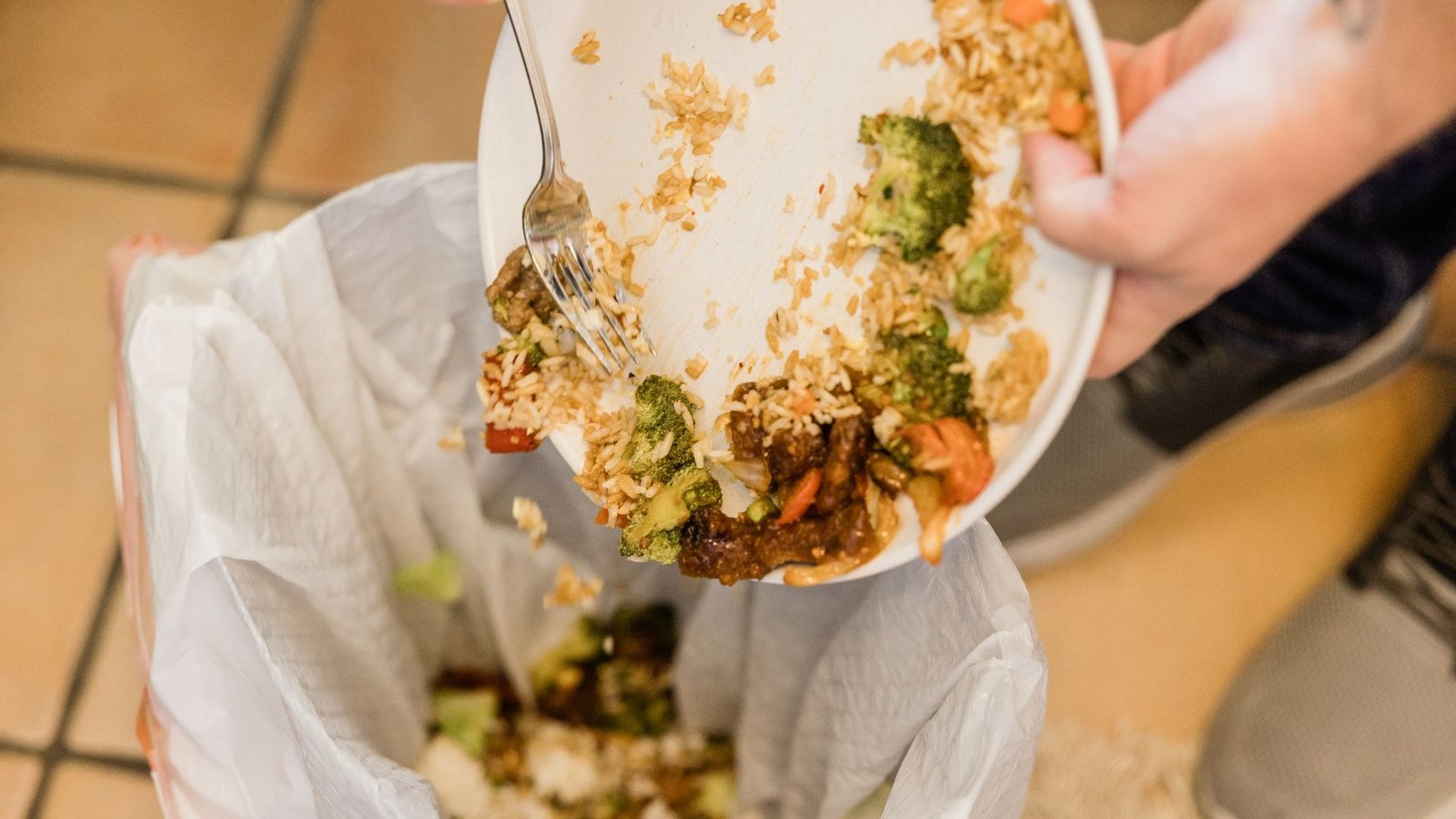
Imagine this: a farmer in Punjab carefully tends to rows of golden wheat. After months of toil, he finally harvests a bumper crop—but before it ever reaches a plate, a third of it is lost in transport, spoiled by heat and poor storage. Meanwhile, in a high-rise kitchen thousands of miles away, perfectly good spinach wilts in the fridge before it’s tossed in the bin. In another scenario somewhere in an urban India, quintals of onion produce gets destroyed in the hope of good price while people in metropolis buying onions costing more than Rs 100 per kg. These two moments—one rural, one urban—are worlds apart, yet stitched together by a shared thread: food loss and waste, one of the planet’s most overlooked environmental emergencies.
The Scale of the Problem: A Global Gluttony of Waste
According to the UNEP Food Waste Index Report 2024 in 2022 alone, the world wasted 1.05 billion tons of food, precisely about 132 kg per person per year or about one-fifth of all food available to consumers (UNEP, 2024).
- Households generated 60% of the total food waste, followed by food services (28%) and retail (12%).
- This translates to over 1 billion meals wasted every single day, while 783 million people globally go hungry (UN News, 2024).
The Environmental Toll: Wasting More Than Just Food
Food waste is not just about what’s scraped off our plates—it’s about everything that went into producing it:
- Water: Agriculture consumes 70% of global freshwater. Wasting food wastes the water used to grow it (FAO, 2013).
- Energy: Food production and transport require large amounts of fossil fuels and electricity.
- Land: Nearly 30% of global agricultural land is used to produce food that is never eaten (FAO, 2013).
- Climate: Decomposing food in landfills emits methane, a greenhouse gas 25 times more potent than carbon dioxide over a 100-year period (IPCC, 2014). Food waste contributes to 8–10% of global greenhouse gas emissions, which is nearly five times more than the entire aviation industry (UNEP, 2024).With a growing global population and rising demand for food, reducing waste is not just a choice—it’s a climate imperative. If food waste were a country, it would be the third-largest emitter of greenhouse gases, after China and the United States (FAO, 2013).
Behind the Scenes: The Science of Spoilage and Loss
Food waste is generally classified into two categories:
1. Food Loss (Pre-consumer)
Occurs during production, harvest, storage, and transport—especially in low and middle-income countries. For example, India loses up to 30-40% of fruits and vegetables post-harvest, largely due to poor cold storage infrastructure (FSSAI, 2021).
2. Food Waste (Post-consumer)
Happens at retail and consumer levels, driven by:
- Overbuying and poor planning
- Misunderstood expiry labels
- Aesthetic standards that reject “ugly” produce
In richer countries, per capita waste at household level is as high as 80–110 kg/year, compared to 6–11 kg/year in sub-Saharan Africa and South Asia (FAO, 2011).
From Waste to Wisdom: What Can Be Done?
For Governments & Industries:
- Invest in cold chains, silos, and rural roads to reduce pre-consumer loss.
- Enforce “ugly produce” acceptance in supermarkets.
- Scale digital solutions for inventory management and food redistribution (e.g., Zomato Feeding India, OLIO app).
- Launch public-private partnerships for measurement and reporting, as seen in the UK and Japan (UNEP, 2024).
For Individuals:
- Learn the difference between “best before” and “use by” dates.
- Plan meals and buy only what you need.
- Store food properly and use leftovers creatively.
- Compost kitchen waste instead of sending it to landfills.
- Support food banks and rescue organizations.
A Future Where Every Grain Counts
The challenge of food waste may seem massive, but it’s one of the few global crises that is entirely preventable. The UNEP emphasizes that with just moderate effort, countries can cut food waste in half by 2030, fulfilling UN SDG 12.3 (UNEP, 2024). It will take a recalibration of our relationship with food—from something cheap and disposable to something deeply valuable. Because when we waste food, we’re not just throwing away calories.
We’re throwing away land, labor, water, hope and the Earth’s future.
For more information
UNEP Food Waste Index Report 2024: https://www.unep.org/resources/publication/food-waste-index-report-2024.
FAO (2013). Food Wastage Footprint: Impacts on Natural Resources https://openknowledge.fao.org/server/api/core/bitstreams/1694038d-98f7-40f6-be4b-98782544b9f9/content.
IPCC (2014). AR5 Climate Change Report: IPCC Summary. https://www.ipcc.ch/report/ar5/syr/