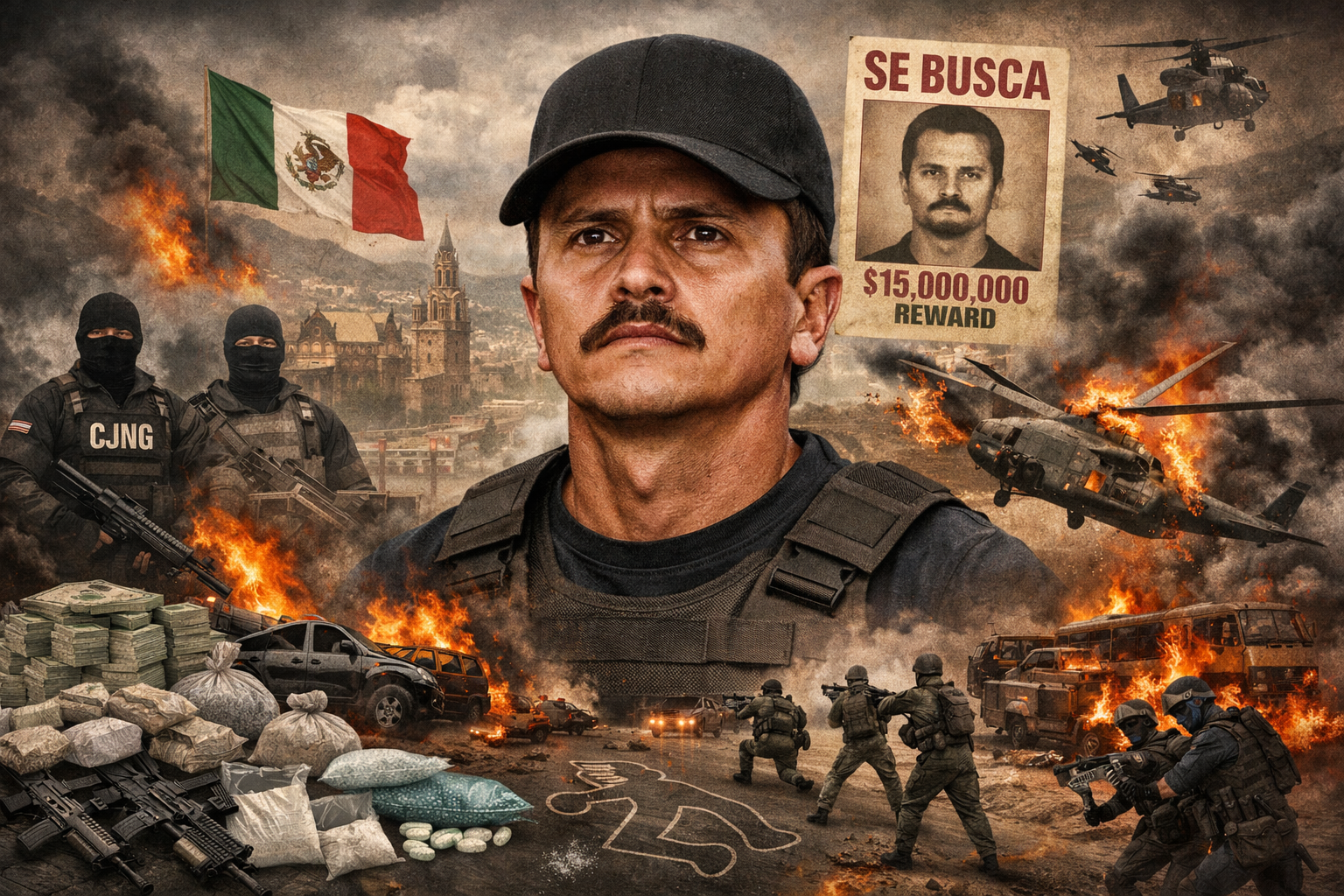
El Mencho was the alias of Nemesio Rubén Oseguera Cervantes, a Mexican drug lord who became the head of the Jalisco New Generation Cartel (CJNG) — one of the most powerful and violent organized crime groups in Mexico and the world.
Thank you for reading this post, don’t forget to subscribe!Born in the western Mexican state of Michoacán, Mencho became involved in drug trafficking in the 1990s. He was reportedly arrested in California in 1994 for heroin distribution and served nearly three years in prison before being deported back to Mexico.
Despite his notoriety, El Mencho maintained a low personal profile — avoiding public appearances and media exposure. Intelligence agencies had only old photographs of him and very limited verified audio recordings.
How He Built His Drug Empire — The Rise of CJNG
After returning to Mexico, Mencho joined the Milenio Cartel, but later broke off and founded the Jalisco New Generation Cartel (CJNG) around 2009.
Under his leadership, CJNG grew rapidly into one of the country’s most ruthless and militarized organizations. It distinguished itself with:
- Territorial expansion across most Mexican states.
- International drug trafficking, including fentanyl, methamphetamine, cocaine, and heroin into the United States and beyond.
- Military-style tactics, using armoured vehicles, drones with explosives, and rocket-propelled grenades.
- Brutal intimidation campaigns against rivals and authorities.
CJNG under El Mencho became feared not just for drugs but for sheer violence and confrontation with state forces — even downing a Mexican military helicopter in 2015 and attempting high-profile assassinations.
El Mencho’s Influence and Wealth
El Mencho wielded immense influence across Mexico:
- He controlled trafficking routes and networks not just within Mexico but into the United States and other continents.
- His cartel’s reach made him one of the most wanted fugitives globally — the U.S. government had offered a $15 million bounty for information leading to his capture or conviction.
- While exact figures are impossible to verify, CJNG’s operations generated billions of dollars annually, making El Mencho one of the most financially powerful criminal leaders in Mexico.
His influence also extended socially in some regions, where CJNG reportedly provided support and services to local communities — a tactic known to help criminal groups secure loyalty and shield their activities.
The Death of El Mencho — How It Happened
On 22 February 2026, Mexican security forces killed El Mencho during a military operation in Tapalpa, Jalisco, with the support of U.S. intelligence.
According to official reports:
- Federal troops encountered heavy gunfire during the raid.
- Mencho and several cartel members were wounded and later died, including during an attempted air transfer for medical care.
- The operation was described as one of Mexico’s most significant strikes against organized crime in recent decades.
Why Violence Erupted After His Death
Immediately after news of his death spread, coordinated violence erupted across Mexico, especially in CJNG strongholds:
- Gunmen blocked highways and set vehicles on fire.
- Clashes between cartel members and security forces broke out in multiple states.
- Airports were disrupted and civilian life interrupted as residents were urged to stay indoors.
This immediate surge in violence occurred for several reasons:
- Leadership Vacuum: Mencho had centralized CJNG power. His sudden absence left a void with no clear successor, prompting internal competition and chaos.
- Organized Armed Cells: CJNG had semi-independent, highly armed units capable of launching rapid, coordinated retaliation.
- Territorial Defence: Cartel members sought to demonstrate strength and deter government advances by attacking infrastructure and forces.
At least a dozen Mexican states saw outbreaks of unrest as CJNG fighters responded.
Impact on Mexico and Its People
El Mencho’s presence and the rise of CJNG had a profound effect:
- Millions of lives were affected by cartel violence, displacement, and insecurity.
- Tourism and daily economic activity suffered during violent flare-ups.
- The Mexican state faced one of its most significant security challenges, with cartels capable of confronting military forces directly.
The government has hailed his death as a symbolic win against organized crime, but security analysts warn that violence could persist — either from CJNG remnants or rival groups trying to seize control.
Conclusion
El Mencho’s life story — from rural origins to the helm of a criminal empire — mirrors the rise of Mexico’s most militarized cartel war. His death, while a historic blow to narcotrafficking, triggered a violent backlash that underscores the deep-rooted challenges Mexico faces in dismantling organized crime and stabilizing regions long affected by cartel dominance.
Leave a Reply