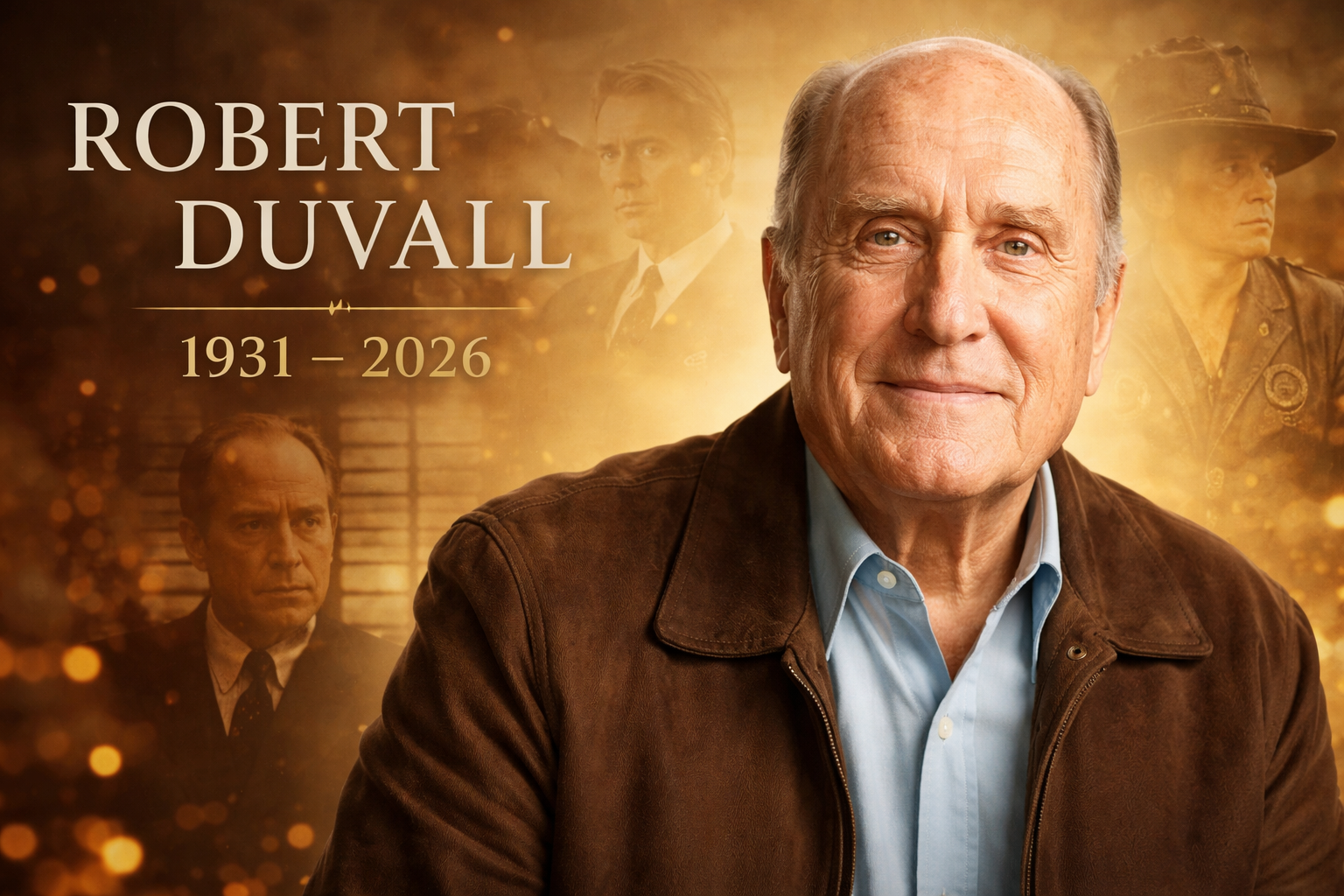
Hollywood mourns the loss of one of its most revered figures. Robert Duvall, an acting titan whose powerful and nuanced performances helped shape modern American cinema, died peacefully on February 15, 2026, at the age of 95 at his home in Middleburg, Virginia, his wife confirmed. His death marks the end of a career that spanned more than six decades, during which he delivered some of the most memorable roles in film history.
Early Life: From Naval Roots to New York Drama
Robert Selden Duvall was born on January 5, 1931, in San Diego, California. His father was a U.S. Navy admiral and his mother an amateur actress—an early hint at the blend of discipline and creativity that would define his life. Raised primarily in Annapolis, Maryland, Duvall struggled with academics but found his passion in acting.
After serving briefly in the U.S. Army, he moved to New York City to study drama at the Neighbourhood Playhouse School of the Theatre under famed acting coach Sanford Meisner. There, he formed lasting friendships with future stars like Dustin Hoffman and Gene Hackman while navigating the early uncertainties of an actor’s life.
Struggles and the First Big Break
Like many actors, Duvall’s early career was marked by small theatre roles and modest TV parts. His breakthrough came in 1962 with a haunting, silent turn as Boo Radley in To Kill a Mockingbird—a performance that, despite limited screen time, put him on Hollywood’s radar.
Throughout the 1960s, he continued building his craft across stage and screen, earning a reputation as a versatile, committed performer.
Iconic Roles That Defined an Era
The Godfather (1972)
Duvall’s portrayal of Tom Hagen, the steady consigliere to the Corleone family, became one of his most enduring roles. His calm intelligence and emotional restraint elevated a supporting character into a cornerstone of cinema history. The part earned him critical acclaim and helped define the tone of New Hollywood storytelling.
Apocalypse Now (1979)
In Francis Ford Coppola’s Vietnam War epic, Duvall delivered one of film’s most quoted lines as Lieutenant Colonel Bill Kilgore: “I love the smell of napalm in the morning.” His energetic, unforgettable performance showcased his range and charisma.
Tender Mercies (1983)
This humble, transformative role as Mac Sledge, a washed-up country singer seeking redemption, won Duvall the Academy Award for Best Actor—his crowning achievement. Critics and peers alike praised his emotional depth and understated delivery.
A Career of Range and Depth
Over seven decades, Duvall appeared in nearly 100 films and numerous television projects. Some highlights include Network, The Great Santini, Lonesome Dove, The Apostle (which he wrote and directed), and later films like Days of Thunder and The Judge. His ability to disappear into characters—whether tough, tender, flawed, or complex—set him apart from his peers.
Life Off Screen
Duvall was notoriously private. He married four times, most notably to Luciana Pedraza in 2005, with whom he shared a deep personal and artistic partnership. He found joy beyond acting in his love of tango and Argentine culture, interests reflected in his film Assassination Tango.
Passing and Global Tributes
Duvall’s wife announced that he died peacefully at home, surrounded by love and comfort. Tributes quickly poured in from across Hollywood and the global film community, with actors and institutions honouring his legacy as one of the medium’s most dedicated and influential artists.
Fellow performers remembered him not just for his screen presence, but for his humanity and quiet dedication to truth in acting.
Legacy: A Lasting Impact on Cinema
Robert Duvall’s contribution to cinema is immense:
- Seven Academy Award nominations, with one win
- Iconic roles in The Godfather, Apocalypse Now, and Tender Mercies
- Critical acclaim across genres and decades
- Influence on generations of actors and filmmakers
He helped elevate the craft of character acting, blending emotional authenticity with disciplined technique in a way few performers ever have.
Final Words
Robert Duvall’s life was a testament to the power of dedication, resilience, and artistic integrity. From struggling young actor to Hollywood icon, his journey reflects the evolution of American cinema itself. Though he has passed, his work endures—etched into the cultural fabric of film history.
Rest in peace, a true legend whose legacy will inspire artists and audiences for generations to come.