Blog

  • Top 15 Best Books for Financial Education and Wealth Creation

    Top 15 Best Books for Financial Education and Wealth Creation

    In today’s fast-changing world, financial literacy is not optional—it is essential. Whether you’re a student, salaried professional, entrepreneur, or policymaker, understanding money is the foundation of wealth creation and long-term security.

    Books remain one of the most powerful tools to build this understanding. The following 15 best books on finance have transformed millions of lives worldwide by teaching money management, investing, psychology, and wealth-building strategies.

    Why You Should Read Financial Books

    • Helps you make smarter financial decisions
    • Builds wealth mindset and discipline
    • Teaches investing, saving, and risk management
    • Reduces dependency on others for financial advice
    • Empowers long-term financial independence

    Financial literacy improves life outcomes significantly by enabling informed decision-making and economic security.

    Top 15 Books for Financial Education

    1. Rich Dad Poor Dad

    • Author: Robert T. Kiyosaki
    • Publisher: Warner Books
    • Year: 1997
    • What it teaches:
      This iconic book contrasts two financial mindsets and emphasizes financial education, asset-building, and passive income. It encourages readers to make money work for them instead of working for money.

    2. The Intelligent Investor

    • Author: Benjamin Graham
    • Publisher: Harper Business
    • Year: 1949
    • What it teaches:
      Known as the “Bible of Investing”, it teaches value investing, risk management, and long-term discipline.

    3. Think and Grow Rich

    • Author: Napoleon Hill
    • Publisher: The Ralston Society
    • Year: 1937
    • What it teaches:
      Focuses on the psychology of success, mindset, and goal-setting, which are critical for wealth creation.

    4. The Psychology of Money

    • Author: Morgan Housel
    • Publisher: Harriman House
    • Year: 2020
    • What it teaches:
      Explains how behaviour, emotions, and habits influence financial success more than technical knowledge.

    5. The Total Money Makeover

    • Author: Dave Ramsey
    • Publisher: Thomas Nelson
    • Year: 2003
    • What it teaches:
      A practical guide to debt elimination, budgeting, and financial discipline with step-by-step plans.

    6. Your Money or Your Life

    • Authors: Vicki Robin & Joe Dominguez
    • Publisher: Penguin
    • Year: 1992
    • What it teaches:
      Teaches financial independence and aligning money with life values.

    7. The Richest Man in Babylon

    • Author: George S. Clason
    • Publisher: Signet
    • Year: 1926
    • What it teaches:
      Uses simple parables to teach saving, investing, and wealth-building principles.

    8. One Up on Wall Street

    • Author: Peter Lynch
    • Publisher: Simon & Schuster
    • Year: 1989
    • What it teaches:
      Shows how everyday investors can identify winning stocks early.

    9. The Millionaire Next Door

    • Authors: Thomas J. Stanley & William D. Danko
    • Publisher: Taylor Trade Publishing
    • Year: 1996
    • What it teaches:
      Reveals that most millionaires build wealth through discipline, frugality, and smart investing.

    10. I Will Teach You to Be Rich

    • Author: Ramit Sethi
    • Publisher: Workman Publishing
    • Year: 2009
    • What it teaches:
      A modern guide to automated investing, budgeting, and financial systems.

    11. The Automatic Millionaire

    • Author: David Bach
    • Publisher: Broadway Books
    • Year: 2003
    • What it teaches:
      Highlights the power of automation and consistent investing.

    12. The Little Book of Value Investing

    • Author: Christopher H. Browne
    • Publisher: Wiley
    • Year: 2006
    • What it teaches:
      Simplifies value investing strategies for beginners.

    13. The Simple Path to Wealth

    • Author: JL Collins
    • Publisher: CreateSpace
    • Year: 2016
    • What it teaches:
      Focuses on index investing and financial independence.

    14. Let’s Talk Money

    • Author: Monika Halan
    • Publisher: Harper Business India
    • Year: 2018
    • What it teaches:
      An excellent Indian-context book explaining insurance, mutual funds, and tax planning.

    15. Rule #1 Investing

    • Author: Phil Town
    • Publisher: Crown Business
    • Year: 2006
    • What it teaches:
      Teaches a simple framework for stock selection and long-term investing.

    Key Lessons from These Books

    Across these books, some universal principles emerge:

    • Invest early and consistently
    • Focus on assets, not liabilities
    • Control emotions in financial decisions
    • Understand risk and diversification
    • Build multiple income streams

    Final Thoughts

    Reading these books is like getting a lifetime MBA in personal finance—for a fraction of the cost. Whether you’re just starting or already investing, these books provide timeless wisdom that can transform your financial future.

    If you truly want to achieve financial independence, start with just one book—and take action.

  • Lord Hanuman: The Eternal Symbol of Strength, Devotion, and Wisdom

    Lord Hanuman: The Eternal Symbol of Strength, Devotion, and Wisdom

    Lord Hanuman is one of the most revered and beloved deities in Hindu tradition. Worshipped across India and beyond, he is known as the embodiment of strength (Bala), wisdom (Buddhi), devotion (Bhakti), and selfless service (Seva). His life and deeds are primarily narrated in sacred texts like the Ramayana, Mahabharata, Ramcharitmanas, and various Puranas.

    1. Birth of Lord Hanuman

    Lord Hanuman was born to Anjana (or Anjani) and Kesari, a vanara (monkey chief). He is also known as the son of the wind god Vayu, hence called Pavan Putra.

    Divine Birth Story

    According to scriptures, King Dasharatha performed a yajna to beget sons. The sacred pudding (payasam) was distributed among his queens. A portion of it, carried by the wind god Vayu, reached Anjana, leading to the divine birth of Hanuman.

    Sanskrit Verse (Hanuman Janma Stuti)

    अञ्जनीसुतं वायुपुत्रं महाबलं
    रामेष्टं फाल्गुनसखं पिङ्गाक्षं अमितविक्रमम्।”

    2. Why is He Called “Hanuman”?

    The name “Hanuman” comes from the Sanskrit word “Hanu” (jaw) and “man” (prominent or disfigured).

    Story Behind the Name

    As a child, Hanuman mistook the rising sun for a fruit and leapt to swallow it. During this event, Indra struck him with his thunderbolt (Vajra), injuring his jaw (hanu). This led to the name Hanuman.

    3. Bal Leela (Childhood Tales)

    Hanuman’s childhood was full of divine mischief and miraculous feats.

    The Sun-Swallowing Episode

    Believing the sun to be a ripe fruit, young Hanuman flew into the sky to eat it. This caused cosmic imbalance.

    • Indra struck him with a thunderbolt.
    • Hanuman fell unconscious.
    • His father Vayu became angry and withdrew air from the universe.

    To pacify him, gods granted Hanuman immense powers and boons.

    Boons Given to Hanuman

    • Immunity from weapons
    • Immense strength and speed
    • Wisdom and longevity

    4. Why is He Called Pavan Putra?

    Hanuman is called Pavan Putra (Son of Wind) because Vayu played a key role in his birth and protected him throughout his life.

    Wind symbolizes:

    • Life force (Prana)
    • Speed and agility
    • Omnipresence

    5. Role in the Ramayana

    Hanuman is the greatest devotee (Bhakta) of Lord Rama.

    Major Contributions

    • Found Sita in Lanka
    • Burned Lanka (Lanka Dahan)
    • Brought Sanjeevani Booti to save Lakshmana
    • Served Rama with unmatched devotion

    Famous Sanskrit Verse

    यत्र यत्र रघुनाथकीर्तनं
    तत्र तत्र कृतमस्तकाञ्जलिम्।
    बाष्पवारि परिपूर्णलोचनं
    मारुतिं नमत राक्षसान्तकम्॥”

    6. Why is Hanuman Called Sankat Mochan?

    Hanuman is called Sankat Mochan (remover of troubles) because:

    • He removes fear, obstacles, and suffering
    • Devotees believe he protects from evil forces
    • His name itself is considered powerful

    From Hanuman Chalisa

    संकट से हनुमान छुड़ावे,
    मन क्रम वचन ध्यान जो लावे।”

    The Hanuman Chalisa is widely recited for relief from difficulties.

    7. Symbol of Strength, Wisdom, and Devotion

    Strength (Bala)

    Hanuman possesses unmatched physical and inner strength.
    He lifted mountains and defeated demons effortlessly.

    Wisdom (Buddhi)

    Despite immense power, he remained humble and wise.

    बुद्धिर्बलं यशो धैर्यं निर्भयत्वं अरोगता।
    अजाड्यं वाक्पटुत्वं हनुमत्स्मरणाद्भवेत्॥”

    Devotion (Bhakti)

    Hanuman’s devotion to Rama is the highest example of selfless love.

    He once said:

    “When I see myself as body, I am your servant;
    when I see myself as soul, I am part of you.”

    8. Other Names of Lord Hanuman

    Hanuman is known by many names, each reflecting his qualities:

    • Anjaneya – Son of Anjana
    • Kesari Nandan – Son of Kesari
    • Bajrangbali – Strong as thunderbolt
    • Maruti – Son of Marut (wind)
    • Mahavir – The great hero
    • Kapish – Lord of monkeys
    • Ramdoot – Messenger of Rama
    • Sankat Mochan – Remover of troubles

    9. Hanuman in Other Scriptures

    • In the Mahabharata, Hanuman appears on Arjuna’s chariot flag (Kapi Dhwaj).
    • In Puranas, he is considered Chiranjeevi (immortal).

    10. Spiritual Significance

    Hanuman represents:

    • Control over mind and senses
    • Perfect balance of power and humility
    • Devotion without ego

    He teaches that:

    True strength lies in service, humility, and faith.

    11. Popular Hanuman Mantras

    Hanuman Mool Mantra

    हं हनुमते नमः”

    Bajrang Baan Invocation

    जय हनुमान ज्ञान गुण सागर”

    Protection Mantra

    नमो भगवते आञ्जनेयाय महाबलाय स्वाहा”

    Conclusion

    Lord Hanuman is not just a mythological figure but a living symbol of courage, devotion, and righteousness. His life inspires millions to overcome challenges with faith and strength. Whether as Sankat Mochan, Pavan Putra, or Ram Bhakta, Hanuman continues to guide humanity on the path of truth and devotion.

  • Bhagwan Mahavir: What is his Teachings & Philosophy

    Bhagwan Mahavir: What is his Teachings & Philosophy

    Introduction

    Bhagwan Mahavir, the 24th Tirthankara of Jainism, stands among the greatest spiritual figures in Indian history. His teachings of non-violence (Ahimsa), truth (Satya), and renunciation have shaped not only Jain philosophy but also influenced global thinkers and movements—including leaders like Mahatma Gandhi.

    Mahavir’s life represents the ultimate journey from material attachment to spiritual liberation (moksha). His philosophy remains deeply relevant in today’s world, marked by conflict, environmental crises, and ethical dilemmas.

    Birth and Early Life

    Bhagwan Mahavir was born in 599 BCE in Kundagrama, near present-day Vaishali in Bihar.

    Parents and Family

    • Father: King Siddhartha, a ruler of the Jnatrika clan
    • Mother: Queen Trishala, also known as Priyakarini
    • He was born into a royal Kshatriya family

    At birth, he was named Vardhamana, meaning “one who grows or increases prosperity.” According to Jain texts, his birth brought prosperity and happiness to the kingdom.

    Why is He Called “Mahavir”?

    The name Mahavir, meaning “Great Hero”, was given to him due to his extraordinary courage and fearlessness.

    Several legends highlight his bravery:

    • He remained calm even when attacked by animals or hostile beings
    • He showed complete control over fear and physical suffering
    • His spiritual courage surpassed worldly valour

    Thus, Mahavir symbolizes inner strength—the victory over self, not others.

    Renunciation and Spiritual Quest

    At the age of 30, Mahavir renounced his royal life in search of truth and liberation.

    He undertook:

    • Severe austerities
    • Deep meditation
    • Complete detachment from material possessions

    For 12 years, he practiced intense penance, enduring:

    • Hunger and thirst
    • Physical hardships
    • Social rejection

    Finally, he attained Kevala Jnana (omniscience)—the highest spiritual knowledge.

    Historical Context: Kings and Era

    Mahavir lived during a transformative period in ancient India, around the 6th century BCE.

    Prominent rulers of his time included:

    • Bimbisara
    • Ajatashatru

    This era also saw the rise of other spiritual traditions, including Buddhism, founded by Gautama Buddha.

    Teachings of Bhagwan Mahavir

    Mahavir did not claim to create a new religion but revived and restructured existing Jain traditions.

    Core Teachings (Five Great Vows – Panch Mahavrata)

    1. Ahimsa (Non-violence)
      Do not harm any living being—physically, mentally, or verbally.
    2. Satya (Truthfulness)
      Always speak the truth without causing harm.
    3. Asteya (Non-stealing)
      Do not take anything not willingly given.
    4. Brahmacharya (Celibacy/Chastity)
      Control of desires and sensual pleasures.
    5. Aparigraha (Non-possession)
      Renounce material attachment and greed.

    Philosophy of Mahavir

    Mahavir’s philosophy is deeply logical, ethical, and universal.

    1. Ahimsa (Non-Violence)

    Ahimsa is the cornerstone of Jain philosophy.

    • Every living being, from humans to microorganisms, has a soul
    • Violence leads to karmic bondage
    • Compassion leads to liberation

    This principle later influenced global peace movements.

    2. Anekantavada (Theory of Multiple Perspectives)

    Mahavir taught that truth is not absolute but multifaceted.

    • Reality can be understood from different viewpoints
    • No single perspective holds complete truth
    • Encourages tolerance and intellectual humility

    This idea promotes dialogue and coexistence in diverse societies.

    3. Syadvada (Theory of Conditional Predication)

    Closely related to Anekantavada, Syadvada teaches:

    • Statements are conditional (“maybe,” “from a certain perspective”)
    • Truth depends on context

    This avoids dogmatism and rigid thinking.

    4. Karma and Liberation

    Mahavir emphasized:

    • Karma binds the soul to the cycle of birth and death
    • Liberation (moksha) is achieved through:
      • Right faith (Samyak Darshan)
      • Right knowledge (Samyak Jnana)
      • Right conduct (Samyak Charitra)

    Important Sutras and Principles

    Some of Mahavir’s core philosophical expressions include:

    • “Ahimsa Parmo Dharma” (Non-violence is the highest religion)
    • “Live and let live”
    • “Parasparopagraho Jivanam”
      (All life is bound together by mutual support and interdependence)

    These principles highlight ecological balance, coexistence, and ethical living.

    Why is Bhagwan Mahavir Worshipped in Jainism?

    Mahavir is revered because:

    • He achieved perfect knowledge and liberation
    • He showed a practical path to moksha
    • He redefined ethics with universal applicability
    • He emphasized self-discipline over ritualism

    For Jains, he is not a god in the creator sense but a perfected soul (Siddha) who serves as an ideal.

    Mahavir and Jain Community

    Mahavir organized his followers into a structured community:

    • Monks (Muni)
    • Nuns (Aryika)
    • Laymen (Shravaka)
    • Laywomen (Shravika)

    This system ensured the preservation and spread of Jain teachings.

    Death and Nirvana

    Mahavir attained nirvana (liberation) in 527 BCE at Pawapuri.

    This day is celebrated as Diwali in Jain tradition.

    Relevance of Mahavir’s Teachings Today

    In modern times, Mahavir’s teachings are more relevant than ever:

    1. Non-violence in a Violent World

    Promotes peace, tolerance, and conflict resolution.

    2. Environmental Sustainability

    Aparigraha encourages minimalism and conservation.

    3. Intellectual Tolerance

    Anekantavada supports diversity of thought.

    4. Ethical Living

    His teachings promote honesty, discipline, and compassion.

    Conclusion

    Bhagwan Mahavir was not just a religious leader but a philosopher of humanity. His teachings transcend religion and offer a universal guide for ethical and spiritual living.

    In an age of excess, conflict, and division, Mahavir’s message is clear:

    Control desires, respect all life, and seek truth with humility.

    His life remains a timeless beacon, guiding humanity toward peace, harmony, and liberation.

  • Taiwan: The Island That Powers the Modern World

    Taiwan: The Island That Powers the Modern World

    Taiwan, officially known as the Republic of China, is a small island nation in East Asia that has emerged as one of the most strategically important economies in the world. Despite its modest size, Taiwan sits at the heart of global technology supply chains, particularly in semiconductor manufacturing, and plays a crucial role in geopolitical dynamics involving the People’s Republic of China and the United States.

    This article explores Taiwan’s journey—from its ancient past to becoming the world’s semiconductor powerhouse—and the geopolitical tensions that define its present.

    1. Geography of Taiwan

    Taiwan is located in the western Pacific Ocean, about 180 km off the southeastern coast of China. It lies along the “First Island Chain,” a strategic maritime line in East Asia.

    Key Features:

    • Capital: Taipei
    • Terrain: Mountainous (over 60% forested)
    • Climate: Subtropical in the north, tropical in the south
    • Natural hazards: Earthquakes and typhoons

    Its geographic location makes it a critical node for global trade routes and military strategy.

    2. Historical Evolution of Taiwan

    Ancient & Indigenous Roots

    Taiwan was originally inhabited by Austronesian indigenous peoples, with cultural links to Southeast Asia and the Pacific Islands.

    Colonial Period

    • 17th century: Controlled by Dutch and Spanish settlers
    • 1683: Annexed by Qing China
    • 1895–1945: Colonized by Japan

    Modern Political Formation

    After World War II, Taiwan was handed to the Republic of China. In 1949, after the Chinese Civil War:

    • The Chiang Kai-shek government fled to Taiwan
    • Mainland China became the People’s Republic of China

    Thus began the “Two Chinas” issue, still unresolved today.

    3. Demography and Ethnicity

    Taiwan has a population of around 23–24 million.

    Ethnic Composition:

    • Han Chinese (≈95%)
      • Hoklo (majority)
      • Hakka
    • Indigenous Austronesian groups (≈2–3%)

    Language:

    • Mandarin (official)
    • Taiwanese Hokkien
    • Hakka dialects
    • Indigenous languages

    Taiwan is one of the most urbanized societies in Asia.

    4. Culture and Society

    Taiwanese culture is a blend of:

    • Traditional Chinese heritage
    • Japanese colonial influences
    • Modern Western values

    Cultural Highlights:

    • Festivals: Lunar New Year, Dragon Boat Festival
    • Cuisine: Bubble tea (originated here), street food culture
    • Religion: Mix of Buddhism, Taoism, folk beliefs

    Taiwan is also known for its liberal democracy, freedom of speech, and progressive policies in Asia.

    5. Political System

    Taiwan is a democratic republic with:

    • Directly elected President
    • Multi-party system
    • Independent judiciary

    Major parties:

    • Democratic Progressive Party (DPP)
    • Kuomintang (KMT)

    Taiwan functions as a sovereign state, but its international recognition is limited due to pressure from China.

    6. Economic Transformation: From Agriculture to High-Tech

    Taiwan’s economic rise is often called an “East Asian Miracle.”

    Phases of Growth:

    1. 1950s–60s: Land reforms and agriculture
    2. 1970s–80s: Export-oriented industrialization
    3. 1990s–present: High-tech innovation

    Today, Taiwan is a global leader in:

    • Electronics
    • Information technology
    • Semiconductors

    7. Taiwan as the World’s Semiconductor Hub

    At the heart of Taiwan’s success lies Taiwan Semiconductor Manufacturing Company (TSMC).

    Why Taiwan Leads in Chip Manufacturing:

    • Produces over 60% of global semiconductors
    • Controls over 90% of advanced chips
    • TSMC alone holds about 64% of global foundry market share

    Key Factors Behind Success:

    1. Innovative Business Model

    TSMC pioneered the “pure-play foundry model”—manufacturing chips for other companies rather than designing its own

    2. Government Support

    • Heavy investment in R&D
    • Institutions like Industrial Technology Research Institute (ITRI)

    3. Skilled Workforce

    Strong engineering education and technical expertise

    4. Cluster Ecosystem

    Close integration of:

    • Suppliers
    • Designers
    • Manufacturers

    5. Economies of Scale

    Huge investments (billions of dollars per fab) created barriers to entry

    8. Raw Materials for Chip Manufacturing

    Semiconductor manufacturing relies on:

    Key Inputs:

    • Silicon wafers (from sand/quartz)
    • Rare gases (neon, argon)
    • Chemicals (photoresists, acids)
    • Ultra-pure water
    • Advanced machinery (e.g., EUV lithography)

    Taiwan’s Advantage:

    Taiwan does not have abundant raw materials, but excels because:

    • It imports raw materials efficiently
    • Focuses on high-value processing, not extraction
    • Maintains strong global supply chains

    This shows Taiwan’s success is based on technology, not natural resources.

    9. Why Taiwan Became a Global Manufacturing Hub

    Taiwan’s rise is not accidental. It is driven by:

    Core Drivers:

    • Strategic state planning
    • Export-oriented policies
    • Strong SME ecosystem
    • Integration with global markets
    • Focus on precision manufacturing

    Unlike resource-rich countries, Taiwan built “knowledge capital” instead of natural capital.”

    10. Geopolitical Rivalry: Taiwan, China, and the USA

    This is one of the most sensitive geopolitical issues today.

    China’s Position

    • Considers Taiwan a breakaway province
    • Seeks reunification (peaceful or forceful)
    • Opposes Taiwan’s independence

    Taiwan’s Position

    • Functions as a sovereign democratic state
    • Majority supports maintaining status quo
    • Increasing identity separate from China

    United States’ Position

    • Follows “One China Policy” (recognizes China diplomatically)
    • But supports Taiwan militarily and economically
    • Provides arms and strategic backing

    Why Taiwan Matters Globally

    1. Semiconductor Dependence

    Global tech giants depend on Taiwan’s chips

    2. Strategic Location

    Control over Taiwan affects Indo-Pacific security

    3. Economic Stability

    Any conflict could disrupt global supply chains

    What the World Thinks

    • Most countries follow “strategic ambiguity”
    • Recognize China diplomatically
    • Maintain economic ties with Taiwan

    Taiwan is thus diplomatically isolated but economically indispensable.

    11. The “Silicon Shield” Concept

    Taiwan’s semiconductor dominance acts as a deterrent against conflict:

    • The world depends on Taiwan’s chips
    • Any disruption would hurt all major economies

    This is often referred to as Taiwan’s “Silicon Shield.”

    12. Challenges Facing Taiwan

    • Rising tensions with China
    • Overdependence on semiconductor sector
    • Aging population
    • Global competition (USA, South Korea, China)

    Conclusion

    Taiwan is a remarkable example of how a small island with limited natural resources can become a global powerhouse through strategic planning, technological innovation, and human capital development.

    Its dominance in semiconductor manufacturing has not only shaped the global economy but also elevated its geopolitical importance. However, its future remains closely tied to the evolving power dynamics between China and the United States.

    Taiwan today stands at the intersection of technology, economics, and geopolitics—making it one of the most important places in the world to understand in the 21st century.

  • From Persia to Iran: A Civilizational Transformation Across Millennia

    From Persia to Iran: A Civilizational Transformation Across Millennia

    The story of Persia’s transformation into modern Iran is one of the most profound civilizational transitions in human history. It spans ancient empires, religious evolution, cultural resilience, and revolutionary political change. At its heart lies the rise and decline of Zoroastrianism, the spread of Islam, and the shaping of a unique Iranian identity.

    1. Ancient Persia: The Birth of a Civilization

    The land we today call Iran was historically known as Persia, derived from the region of Pars (Fars) in southern Iran.

    Achaemenid Empire (c. 550–330 BCE)

    Founded by Cyrus the Great, this empire became one of the largest in ancient history. It stretched from the Indus Valley to Egypt and was known for:

    • Administrative efficiency
    • Religious tolerance
    • Cultural integration

    Zoroastrian ethical principles—truth (asha) and righteousness—guided governance.

    Subsequent Persian Empires

    • Parthian Empire (247 BCE – 224 CE)
    • Sasanian Empire (224–651 CE)

    The Sasanian period marked the peak of Persian cultural and religious identity, with Zoroastrianism as the state religion.

    2. Zoroastrianism: Ancient Roots and Philosophy

    Zoroastrianism is among the world’s oldest monotheistic religions, founded by Zarathustra (also called Zoroaster), likely around 1500–1000 BCE.

    Core Beliefs

    • Worship of one supreme god: Ahura Mazda
    • Dualism: Good (truth/light) vs Evil (falsehood/darkness)
    • Moral responsibility: Good thoughts, good words, good deeds

    Its roots lie in the Indo-Iranian religious tradition, closely related to early Vedic culture in India.

    Zoroastrianism influenced later religions, including Judaism, Christianity, and Islam, particularly concepts like heaven, hell, and judgment.

    3. The Fall of Persia and the Rise of Islam (7th Century)

    The Arab-Islamic conquest (633–651 CE) marked a turning point.

    • The Sasanian Empire collapsed
    • Islam became politically dominant
    • Zoroastrians were given dhimmi (protected but subordinate) status

    Conversion to Islam

    Conversion was gradual, not immediate:

    • Economic incentives (tax relief from jizya)
    • Social mobility under Islamic rule
    • Political pressure

    By the 10th century, most Persians had converted to Islam.

    4. What Happened to the Zoroastrian Community?

    Decline and Migration

    After the conquest:

    • Many Zoroastrians converted to Islam
    • Others faced discrimination and persecution
    • A group migrated to India (Gujarat), becoming the Parsis

    Zoroastrians in India (Parsis)

    • Preserved ancient traditions
    • Became economically influential (e.g., Tata family)
    • Today: ~60,000 in India

    In Iran

    • Continued decline due to persecution and marginalization
    • Safavid era (16th–18th century) intensified forced conversions

    By modern times:

    • Only 15,000–25,000 Zoroastrians remain in Iran

    5. Persia Becomes Iran: Identity and Nationalism

    The name “Iran” comes from “Aryānām” (Land of the Aryans) and was historically used internally.

    In 1935, Reza Shah Pahlavi officially requested the international community to use the name Iran instead of Persia.

    Pahlavi Era (1925–1979)

    • Emphasized pre-Islamic Persian heritage
    • Promoted Zoroastrian legacy as national identity
    • Modernization and Westernization

    6. How Iran Became an Islamic State

    Although Islam arrived in the 7th century, Iran’s distinct Islamic identity evolved later.

    Safavid Revolution (16th Century)

    Under Shah Ismail I:

    • Iran was converted to Shia Islam
    • Religious uniformity was enforced
    • Iran became the global centre of Shia Islam

    This marked a defining shift:

    • From Zoroastrian Persia → Sunni Islam → Shia Islamic Iran

    7. The Iranian Revolution (1979): Causes and Impact

    The 1979 Islamic Revolution transformed Iran into a theocratic Islamic republic.

    Key Figure

    • Ruhollah Khomeini

    Major Causes

    1. Authoritarian rule of the Shah
    2. Western influence (especially U.S.)
    3. Economic inequality and inflation
    4. Cultural backlash against modernization
    5. Religious mobilization under Shia leadership

    Outcome

    • Monarchy abolished
    • Islamic Republic established
    • Clerical rule under Supreme Leader

    8. Status of Zoroastrians Today

    In Iran

    • Recognized as a religious minority
    • Limited representation in parliament
    • Cultural traditions still survive (e.g., Sadeh festival)

    However:

    • Social and political limitations remain
    • Religious freedom is constrained

    Globally

    • Total population: ~100,000–200,000
    • Major communities:
      • India (Parsis)
      • Iran
      • Diaspora (US, UK, Canada)

    9. Cultural Continuity: Persia Lives On

    Despite religious transformation, Persian identity survived:

    • Language (Farsi) remained intact
    • Festivals like Nowruz continue
    • Zoroastrian ethical ideas persist in culture

    Iran today is Islamic in faith but deeply Persian in civilization.

    Conclusion

    The journey from Persia to Iran is not merely a change of name—it is a transformation shaped by conquest, faith, resistance, and revival.

    Zoroastrianism, once the spiritual backbone of a vast empire, declined under Islamic rule but never disappeared. Instead, it evolved into a cultural memory and minority tradition, preserved both in Iran and in India by the Parsis.

    Modern Iran stands at the crossroads of:

    • Ancient Persian heritage
    • Islamic ideology
    • Revolutionary politics

    Understanding this layered history is essential to understanding Iran’s identity today—complex, resilient, and deeply rooted in antiquity.

  • Do you know these key Geographical Concepts?

    Do you know these key Geographical Concepts?

    Geography is not only about mountains, rivers, and countries. Some of the most important geographical features that shape global trade, political power, and strategic control are narrow water passages, land bridges, and landforms surrounded by water. Concepts such as straits, isthmuses, peninsulas, and islands play a crucial role in international trade routes, naval strategy, and geopolitical relations.

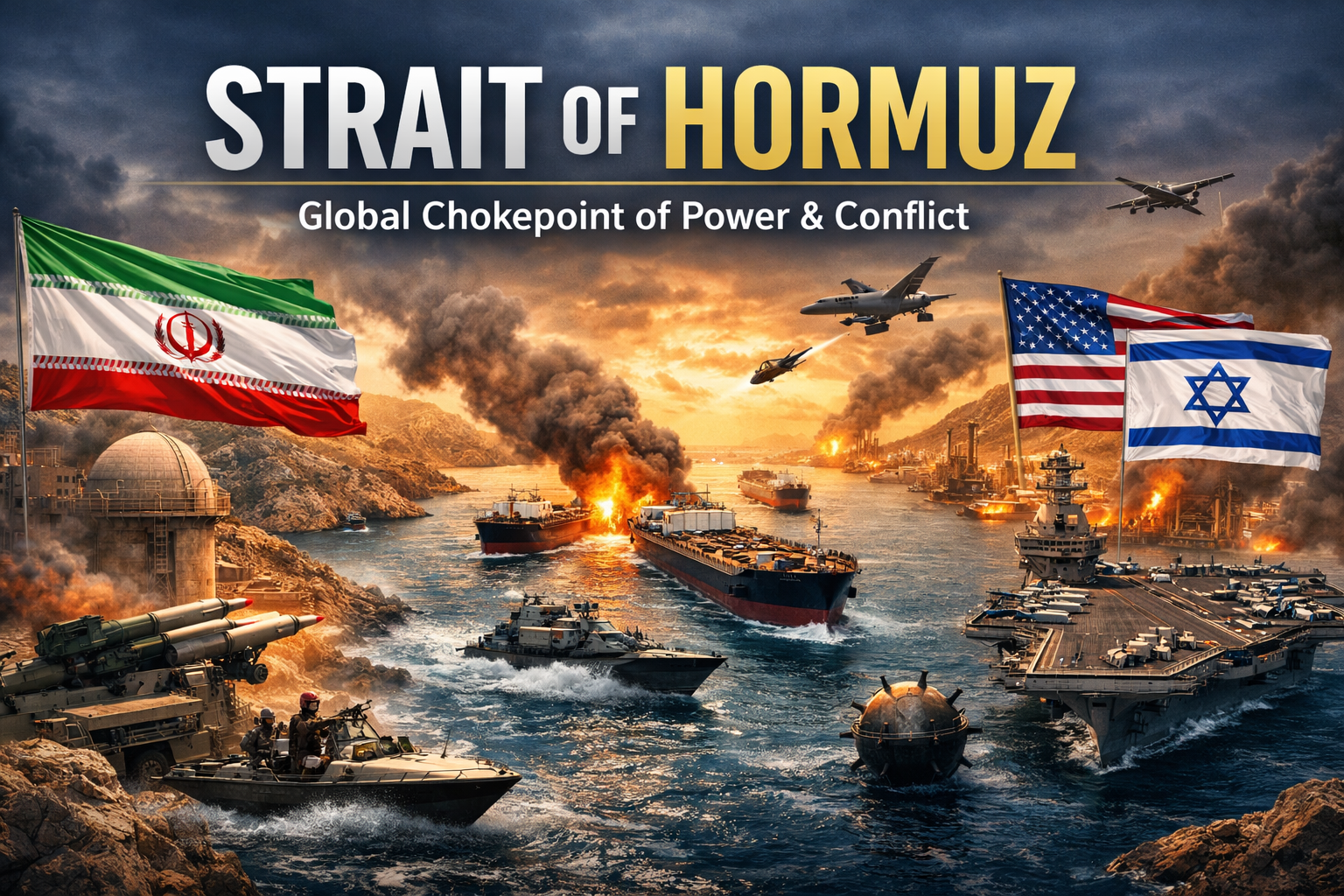
    From the Strait of Hormuz, through which a significant share of the world’s oil passes, to the Isthmus of Panama, which connects North and South America and hosts the famous Panama Canal, these geographical features have shaped history, commerce, and international politics.

    This blog explains these key geographical concepts and highlights the most important straits and isthmuses that influence global trade and geopolitics.

    1. What is a Strait?

    A strait is a narrow natural waterway that connects two larger bodies of water and separates two land masses.

    Straits are extremely important for global shipping routes, because they provide the shortest maritime passages between oceans and seas.

    Key Characteristics of a Strait

    • Narrow water passage
    • Connects two seas or oceans
    • Separates two land masses
    • Often strategically controlled by nearby countries

    Example

    The Strait of Gibraltar connects the Atlantic Ocean with the Mediterranean Sea, separating Spain and Morocco.

    Because many straits are narrow, control over them can influence global trade and military movement.

    Major Strategic Straits of the World

    1. Strait of Hormuz

    • Location: Between Iran and Oman
    • Connects Persian Gulf to Arabian Sea
    • Around 20% of global oil trade passes through it.
    • A major geopolitical flashpoint in Middle East tensions.

    2. Strait of Malacca

    • Located between Malaysia, Indonesia, and Singapore
    • Connects the Indian Ocean with the Pacific Ocean
    • One of the busiest shipping lanes in the world.

    3. Bab el-Mandeb Strait

    • Between Yemen and Djibouti
    • Connects Red Sea to the Gulf of Aden
    • Crucial for ships traveling through the Suez Canal.

    4. Strait of Gibraltar

    • Connects Atlantic Ocean and Mediterranean Sea
    • Strategic naval gateway between Europe and Africa.

    5. Bosporus Strait

    • Located in Istanbul, Turkey
    • Connects the Black Sea to the Sea of Marmara.

    6. Bering Strait

    • Separates Russia and United States
    • Connects the Arctic Ocean and Pacific Ocean.

    2. What is an Isthmus?

    An isthmus is a narrow strip of land connecting two larger land masses and separating two bodies of water.

    It acts like a natural land bridge between continents or regions.

    Key Characteristics

    • Narrow land strip
    • Connects two larger land areas
    • Separates two water bodies

    Example

    The Isthmus of Panama connects North America and South America.

    Major Isthmuses of the World

    1. Isthmus of Panama

    • Connects North and South America
    • Site of the Panama Canal
    • One of the most important maritime shortcuts in the world.

    2. Isthmus of Suez

    • Located in Egypt
    • Connects Africa and Asia
    • Location of the Suez Canal.

    3. Isthmus of Kra

    • Located in Thailand
    • Potential site of a future canal project linking the Andaman Sea and Gulf of Thailand.

    4. Isthmus of Tehuantepec

    • Located in Mexico
    • Narrowest part of Mexico between the Pacific Ocean and Gulf of Mexico.

    3. What is a Peninsula?

    A peninsula is a piece of land surrounded by water on three sides but connected to the mainland on one side.

    Key Characteristics

    • Surrounded by water on three sides
    • Connected to mainland on one side

    Famous Examples

    • Arabian Peninsula – largest peninsula in the world
    • Indian Peninsula – surrounded by Arabian Sea, Bay of Bengal, and Indian Ocean
    • Iberian Peninsula – includes Spain and Portugal
    • Korean Peninsula – includes North Korea and South Korea

    Peninsulas are often centres of civilization and trade because they provide access to sea routes.

    4. What is an Island?

    An island is a piece of land completely surrounded by water.

    Islands vary in size from small uninhabited landforms to large countries.

    Types of Islands

    • Continental islands
    • Volcanic islands
    • Coral islands

    Examples

    • Australia – considered the largest island continent
    • Japan – an island nation in East Asia
    • Sri Lanka – located near India
    • Iceland – volcanic island in the North Atlantic.

    Why These Geographical Features Matter in Global Trade and Geopolitics

    These landforms are not just geographical terms. They shape global power and economic systems.

    1. Control of Trade Routes

    Straits like the Strait of Malacca and Strait of Hormuz handle a massive share of world shipping.

    2. Strategic Military Importance

    Countries often deploy naval forces near important straits.

    3. Energy Security

    Oil shipments depend on chokepoints such as:

    • Bab el-Mandeb Strait
    • Strait of Hormuz

    4. Canal Construction

    Isthmuses have allowed humans to build canals that transform global trade, such as:

    • Suez Canal
    • Panama Canal

    These canals reduce shipping distance by thousands of kilometres.

    Conclusion

    Understanding geographical features such as straits, isthmuses, peninsulas, and islands helps us understand the geopolitical and economic dynamics of the modern world.

    Many of the world’s most important trade routes pass through narrow straits or canals built across strategic isthmuses. Control over these locations often determines economic advantage, naval dominance, and political influence.

    In the era of globalization, these geographical chokepoints continue to shape international relations, maritime trade, and energy security.

  • Beyond the Lab: Rethinking Science in Modern India

    Beyond the Lab: Rethinking Science in Modern India

    Most of us begin our mornings without thinking about science.

    We tap our phones to check messages. We switch on a light. We trust that clean water will flow from the tap. Even the simple act of brewing tea relies on centuries of accumulated knowledge — heat transfer, material science, chemistry — quietly working in the background. Science rarely announces itself. It simply makes life possible.

    Perhaps that is why 28th February, celebrated in India as National Science Day, feels less like a grand festival and more like a moment of reflection. It marks the day when C. V. Raman announced his discovery of the Raman Effect in 1928.

    In simple terms, Raman showed that when light passes through a substance, a tiny fraction of it changes in a subtle way. That change carries information about the material itself. It was a quiet but powerful insight: light could be used not just to see things, but to understand what they are made of. That idea now underpins tools used in chemistry labs, pharmaceutical research, materials science, and even medical diagnostics.

    But National Science Day is not just about looking back at one breakthrough. It invites us to think about what scientific thinking really means today.

    We are living in a time when ideas move faster than ever. Artificial intelligence is reshaping industries. Climate change is forcing us to rethink energy, agriculture, and urban planning. Healthcare innovation is accelerating, yet access remains uneven. Research is no longer confined to isolated laboratories; it sits at the intersection of biology, data science, engineering, policy, and entrepreneurship.

    In this landscape, discovery alone is not enough.

    We often celebrate publications, impact factors, and citations. These matter. But the real question is: how do ideas travel beyond journals? How do they become technologies, solutions, startups, policies, or affordable products that reach people?

    This is where innovation and research translation enter the conversation. A promising molecule in a lab notebook is just the beginning. Turning it into a therapeutic product requires regulatory pathways, clinical validation, funding, intellectual property strategy, and industry collaboration. A clever algorithm is only valuable if it solves a real problem in a scalable way. A sustainability model must align with economic realities to be adopted.

    Patents, often misunderstood as mere legal tools, are actually bridges. They help protect ideas long enough for them to mature. They signal seriousness to investors and industry partners. They encourage researchers to think not only about novelty, but about application.

    Interdisciplinary work has become equally essential. A climate solution may require ecologists, data scientists, material engineers, and policy experts working together. An AI-driven healthcare tool needs both coders and clinicians. The era of working in silos is quietly fading.

    At its heart, science is not about memorizing formulas. It is about asking better questions.

    For young researchers and PhD scholars, this may be the most important takeaway: cultivate curiosity, but also cultivate context. Understand the ecosystem around your work. Who could use your findings? What problem are you actually solving? Is there a gap between theory and practice that your research can bridge?

    The ability to identify meaningful gaps — not just publishable ones — is becoming a defining skill.

    Scientific thinking also extends beyond laboratories. It shapes how we evaluate information in an age of misinformation. It influences how we approach public health decisions. It informs how we design policies and assess risks. It demands evidence, but also humility — the willingness to revise conclusions when new data emerges.

    In many ways, that mindset is what India needs as it aspires to strengthen its position in global research and innovation. Investments in deep tech, space missions, biotechnology, clean energy, and digital infrastructure are growing. Startups are emerging from campuses. Industry-academia collaborations are expanding. The ambition is visible.

    Yet ambition must be matched with a culture of rigorous thinking, ethical responsibility, and long-term vision.

    When Raman pursued his experiments with scattered light, he was not chasing a trending topic. He was driven by curiosity and disciplined inquiry. That combination remains timeless.

    National Science Day is therefore not only a tribute to a discovery made nearly a century ago. It is a reminder that progress begins with careful observation, patient experimentation, and the courage to question assumptions.

    As we move forward, the role of science in shaping India’s future will depend not just on funding or infrastructure, but on mindset. On whether we encourage young minds to explore boldly. On whether we create pathways for research to translate into impact. On whether we treat failure as part of the process rather than a verdict.

    Science may work quietly in the background of our daily routines. But the choices we make — as researchers, educators, entrepreneurs, policymakers, and citizens — determine how powerfully it shapes the years ahead.

    On this 28th February, perhaps the most meaningful celebration is not a ceremony or a slogan, but a renewed commitment to think clearly, question deeply, and build responsibly. That is how scientific thinking becomes more than a subject. It becomes a way of shaping the future.

  • Political Economy: Concept, Evolution, Thinkers, and Its Relevance to India

    Political Economy: Concept, Evolution, Thinkers, and Its Relevance to India

    Introduction

    Political economy is one of the most powerful and interdisciplinary concepts in social sciences. It connects economics and politics, explaining how power, governance, institutions, and policies influence economic outcomes—and vice versa.

    In simple terms, political economy helps us understand who gets what, when, and how in a society. It examines how laws, political decisions, institutions, and social structures shape production, distribution, and consumption of wealth.

    Today, political economy is not merely a theoretical field; it shapes debates around inequality, welfare policies, globalization, climate change, and development.

    What is Political Economy?

    Definition

    Political economy can be defined as:

    The study of how political institutions, political environment, and economic systems influence each other.

    It examines the interaction between:

    • The State (government, political institutions)
    • The Market (firms, consumers, capital, trade)
    • Society (citizens, social groups, classes, interest groups)

    Unlike pure economics—which often assumes markets operate independently—political economy argues that economic decisions are embedded within political power structures.

    Understanding Political Economy with Examples

    1. Subsidy Policies

    When a government provides fertilizer subsidies to farmers, the decision is not purely economic. It reflects:

    • Political pressures from farmers
    • Electoral considerations
    • Budgetary constraints
    • Ideological stance on welfare

    This is political economy in action.

    2. Minimum Support Price (MSP) in India

    India’s MSP policy is not just about market price determination. It reflects:

    • Farmer mobilization
    • Rural vote bank politics
    • Food security concerns
    • Fiscal sustainability

    Thus, the MSP debate is deeply political-economic in nature.

    3. Global Trade Agreements

    When countries negotiate trade deals, economic interests intersect with:

    • Geopolitical strategy
    • Domestic political lobbying
    • National security concerns

    Political economy helps explain why economically beneficial policies are sometimes rejected due to political reasons.

    Origin and Historical Evolution of Political Economy

    1. Early Origins (16th–18th Century)

    The term “political economy” emerged in Europe when scholars began studying national wealth and governance together.

    One early contributor was Antoine de Montchrestien, who used the term in 1615.

    2. Classical Political Economy (18th–19th Century)

    The field matured during the Enlightenment period.

    Adam Smith

    In The Wealth of Nations (1776), Smith argued that markets guided by the “invisible hand” could allocate resources efficiently—but he also emphasized the role of the state in justice, defence, and public goods.

    David Ricardo

    Ricardo developed theories of comparative advantage and income distribution among landlords, workers, and capitalists.

    John Stuart Mill

    Mill refined liberal political economy, integrating liberty and social reform.

    Classical political economy focused on:

    • Production
    • Distribution of income
    • Role of land, labour, and capital

    3. Marxist Political Economy

    A major transformation occurred with Karl Marx.

    Marx argued that capitalism is based on exploitation of labour and class struggle. His work analysed:

    • Surplus value
    • Capital accumulation
    • Class conflict
    • State as instrument of ruling class

    Marxist political economy influenced socialist movements and critiques of capitalism globally.

    4. Neoclassical Shift (Late 19th Century)

    Economics became more mathematical and separated from politics. The discipline began calling itself simply “economics,” focusing on:

    • Supply and demand
    • Individual rational choice
    • Market equilibrium

    Political aspects were temporarily sidelined.

    5. Modern Political Economy (20th–21st Century)

    Political economy revived strongly in the 20th century through:

    • Public choice theory
    • Institutional economics
    • Development economics
    • International political economy

    Key modern scholars include:

    • Douglass North – Role of institutions in economic development
    • Amartya Sen – Development as freedom
    • Daron Acemoglu – Institutions and prosperity

    Today, political economy examines democracy, inequality, corruption, climate policy, digital economy, and globalization.

    Core Themes in Political Economy

    1. Power and Resource Distribution
    2. Institutions and Governance
    3. Inequality and Welfare
    4. Development and Underdevelopment
    5. Globalization and Trade
    6. Political Incentives in Economic Policy

    Is Political Economy Still Relevant?

    Absolutely—perhaps more than ever.

    Why?

    • Rising global inequality
    • Climate finance debates
    • Trade wars
    • Welfare state expansion
    • Digital monopolies
    • Geopolitical tensions

    Purely economic explanations are insufficient. Political economy explains:

    • Why reforms succeed or fail
    • Why corruption persists
    • Why some countries grow faster
    • Why redistribution policies are controversial

    Political Economy Lens for Understanding India

    India provides a rich case study of political economy.

    1. Liberalization Reforms (1991)

    Economic reforms in 1991 were not purely economic decisions. They were shaped by:

    • Balance of payments crisis
    • Political leadership
    • International institutions
    • Domestic interest groups

    Thus, reform was a political-economic transformation.

    2. Welfare Politics

    Schemes such as:

    • MGNREGA
    • Food Security Act
    • Direct Benefit Transfer

    reflect the interaction between electoral politics and redistribution.

    3. Federalism and Resource Allocation

    India’s fiscal federalism—Finance Commission transfers, GST Council decisions—illustrates political bargaining between states and the Union government.

    4. Agricultural Reforms and Protests

    The farm law reforms debate showed:

    • Market reform goals
    • Farmer mobilization
    • Electoral consequences
    • Policy rollback

    Political economy explains why economically “efficient” policies may face resistance.

    5. Political Economy of Development

    India’s growth story includes:

    • Service-led growth
    • Informal sector dominance
    • Demographic dividend
    • Regional disparities

    Understanding these requires studying institutions, governance capacity, and political incentives.

    Strengths and Criticisms of Political Economy

    Strengths

    ✔ Integrates economics with real-world politics
    ✔ Explains policy outcomes better
    ✔ Helps understand inequality
    ✔ Useful for governance reforms

    Criticisms

    ✖ Can be too broad
    ✖ Sometimes ideological
    ✖ Lacks mathematical precision compared to mainstream economics

    Yet, its interdisciplinary richness is also its strength.

    Conclusion

    Political economy is not just an academic concept—it is a lens to understand the world. From Adam Smith’s classical insights to Marx’s critique of capitalism, from institutional theories to modern development debates, political economy continues to evolve.

    In India, political economy explains:

    • Welfare expansion
    • Reform challenges
    • Federal negotiations
    • Inequality
    • Democratic development

    In an era of climate change, globalization shifts, and rising inequality, political economy remains indispensable for policymakers, researchers, and citizens alike.

    Understanding political economy means understanding how power shapes prosperity—and how prosperity reshapes power.

  • Climate Change and the Power of Climate Finance: Building a Resilient Future

    Climate Change and the Power of Climate Finance: Building a Resilient Future

    Climate change is no longer a distant environmental concern—it is a defining challenge of the 21st century. From record-breaking heatwaves to devastating floods, rising sea levels, and prolonged droughts, its effects are visible across continents. Scientific consensus, particularly under the guidance of the Intergovernmental Panel on Climate Change (IPCC), confirms that human activities—especially the burning of fossil fuels, deforestation, and unsustainable industrial practices—are driving unprecedented increases in greenhouse gas (GHG) concentrations in the atmosphere.

    Addressing climate change requires not only environmental awareness but also large-scale financial transformation. This is where climate finance becomes critical. By channelling funds toward low-carbon development and climate resilience, climate finance bridges the gap between ambition and action.

    Understanding Climate Change: Causes and Consequences

    1. Primary Drivers

    • Fossil fuel combustion (coal, oil, and gas)
    • Deforestation and land-use change
    • Industrial agriculture and methane emissions
    • Rapid urbanization and infrastructure expansion

    These activities increase atmospheric concentrations of carbon dioxide (CO₂), methane (CH₄), and nitrous oxide (N₂O), intensifying the greenhouse effect.

    2. Impacts Across Sectors

    a. Environmental Impacts

    • Melting glaciers and polar ice caps
    • Biodiversity loss and ecosystem collapse
    • Ocean acidification

    b. Economic Impacts

    • Agricultural productivity decline
    • Infrastructure damage due to extreme events
    • Increased insurance and disaster recovery costs

    c. Social Impacts

    • Climate-induced migration
    • Health crises (heat stress, vector-borne diseases)
    • Rising inequality, especially in vulnerable communities

    Climate change disproportionately affects developing countries, despite their lower historical emissions. This imbalance underscores the need for climate justice and financial solidarity.

    Global Climate Commitments: The Policy Framework

    International climate action gained momentum through the Paris Agreement adopted at United Nations Framework Convention on Climate Change (UNFCCC). The agreement aims to:

    • Limit global temperature rise to well below 2°C, preferably 1.5°C above pre-industrial levels
    • Strengthen adaptive capacity
    • Align financial flows with low-emission, climate-resilient pathways

    In parallel, climate action is embedded in the United Nations Sustainable Development Goals (SDGs), especially SDG 13 (Climate Action).

    However, commitments alone are insufficient without financing mechanisms to operationalize them.

    What Is Climate Finance?

    Climate finance refers to local, national, or transnational funding—drawn from public, private, and alternative sources—aimed at supporting mitigation and adaptation efforts.

    It serves three core purposes:

    1. Mitigation – Reducing or preventing GHG emissions
    2. Adaptation – Adjusting systems to withstand climate impacts
    3. Loss and Damage – Addressing irreversible climate harm

    How Climate Finance Supports Mitigation

    Mitigation focuses on reducing emissions to slow global warming. Climate finance supports mitigation through:

    1. Renewable Energy Investment

    • Solar, wind, hydro, and green hydrogen projects
    • Grid modernization and energy storage
    • Decentralized clean energy access in rural areas

    2. Energy Efficiency

    • Green buildings
    • Smart cities
    • Efficient industrial processes

    3. Sustainable Transport

    • Electric vehicles (EVs)
    • Public transportation infrastructure
    • Rail and non-motorized mobility

    4. Nature-Based Solutions

    • Afforestation and reforestation
    • Wetland restoration
    • Carbon sequestration initiatives

    Instruments such as green bonds, sustainability-linked loans, and carbon markets have emerged as key tools for channelling private capital toward mitigation projects.

    Climate Finance and Adaptation: Building Resilience

    While mitigation addresses the root causes, adaptation strengthens systems against unavoidable impacts.

    1. Climate-Resilient Infrastructure

    • Flood-resistant roads and bridges
    • Cyclone shelters
    • Climate-proof housing

    2. Climate-Smart Agriculture

    • Drought-resistant crops
    • Efficient irrigation systems
    • Agroforestry practices

    3. Disaster Risk Reduction

    • Early warning systems
    • Coastal protection barriers
    • Insurance mechanisms

    Adaptation finance is especially crucial for Least Developed Countries (LDCs) and Small Island Developing States (SIDS), where climate impacts threaten survival.

    Loss and Damage: Addressing Irreversible Impacts

    Even with mitigation and adaptation, some damages are unavoidable. At recent climate negotiations, countries agreed to operationalize a Loss and Damage Fund to assist vulnerable nations facing irreversible destruction from climate disasters.

    This marks a historic step toward recognizing climate responsibility and equity.

    Sources of Climate Finance

    Climate finance flows from multiple channels:

    1. Public Finance

    • Multilateral development banks (MDBs)
    • Bilateral aid agencies
    • Climate funds such as the Green Climate Fund

    2. Private Finance

    • Institutional investors
    • Commercial banks
    • Impact investment funds

    3. Innovative Mechanisms

    • Carbon pricing and emissions trading systems
    • Blended finance (public-private partnerships)
    • Sovereign green bonds

    Mobilizing private capital is essential because public funds alone cannot meet the estimated trillions of dollars required annually for climate transition.

    Key Challenges in Climate Finance

    Despite progress, significant barriers remain:

    1. Financing Gap

    Developing countries require trillions annually, yet actual flows remain far below pledged amounts.

    2. Access Constraints

    Smaller and vulnerable countries often lack institutional capacity to access complex funding mechanisms.

    3. Imbalance Between Mitigation and Adaptation

    Mitigation receives the majority of funding, while adaptation—critical for vulnerable nations—remains underfunded.

    4. Greenwashing Risks

    Weak regulatory frameworks may allow investments labelled “green” without meaningful climate benefits.

    Strengthening transparency, accountability, and monitoring systems is therefore essential.

    The Role of Carbon Markets

    Article 6 of the Paris Agreement enables countries to trade emission reductions. Well-regulated carbon markets can:

    • Lower mitigation costs
    • Encourage innovation
    • Channel funds to developing countries

    However, environmental integrity and social safeguards must be ensured to prevent exploitation.

    Climate Finance and Sustainable Development

    Climate finance is not only about emissions—it intersects with:

    • Poverty reduction
    • Gender equality
    • Energy access
    • Health security
    • Food security

    When aligned with national development strategies, climate finance accelerates green growth and job creation, particularly in renewable energy and sustainable infrastructure sectors.

    The Way Forward: Scaling Climate Finance

    To make climate finance transformative, several actions are necessary:

    1. Align Global Financial Systems

    Financial institutions must integrate climate risk into lending and investment decisions.

    2. Reform Multilateral Development Banks

    Enhance concessional financing and reduce borrowing costs for vulnerable nations.

    3. Strengthen Domestic Financial Systems

    Develop green taxonomies, sustainable finance frameworks, and climate budgeting.

    4. Enhance Transparency and Accountability

    Standardized reporting frameworks can prevent greenwashing and improve impact measurement.

    5. Promote Just Transition

    Ensure workers and communities dependent on fossil fuels are supported through retraining and social protection measures.

    Conclusion: Finance as the Engine of Climate Action

    Climate change is fundamentally a development and economic challenge as much as it is an environmental one. Science provides the warnings. Policy sets the direction. But finance drives implementation.

    Climate finance, when mobilized at scale and allocated equitably, can:

    • Reduce emissions
    • Protect vulnerable populations
    • Strengthen economic resilience
    • Accelerate sustainable development

    The global transition to a low-carbon and climate-resilient future is not optional—it is imperative. The question is not whether we can afford climate finance, but whether we can afford to delay it.

    The coming decade will determine whether financial systems evolve fast enough to safeguard both the planet and future generations.

  • El Mencho: Rise, Death, Wealth & Impact of Mexico’s CJNG Cartel Leader

    El Mencho: Rise, Death, Wealth & Impact of Mexico’s CJNG Cartel Leader

    El Mencho was the alias of Nemesio Rubén Oseguera Cervantes, a Mexican drug lord who became the head of the Jalisco New Generation Cartel (CJNG) — one of the most powerful and violent organized crime groups in Mexico and the world.

    Born in the western Mexican state of Michoacán, Mencho became involved in drug trafficking in the 1990s. He was reportedly arrested in California in 1994 for heroin distribution and served nearly three years in prison before being deported back to Mexico.

    Despite his notoriety, El Mencho maintained a low personal profile — avoiding public appearances and media exposure. Intelligence agencies had only old photographs of him and very limited verified audio recordings.

    How He Built His Drug Empire — The Rise of CJNG

    After returning to Mexico, Mencho joined the Milenio Cartel, but later broke off and founded the Jalisco New Generation Cartel (CJNG) around 2009.

    Under his leadership, CJNG grew rapidly into one of the country’s most ruthless and militarized organizations. It distinguished itself with:

    • Territorial expansion across most Mexican states.
    • International drug trafficking, including fentanyl, methamphetamine, cocaine, and heroin into the United States and beyond.
    • Military-style tactics, using armoured vehicles, drones with explosives, and rocket-propelled grenades.
    • Brutal intimidation campaigns against rivals and authorities.

    CJNG under El Mencho became feared not just for drugs but for sheer violence and confrontation with state forces — even downing a Mexican military helicopter in 2015 and attempting high-profile assassinations.

    El Mencho’s Influence and Wealth

    El Mencho wielded immense influence across Mexico:

    • He controlled trafficking routes and networks not just within Mexico but into the United States and other continents.
    • His cartel’s reach made him one of the most wanted fugitives globally — the U.S. government had offered a $15 million bounty for information leading to his capture or conviction.
    • While exact figures are impossible to verify, CJNG’s operations generated billions of dollars annually, making El Mencho one of the most financially powerful criminal leaders in Mexico.

    His influence also extended socially in some regions, where CJNG reportedly provided support and services to local communities — a tactic known to help criminal groups secure loyalty and shield their activities.

    The Death of El Mencho — How It Happened

    On 22 February 2026, Mexican security forces killed El Mencho during a military operation in Tapalpa, Jalisco, with the support of U.S. intelligence.

    According to official reports:

    • Federal troops encountered heavy gunfire during the raid.
    • Mencho and several cartel members were wounded and later died, including during an attempted air transfer for medical care.
    • The operation was described as one of Mexico’s most significant strikes against organized crime in recent decades.

    Why Violence Erupted After His Death

    Immediately after news of his death spread, coordinated violence erupted across Mexico, especially in CJNG strongholds:

    • Gunmen blocked highways and set vehicles on fire.
    • Clashes between cartel members and security forces broke out in multiple states.
    • Airports were disrupted and civilian life interrupted as residents were urged to stay indoors.

    This immediate surge in violence occurred for several reasons:

    1. Leadership Vacuum: Mencho had centralized CJNG power. His sudden absence left a void with no clear successor, prompting internal competition and chaos.
    2. Organized Armed Cells: CJNG had semi-independent, highly armed units capable of launching rapid, coordinated retaliation.
    3. Territorial Defence: Cartel members sought to demonstrate strength and deter government advances by attacking infrastructure and forces.

    At least a dozen Mexican states saw outbreaks of unrest as CJNG fighters responded.

    Impact on Mexico and Its People

    El Mencho’s presence and the rise of CJNG had a profound effect:

    • Millions of lives were affected by cartel violence, displacement, and insecurity.
    • Tourism and daily economic activity suffered during violent flare-ups.
    • The Mexican state faced one of its most significant security challenges, with cartels capable of confronting military forces directly.

    The government has hailed his death as a symbolic win against organized crime, but security analysts warn that violence could persist — either from CJNG remnants or rival groups trying to seize control.

    Conclusion

    El Mencho’s life story — from rural origins to the helm of a criminal empire — mirrors the rise of Mexico’s most militarized cartel war. His death, while a historic blow to narcotrafficking, triggered a violent backlash that underscores the deep-rooted challenges Mexico faces in dismantling organized crime and stabilizing regions long affected by cartel dominance.