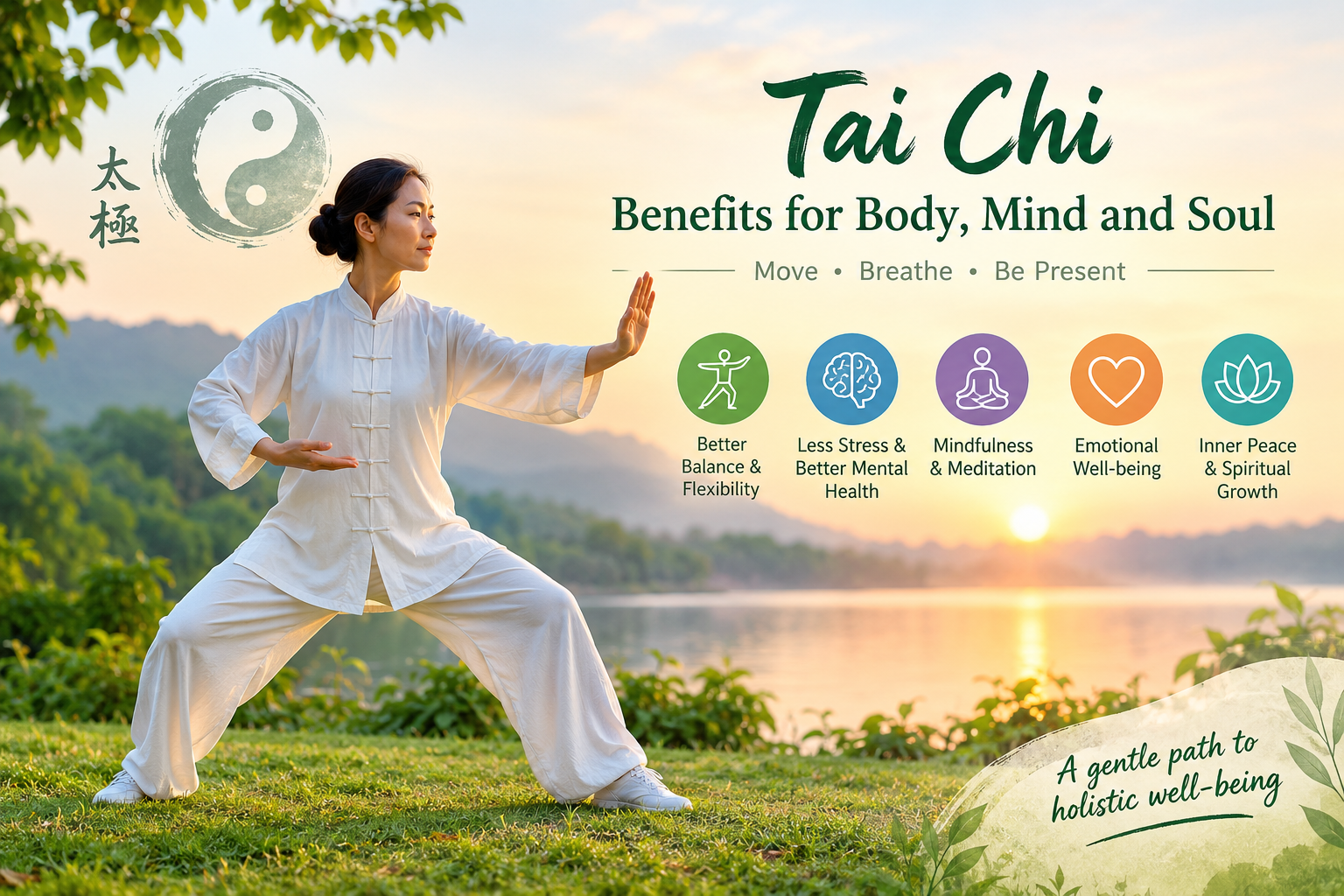
What Is Tai Chi?
Thank you for reading this post, don’t forget to subscribe!In a world where busy schedules, long working hours and constant digital distractions affect our well-being, many people are looking for gentle ways to maintain a healthy body and peaceful mind. One ancient practice attracting growing interest worldwide is Tai Chi (pronounced “tie-chee”), a traditional Chinese mind-body exercise.
Tai Chi originated as a martial art in China but has gradually become popular as a form of exercise, relaxation and health promotion. It combines slow, flowing movements, controlled breathing, balanced postures and focused attention. Unlike high-intensity workouts, it encourages people to move gently and mindfully.
Often described as “meditation in motion,” Tai Chi offers an opportunity to exercise the body while calming the mind. Scientific research suggests that it can support balance, mobility and psychological well-being, although its benefits vary depending on the individual and the condition being studied.
Why Is Tai Chi Becoming Popular?
Tai Chi appeals to people because it is gentle, adaptable and requires very little equipment. It can be practised in a park, at home, in a community centre or in a suitable indoor space.
Its popularity is also linked to modern lifestyle challenges, including stress, prolonged sitting, reduced physical activity and sleep difficulties. People appreciate an activity that combines movement with concentration rather than focusing only on physical performance.
Another important advantage is accessibility. Beginners do not need exceptional strength, flexibility or athletic ability. Many movements can be modified for older adults and people with limited mobility, including seated versions.
What Are the Main Health Benefits of Tai Chi?
1. Physical Health: Balance, Strength and Flexibility
Tai Chi involves shifting body weight, coordinating the arms and legs, maintaining posture and moving in a controlled manner. Regular practice can help improve balance, coordination, flexibility and functional strength.
These benefits are particularly valuable for older adults, for whom maintaining stability and independence becomes increasingly important. Research indicates that Tai Chi may reduce falls in older people, although the results depend on the programme and the population studied.
It may also help some people manage chronic conditions, including knee osteoarthritis and lower-back pain. Certain studies suggest improvements in pain, stiffness and everyday physical function. However, Tai Chi should complement appropriate medical care rather than replace it.
2. Mental Health: Relaxation and Stress Management
Modern life frequently places the mind under continuous pressure. Tai Chi encourages practitioners to slow down, pay attention to their movements and breathe naturally.
This combination may support relaxation, emotional regulation and stress management. By focusing on the present movement instead of repeatedly thinking about work, worries or daily responsibilities, practitioners can develop a calmer approach to everyday experiences.
Some research also suggests possible improvements in mood, sleep and quality of life. Nevertheless, Tai Chi is not a guaranteed treatment for anxiety, depression or other mental health conditions.
3. Mindfulness and Meditation
One of Tai Chi’s distinctive features is the integration of physical movement with mental awareness.
In conventional seated meditation, a person may focus on breathing, bodily sensations, a mantra or the present moment. In Tai Chi, attention is directed towards body posture, weight distribution, movement, breathing and coordination.
For example, when raising the arms slowly, a practitioner may observe the movement, maintain a relaxed posture and remain aware of each breath. This encourages present-moment attention.
Tai Chi is therefore closely connected with mindfulness and moving meditation. However, not every Tai Chi class follows the same meditative approach, and it does not replace every form of meditation.
4. Emotional Well-being and the Spiritual Dimension
Tai Chi is also associated with traditional Chinese philosophical ideas, including yin and yang—the complementary forces often used to describe balance and harmony.
From a personal or spiritual perspective, practising Tai Chi may encourage patience, self-awareness, calmness and a greater appreciation of the present moment. Some people experience it as a way to reconnect with themselves and develop a more balanced relationship with their surroundings.
The term “soul” can have different meanings across cultures and belief systems. Tai Chi may support a person’s subjective sense of inner peace or spiritual well-being, but such experiences should not be confused with scientifically established medical outcomes.
How Is Tai Chi Connected with Body, Mind and Soul?
Tai Chi can be understood through three interconnected dimensions:
- Body: Gentle movement, coordination, posture, flexibility and balance.
- Mind: Concentration, mindfulness, relaxation and awareness of bodily sensations.
- Soul: For those who find spiritual meaning in the practice, a sense of harmony, reflection and inner tranquillity.
These dimensions work together during practice. Physical movement gives the mind something concrete to focus on, while mental attention helps make movement more deliberate and controlled.
Who Can Practise Tai Chi?
Tai Chi is suitable for many people, including beginners, working adults, older adults and those seeking a low-impact form of exercise. It can also be adapted for people with certain mobility limitations.
There is no single age at which a person must start, nor is exceptional physical fitness required. However, individual needs and abilities matter.
People with significant balance difficulties, recent surgery, severe joint problems, dizziness or other medical conditions should consult a healthcare professional before beginning. Pregnant individuals should also seek personalised advice. A qualified instructor can modify movements and help participants practise safely.
How Can Beginners Get Started?
Starting Tai Chi does not require an elaborate routine. A practical approach is to:
- Find a qualified instructor who teaches beginners and adapts movements to different abilities.
- Wear comfortable clothing and supportive, non-slip footwear.
- Begin with short, manageable sessions and gradually increase practice time.
- Keep movements gentle, breathe naturally and avoid forcing joints or holding uncomfortable positions.
- Practise consistently and allow time to learn the movements.
Even a short introductory session can help you discover whether the practice suits your preferences. Consistency is generally more useful than attempting difficult movements too quickly.
Is Tai Chi Enough for Complete Health?
Although Tai Chi can contribute to physical and mental well-being, it should be viewed as one part of a balanced lifestyle. Walking or other aerobic activity, appropriate strength exercises, nutritious food, sufficient sleep, social connection and preventive healthcare remain important.
Tai Chi may be especially valuable for people who prefer a slower, more mindful approach to movement. Those seeking substantial aerobic conditioning or progressive muscle strengthening may need additional forms of exercise.
Conclusion: A Gentle Path Towards Holistic Well-being
Tai Chi demonstrates that exercise does not always have to be fast, strenuous or competitive. Through slow movements, balanced postures, natural breathing and focused attention, it offers a practical way to bring physical activity and mindfulness together.
Its potential benefits include improved balance, mobility, flexibility and relaxation, with promising evidence for certain pain-related conditions and aspects of psychological well-being. Its spiritual significance, meanwhile, depends on individual experience and belief.
For anyone seeking a gentle introduction to a more mindful lifestyle, Tai Chi can be a worthwhile practice. The essential principle is simple: move with awareness, breathe naturally and give the present moment your attention.
References
- National Center for Complementary and Integrative Health (NCCIH), Tai Chi: What You Need to Know.
- Harvard Health Publishing, The Health Benefits of Tai Chi.
- National Center for Complementary and Integrative Health (NCCIH), Meditation and Mindfulness: Effectiveness and Safety.
Disclaimer: This article is for general educational purposes and is not a substitute for individual medical advice, diagnosis or treatment.
Leave a Reply