Introduction: A Celebration of Eternal Sibling Love
Thank you for reading this post, don’t forget to subscribe!Bhai Dooj — also known as Bhaiya Dooj, Bhau Beej, or Yama Dwitiya — is one of the most heartwarming festivals in Sanatan Dharma. Celebrated on the second day (Dwitiya Tithi) of the Shukla Paksha in Kartik month, it marks the fifth and final day of Diwali festivities.
This sacred occasion celebrates the bond of love, duty, and protection between brothers and sisters — a tradition deeply rooted in Indian family values and spiritual culture. Just as Raksha Bandhan strengthens this bond through a thread, Bhai Dooj strengthens it through prayers, blessings, and a sacred tilak ceremony.
Mythological and Historical Origin of Bhai Dooj
The roots of Bhai Dooj trace back to ancient Hindu scriptures and legends. Several stories explain its origin, all of which convey themes of love, protection, and purity of the sibling relationship.
1. The Legend of Yama and Yami
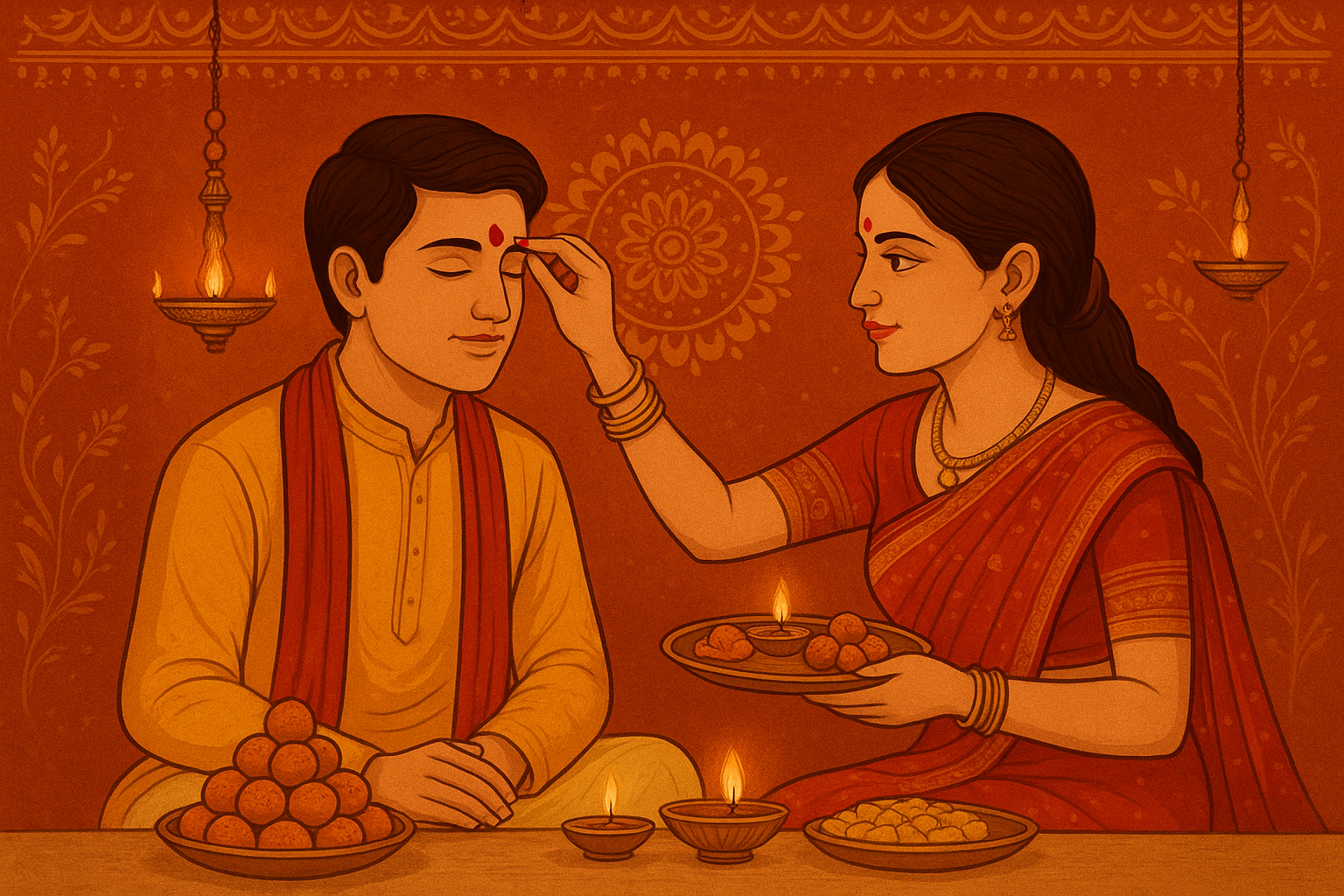
The most popular story comes from the Puranas. According to legend, Yama, the God of Death, once visited his sister Yami (also known as Yamuna) after a long separation. Yami welcomed him warmly, performed an aarti, applied tilak (vermilion mark) on his forehead, and offered him a delicious meal.
Moved by her affection, Yama blessed her and declared that on this day every brother who receives a tilak from his sister will be blessed with long life, prosperity, and protection from evil.
Since then, this day is observed as “Yama Dwitiya”, meaning the second lunar day dedicated to Yama and his sister.
2. The Story of Lord Krishna and Subhadra
Another legend says that after killing the demon Narakasura, Lord Krishna visited his sister Subhadra. She greeted him with sweets and flowers, lit lamps to welcome him, and applied a tilak on his forehead to protect him from evil.
Since that time, this affectionate gesture of sisters toward their brothers is celebrated as Bhai Dooj.
When is Bhai Dooj Celebrated?
Bhai Dooj is celebrated every year on the Dwitiya Tithi (second day) of Shukla Paksha in the Kartik month of the Hindu lunar calendar — generally falling two days after Diwali.
In 2025, Bhai Dooj will be celebrated on October 23, 2025.
Significance of Bhai Dooj in Sanatan Dharma
Bhai Dooj is not merely a family festival — it reflects the Vedic principle of love, duty, and gratitude among family members.
- It strengthens emotional ties and the sense of mutual care.
- Symbolizes prayers for a brother’s longevity and the sister’s well-being.
- Represents the divine bond of Yama and Yamuna, showing how love can overcome even death.
- Encourages family reunion and the spirit of affection beyond materialism.
Spiritually, it teaches that relationships are sacred channels through which divine love manifests in daily life.
How is Bhai Dooj Celebrated Across India?
1. Tilak and Aarti Ceremony
The core ritual involves the sister applying a tilak (vermilion or sandal paste) on her brother’s forehead, performing aarti, and offering sweets. In return, the brother presents gifts to his sister and vows to protect her throughout life.
The tilak symbolizes protection, purity, and blessings — ensuring that the brother is guarded from evil influences and misfortune.
2. Special Meals and Feasts
Sisters prepare elaborate meals featuring their brother’s favorite dishes. The act of feeding the brother is considered a sacred duty, just as Yami fed Yama with love.
Common festive dishes include puri, halwa, kheer, laddoo, and savory items representing prosperity and abundance.
3. Yama Worship
In certain regions, especially in North India, devotees also offer prayers to Lord Yama and Yamuna, seeking blessings for good health, longevity, and liberation from untimely death.
4. Regional Traditions
- Maharashtra: Celebrated as Bhau Beej; sisters invite their brothers for a meal and perform rituals of protection.
- West Bengal: Known as Bhai Phonta; elaborate ceremonies are held, with sisters fasting until they apply the tilak.
- Nepal: Celebrated as Bhai Tika, part of the Tihar festival, where sisters apply five-colored tika on their brothers’ foreheads and offer prayers for their longevity.
- Punjab & Haryana: Sisters who live far away symbolically perform rituals by praying to the moon for their brothers.
Symbolism and Deeper Meaning
Bhai Dooj goes beyond rituals — it’s a celebration of the spiritual unity between souls connected by affection and duty.
- The Tilak represents divine protection.
- The Aarti is a prayer for the brother’s well-being and purity of life.
- The Gift Exchange reflects gratitude, mutual respect, and the joy of giving.
- The Meal Together symbolizes nourishment of relationships — emotional and spiritual.
It reinforces the timeless belief of Sanatan Dharma that family is the first temple of love and dharma (duty).
Bhai Dooj and Modern Context
In the contemporary era, Bhai Dooj continues to hold deep emotional and cultural relevance. Even as families grow apart geographically, the essence of the festival — connection, care, and commitment — remains unchanged.
Technology now bridges distances: sisters send virtual tilaks, and brothers send digital gifts, but the sentiment stays pure and powerful.
Beyond family, Bhai Dooj also reminds us to cherish relationships, practice empathy, and foster unity in a world driven by individualism.
Conclusion: The Divine Thread of Love and Duty
Bhai Dooj beautifully completes the Diwali festival cycle, ending it on a note of love, warmth, and family blessings. It celebrates the eternal bond between brothers and sisters — a bond that transcends time, distance, and even death, as taught by the legend of Yama and Yami.
In essence, Bhai Dooj teaches us that love is the greatest protector and that relationships built on affection and gratitude are sacred gifts of life.
So, this Bhai Dooj, let us celebrate not just rituals, but the spirit of care, compassion, and connection that sustains every family and every human heart.
Leave a Reply