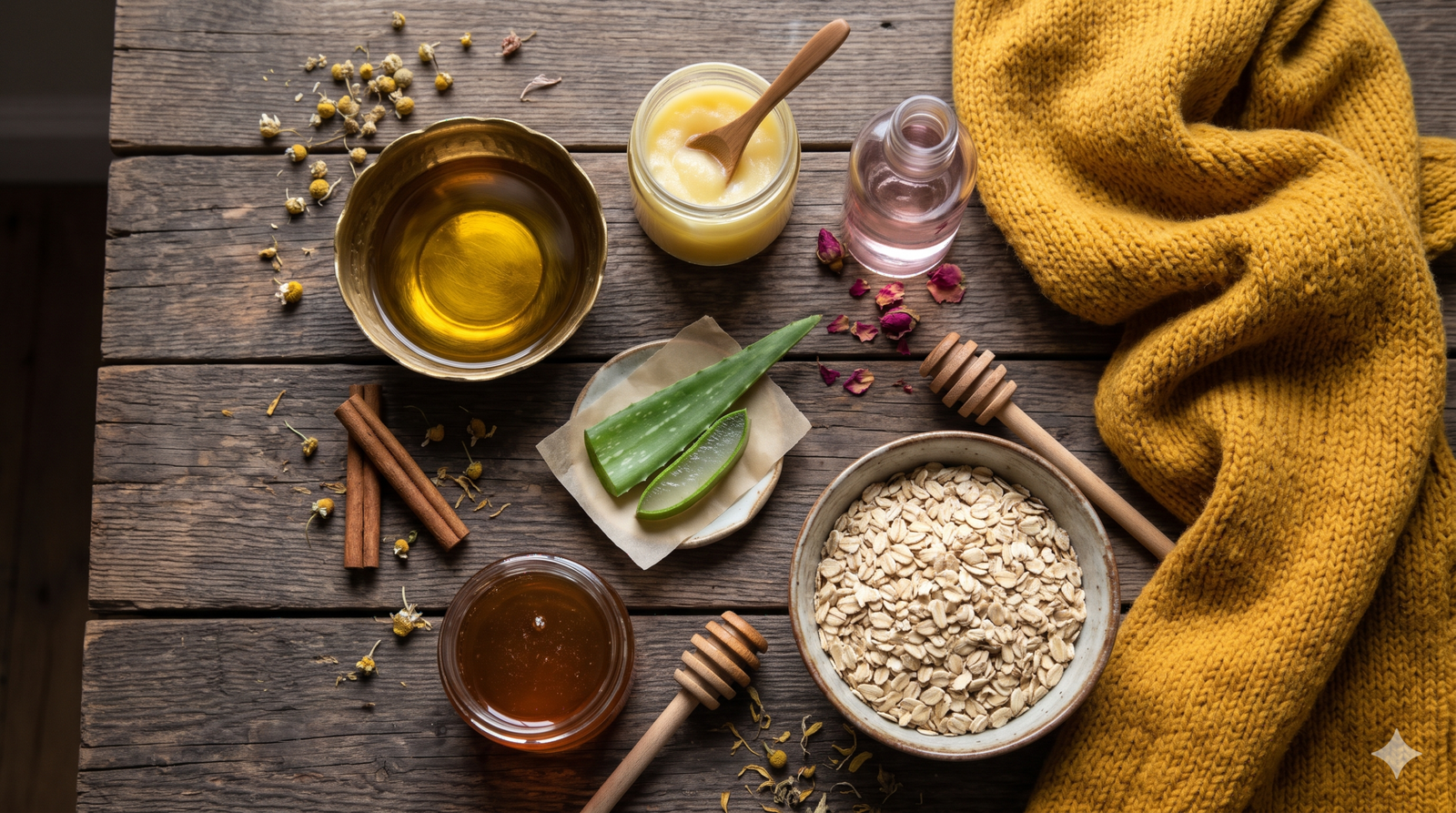
Natural and Ayurvedic care that works for everyone, from toddlers to grandparents
Thank you for reading this post, don’t forget to subscribe!You know the moment. You step out of a warm blanket, wash your face, and your cheeks pull tight like a drum. A few days later your elbows look dusty, your heels catch on your socks, and your lips feel like sandpaper. Welcome to winter.
Here is the comforting part: you don’t need a dozen expensive jars to fix it. In many Indian homes, the cure has always been sitting a few feet from the stove, in a steel bowl of oil, a tin of ghee or a bottle of rose water. Grandmothers swore by them long before skincare had fancy labels.
This guide brings together that old wisdom and a little modern science, so you can pick what suits you and your family. No jargon, no fuss.
First, why does winter do this to your skin?
Picture your skin as a brick wall. The bricks are skin cells and the cement is a thin layer of natural oils. Cold, dry air and long hot showers chip away at that cement, so moisture escapes and dust and irritants sneak in. Result: tightness, flakes and itching.
Ayurveda tells the same story in its own words. In winter, it says, Vata rises, and Vata is all about dryness, cold and roughness. The Ayurvedic fix is the opposite of those qualities: warmth, oil and nourishment. Modern dermatology nods along: lock in moisture, go easy on harsh cleansing, protect the barrier.
Meet the winter pantry
These nine are easy to find, easy on the pocket, and have loyal fans in almost every household.
Coconut oil: the all-rounder. Light and familiar, it works on arms, legs, hands, feet and even dry hair ends. Warm a spoonful between your palms and smooth it onto slightly damp skin. One catch: it can clog pores on oily or acne-prone faces, so keep it for the body if you break out easily.
Sesame (til) oil: the winter classic. Warm, rich and deeply nourishing, this is the oil Ayurveda reaches for when the temperature drops. It is the star of Abhyanga, the traditional full-body massage. Any cold-pressed or filtered sesame oil from your local grocer will do.
Almond oil: the gentle one. Rich in vitamin E and kind to sensitive skin, it is lovely for dry lips and, in tiny amounts, the delicate area under the eyes. It is a popular choice for baby massage too, but skip it if anyone in the family has a nut allergy.
Ghee: the heel and lip rescuer. Indian homes have used it for ages on chapped lips and cracked heels. A tiny dab at bedtime is plenty. Eating a spoonful with warm food is also part of the traditional Ayurvedic winter routine, in moderation.
Aloe vera gel: the cool-down. Soothing and light, it is perfect for wind-burnt cheeks and works nicely as a base before a few drops of oil. Pick a pure gel, or scoop it fresh from a leaf if you have a plant on the balcony.
Honey: the moisture magnet. Honey is a natural humectant, which simply means it pulls water toward the skin. Spread a thin layer on your face for 10 minutes, then rinse with lukewarm water. Soft skin, sticky fingers.
Milk, curd and malai: the old-school glow. The gentle lactic acid and fats in dairy make a soft cleanser and a comforting mask. A spoonful of malai on rough patches for 10 minutes is a remedy many of us have seen at home.
Oats: the itch soother. Ground oatmeal in a lukewarm bath calms that restless winter itch. Dermatologists recognise colloidal oatmeal for exactly this.
Rose water: the refresher. A mild, fragrant toner. Spritz it on, then seal it in with your moisturiser.
Four Ayurvedic rituals worth borrowing
1. Abhyanga: the warm oil hug
Warm a few tablespoons of sesame or coconut oil until it is comfortably warm, never hot. Massage it into your body with long strokes along the arms and legs and little circles on the joints. Let it soak in for 10 to 15 minutes, then take a lukewarm bath. Short on time? Even five minutes before your shower makes a difference. One tip from experience: oily feet and wet bathroom floors are a slippery combination, so step carefully.
2. Udvartana: the gentle homemade scrub
Mix besan (gram flour) with a little milk or curd and a pinch of turmeric into a soft paste. Massage it on gently and rinse. It polishes away dull skin without the roughness of grainy scrubs. Once or twice a week is enough, and skip it if your skin is cracked or very dry. Turmeric can leave a yellow tint, so go light.
3. Kumkumadi tailam: the night-time glow oil
This saffron-based Ayurvedic facial oil is traditionally used to brighten dull skin. Two or three drops pressed into the face at night go a long way. You will find it at most Ayurvedic stores, but prices and quality vary, so buy from a brand you trust.
4. Eat and drink for your skin too
Ayurveda treats skin health as something that starts inside. Think warm, home-cooked meals, soups, nuts, seeds and cups of tulsi, ginger or cinnamon tea. And remember water: we feel less thirsty in winter, but skin still needs it.
A five-minute routine you will actually stick to
The best routine is the one you do on a sleepy Tuesday. Keep it short.
Morning
- Wash with lukewarm water and a mild cleanser, or just a splash if your skin is very dry.
- Pat on moisturiser or a few drops of oil while your skin is still slightly damp.
- Apply sunscreen. Yes, even when it is cold. Winter sun still sends UV rays, especially on bright days and in the hills.
Night
- Cleanse gently, then add something richer: a cream, aloe gel with a few drops of oil, or kumkumadi tailam.
- Dab ghee or a lip balm on your lips. Slather oil or cream on hands and heels, then slip on cotton gloves or socks.
The golden rule: moisturise within about three minutes of bathing, while skin is still damp. That is how you trap water in.
What works for each age
- Babies and toddlers: Keep baths short and lukewarm. A gentle massage with coconut or almond oil is traditional, but test a small patch first. Skip honey on babies under one year, and avoid strong-smelling oils on their delicate skin.
- Kids and teens: Dry lips and rough hands are the usual troublemakers. A mild cleanser, a moisturiser and sunscreen is plenty. Teens with pimples should reach for light aloe gel instead of heavy oils on the face.
- Adults: Add a weekly honey or malai mask, drink enough water and make the evening oil or cream ritual a habit. Your future skin will thank you.
- Grandparents and seniors: Skin grows thinner and drier with age, so a warm oil massage after a lukewarm bath feels wonderful. Moisturise twice a day, and keep bathroom floors dry to prevent slips.
Five winter habits to quietly retire
- The scalding shower. It feels like heaven and strips your skin’s oils. Go lukewarm.
- The aggressive scrub. More exfoliating does not mean more glow. It means a damaged barrier.
- Skipping sunscreen because it is chilly. UV does not take winter off.
- Squeaky-clean soap. That squeak is the sound of your natural oils leaving.
- Assuming natural means harmless. Even kitchen ingredients can trigger allergies.
A quick word on safety
Before trying anything new, do a patch test. Dab a little on your inner forearm and wait 24 hours. If you see redness, itching or swelling, stop. And if you have eczema or psoriasis, or your skin is deeply cracked, bleeding or not improving after a couple of weeks, please see a dermatologist. Home and Ayurvedic remedies are lovely helpers, but they are not a replacement for medical care.
The bottom line
Healthy winter skin is not about a 12-step routine. It is a handful of kind habits: lukewarm water, regular moisturising, sunscreen, warm food and a glass of water now and then. Whether you reach for sesame oil, a spoon of honey or a tin of ghee, you are following a tradition that has helped families through cold seasons for generations.
Start small, stay consistent, and let your skin tell you what it loves. Your cheeks will let you know.
This article is for general information and is not a substitute for professional medical advice.
Leave a Reply