Introduction
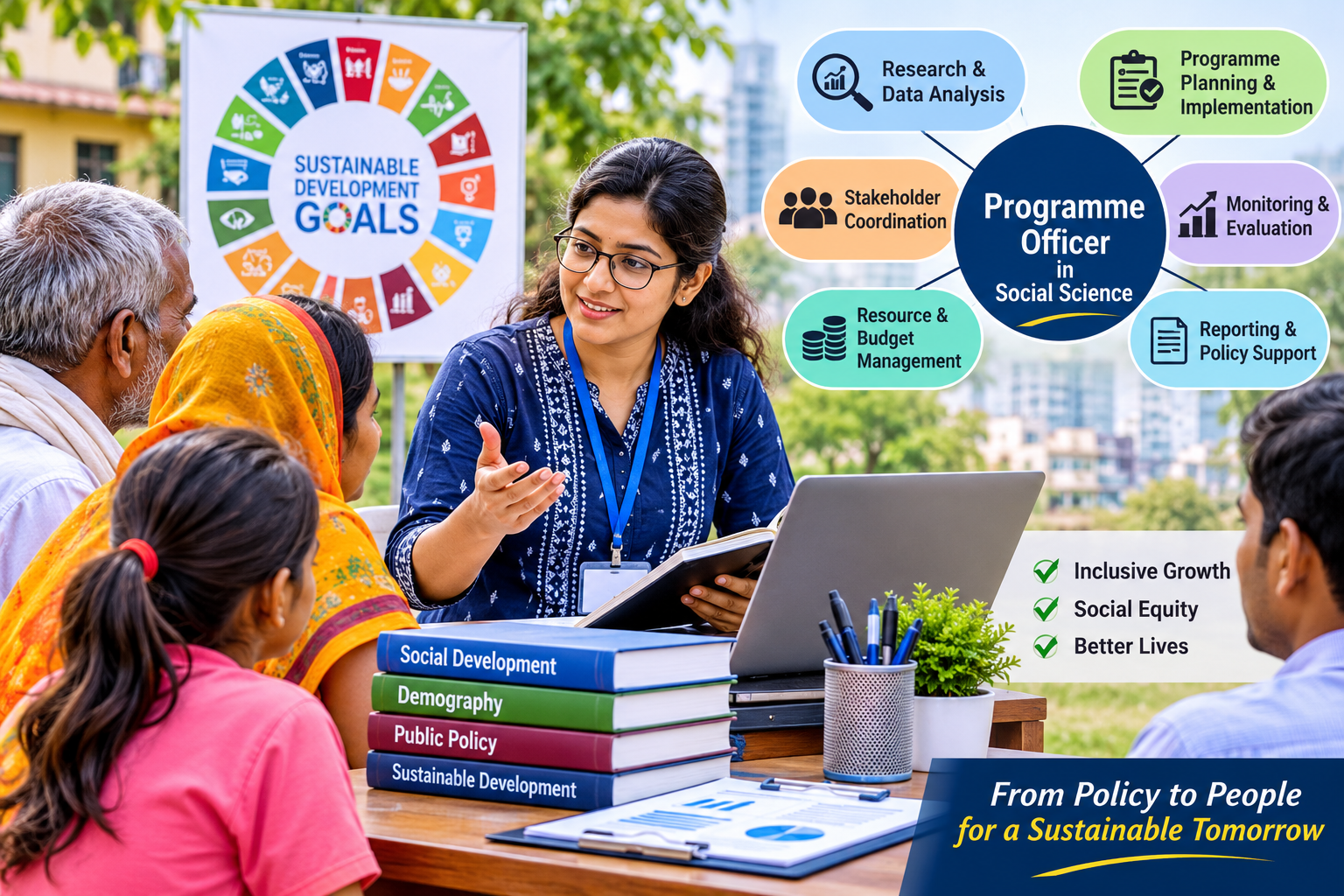
Thank you for reading this post, don’t forget to subscribe!A Programme Officer plays a vital role in translating organisational objectives, development policies and research-based strategies into practical programmes that create meaningful social change. In the field of social sciences, the position goes beyond routine programme administration. It involves understanding complex social realities, identifying developmental challenges, coordinating stakeholders, managing resources, monitoring interventions and evaluating their impact on communities.
Programme Officers are increasingly important in government departments, international development agencies, non-governmental organisations (NGOs), research institutions, think tanks, universities, philanthropic foundations and multilateral organisations. Their work often covers diverse sectors such as education, public health, gender equality, poverty alleviation, child development, livelihoods, social protection, sustainable development and governance.
In simple terms, a Programme Officer acts as a bridge between policy, research, institutions and people. The effectiveness of a development programme largely depends on how well this professional understands the problem, plans interventions, mobilises stakeholders and ensures that the intended benefits reach the target population.
Understanding the Role of a Programme Officer in Social Science
A Programme Officer is responsible for planning, implementing, coordinating, monitoring and reporting on programmes designed to achieve specific institutional or developmental objectives.
In social science, the role has a strong analytical and people-oriented foundation. It requires an understanding of sociology, economics, political science, demography, geography, public administration, development studies and other related disciplines.
Unlike purely administrative positions, Programme Officers must understand the social, economic, cultural and institutional factors influencing programme outcomes. They need to assess the needs of communities, identify inequalities, understand behavioural patterns and develop evidence-based interventions.
For example, a Programme Officer working on child development may coordinate with government departments, schools, health institutions, community organisations and local stakeholders to improve children’s access to education, nutrition and healthcare.
Similarly, a professional working on sustainable development may coordinate with state governments, district administrations, civil society organisations and development partners to advance the Sustainable Development Goals (SDGs).
Major Roles and Responsibilities of a Programme Officer
The responsibilities of a Programme Officer vary according to the organisation, programme objectives, geographical coverage and sector of intervention. However, several core functions are common across social science and development-sector assignments.
A. Programme Planning and Designing
Programme planning is one of the most important responsibilities of a Programme Officer. It involves converting organisational priorities and developmental needs into structured, achievable activities.
Major responsibilities include:
- Identifying development issues and assessing programme requirements.
- Conducting background research and reviewing existing policies, reports and evidence.
- Preparing programme concepts, proposals, work plans and implementation strategies.
- Defining programme objectives, expected outputs, outcomes and measurable indicators.
- Identifying target beneficiaries, geographical areas and stakeholder groups.
- Preparing implementation timelines, activity schedules and resource requirements.
- Ensuring alignment with national development priorities and relevant Sustainable Development Goals.
A well-designed programme should be realistic, measurable, inclusive and responsive to the needs of its intended beneficiaries.
B. Programme Implementation and Execution
Planning alone cannot ensure development outcomes. Effective implementation requires continuous supervision, coordination and problem-solving.
A Programme Officer ensures that planned activities are executed according to approved objectives, timelines and institutional guidelines.
Key duties include:
- Coordinating the execution of programme activities.
- Ensuring timely completion of planned interventions.
- Supervising field-level activities and implementation teams.
- Maintaining communication with implementing partners and stakeholders.
- Identifying operational challenges and suggesting corrective measures.
- Ensuring that programme activities reach the intended beneficiaries.
- Maintaining implementation records and progress documentation.
The Programme Officer must remain responsive to changing circumstances and adapt implementation strategies whenever necessary.
C. Research, Data Analysis and Evidence Generation
Social science programmes require reliable evidence to understand problems and measure progress. Therefore, research and analytical capabilities are essential for Programme Officers.
Their responsibilities may include:
- Conducting literature reviews and secondary data analysis.
- Undertaking baseline studies, needs assessments and situational analyses.
- Designing and supervising household surveys and field investigations.
- Conducting Focus Group Discussions (FGDs) and In-Depth Interviews (IDIs).
- Analysing quantitative and qualitative information.
- Identifying social inequalities, regional disparities and vulnerable population groups.
- Preparing analytical reports, policy briefs and research papers.
- Translating research findings into practical programme recommendations.
Knowledge of statistical and qualitative research tools such as SPSS, STATA, R, Excel and ATLAS.ti can be particularly useful.
A Programme Officer should be capable of interpreting data rather than simply collecting it. Evidence must inform programme decisions and improve the quality of interventions.
D. Monitoring, Evaluation and Learning (MEL)
Monitoring and Evaluation (M&E) is another fundamental responsibility. It helps organisations understand whether programmes are progressing as intended and whether interventions are producing the desired results.
A Programme Officer may be responsible for:
- Developing monitoring frameworks and performance indicators.
- Tracking programme activities against approved work plans.
- Monitoring financial and physical progress.
- Conducting field visits and reviewing implementation quality.
- Measuring outputs, outcomes and long-term impact.
- Identifying implementation gaps and performance bottlenecks.
- Preparing periodic monitoring and evaluation reports.
- Documenting lessons learned and recommending improvements.
Modern development programmes increasingly emphasise Monitoring, Evaluation and Learning (MEL), which integrates evidence and feedback into programme improvement.
For instance, a programme aimed at improving school enrolment should not only measure the number of children enrolled but also examine attendance, retention, learning outcomes and gender-related disparities.
E. Stakeholder Coordination and Partnership Management
Development programmes generally involve multiple institutions and stakeholders. Coordination is therefore central to the Programme Officer’s responsibilities.
These stakeholders may include:
- Central and state government departments.
- District administrations and local authorities.
- NGOs and civil society organisations.
- International development agencies.
- Research institutions and universities.
- Corporate Social Responsibility (CSR) partners.
- Community-based organisations and beneficiary groups.
- Technical experts, consultants and subject specialists.
A Programme Officer facilitates meetings, consultations, workshops, review discussions and collaborative activities.
The officer must maintain professional relationships, ensure effective communication, clarify institutional responsibilities and encourage collective ownership of programme objectives.
Strong stakeholder coordination can prevent duplication of efforts, improve resource utilisation and strengthen programme sustainability.
F. Budgeting and Financial Management
Financial management is an important administrative and operational component of programme management.
Although financial approvals may rest with senior management or designated finance officers, Programme Officers frequently contribute to budgeting and expenditure monitoring.
Their responsibilities may include:
- Preparing activity-based budget estimates.
- Identifying resource requirements.
- Monitoring programme expenditure against approved allocations.
- Reviewing utilisation certificates and financial progress reports.
- Coordinating with finance and accounts teams.
- Ensuring expenditure is consistent with approved guidelines.
- Identifying financial bottlenecks and recommending corrective action.
Transparency, accountability and proper documentation are essential to maintaining institutional credibility.
G. Documentation, Reporting and Knowledge Management
Programme documentation ensures institutional continuity, accountability and the availability of reliable information for decision-making.
A Programme Officer is often required to prepare:
- Monthly, quarterly and annual progress reports.
- Programme implementation reports.
- Minutes of meetings and workshop proceedings.
- Field visit reports and monitoring observations.
- Policy notes, concept papers and background documents.
- Presentations for senior management and stakeholders.
- Case studies, success stories and best-practice documents.
- Knowledge products and programme completion reports.
The ability to communicate complex information in a concise, structured and evidence-based manner is a valuable professional skill.
3. Field-Level Engagement and Community Participation
A distinguishing feature of social science programmes is their direct relationship with people and communities.
Programme Officers may undertake field visits to understand local realities, assess programme implementation and interact with beneficiaries.
Such engagement helps identify the gap between policy intentions and actual outcomes.
For example, a government scheme may have excellent policy provisions, but beneficiaries may face difficulties due to inadequate awareness, geographical barriers, social exclusion or administrative delays.
Through field engagement, Programme Officers can identify these challenges and communicate practical recommendations to the relevant authorities.
Community participation also ensures that development interventions are not merely imposed from above but reflect the priorities and aspirations of the people concerned.
4. Policy Analysis and Strategic Advisory Functions
In government institutions, think tanks and research organisations, Programme Officers may also contribute to policy research and strategic advisory assignments.
This involves examining existing policies, analysing development indicators, identifying emerging issues and preparing recommendations for decision-makers.
Some important responsibilities include:
- Reviewing national and international development policies.
- Analysing government schemes and institutional interventions.
- Examining SDG indicators and development performance.
- Identifying regional and socio-economic inequalities.
- Preparing policy briefs and background papers.
- Supporting interdepartmental consultations.
- Providing research-based inputs for strategic planning.
- Contributing to policy reviews and development assessments.
This function is particularly important because social development requires coordination between evidence, policy formulation and implementation.
5. Essential Skills and Competencies of a Programme Officer
A successful Programme Officer requires a combination of technical knowledge, administrative capability and interpersonal skills.
1. Analytical and Research Skills: Ability to interpret data, understand social phenomena, conduct research and generate evidence-based recommendations.
2. Programme Management: Competence in planning, scheduling, resource allocation, implementation and performance monitoring.
3. Communication Skills: Ability to prepare reports, draft official correspondence, deliver presentations and communicate with diverse stakeholders.
4. Leadership and Team Management: Capacity to guide teams, delegate responsibilities, resolve conflicts and motivate colleagues.
5. Problem-Solving and Decision-Making: Ability to identify challenges, assess alternatives and recommend practical solutions.
6. Digital and Technical Skills: Familiarity with MS Office, statistical software, data visualisation, GIS applications, project management platforms and online reporting systems.
7. Interpersonal and Negotiation Skills: Ability to build institutional relationships and facilitate constructive stakeholder engagement.
8. Time and Resource Management: Capacity to manage multiple assignments while meeting deadlines and maintaining quality.
9. Adaptability and Cultural Sensitivity: Understanding diverse social contexts and adapting interventions to local needs.
10. Ethical and Professional Conduct: Commitment to transparency, confidentiality, inclusiveness, accountability and research ethics.
6. Role of a Programme Officer Across Different Development Sectors
The scope of the position varies considerably depending on the thematic area.
| Development sector | Key responsibilities |
| Education | School improvement, learning outcomes, teacher development and educational inclusion |
| Public Health | Health programme coordination, awareness, service delivery and health indicators |
| Gender Equality | Women’s empowerment, gender budgeting and prevention of discrimination |
| Child Development | Nutrition, child protection, early childhood care and development |
| Poverty Alleviation | Livelihoods, social protection and multidimensional poverty reduction |
| Sustainable Development | SDG localisation, indicator monitoring and development assessments |
| Governance | Institutional coordination, public service delivery and administrative reforms |
| Environment | Climate resilience, environmental awareness and sustainable resource management |
| Population and Demography | Population dynamics, fertility, migration and demographic analysis |
This diversity makes the Programme Officer’s position relevant to a wide range of social science professionals.
7. Key Performance Indicators (KPIs) for Programme Officers
An effective Programme Officer should be assessed not only on the number of activities completed but also on the quality and outcomes of programme implementation.
Some commonly used performance indicators include:
- Percentage of planned activities completed within the timeline.
- Achievement of programme outputs and outcome targets.
- Quality and timeliness of reports and documentation.
- Effectiveness of stakeholder coordination.
- Number and quality of field monitoring visits.
- Timely identification and resolution of implementation challenges.
- Budget utilisation and financial compliance.
- Quality of research, analysis and evidence generation.
- Beneficiary participation and satisfaction.
- Contribution to programme improvement and institutional learning.
Performance indicators should be aligned with the programme’s objectives and the officer’s actual responsibilities.
8. Challenges Faced by Programme Officers
Despite their importance, Programme Officers often encounter several operational and institutional challenges.
Limited resources: Insufficient financial, human and technical resources may affect programme implementation.
Coordination gaps: Differences in institutional priorities and administrative procedures can delay decisions.
Data limitations: Incomplete, outdated or inconsistent information can affect research and monitoring.
Field-level constraints: Geographical barriers, local resistance and inadequate infrastructure may restrict programme outreach.
Administrative workload: Excessive reporting and procedural responsibilities may reduce the time available for substantive programme activities.
Changing priorities: Policy changes, funding uncertainties and emerging development challenges may require frequent adjustments.
Addressing these challenges requires institutional support, effective communication, realistic planning and adaptive management.
9. Career Opportunities and Professional Growth
The position of Programme Officer offers diverse career opportunities for professionals with backgrounds in social sciences and related disciplines.
Potential employers include:
- Government ministries and departments.
- NITI Aayog and other policy research institutions.
- United Nations agencies and international organisations.
- NGOs and civil society organisations.
- Development consulting firms.
- Research institutes and academic institutions.
- Corporate foundations and CSR organisations.
- Bilateral and multilateral development agencies.
With experience, professionals may progress towards positions such as Senior Programme Officer, Programme Manager, Project Director, State Programme Lead, Monitoring and Evaluation Specialist, Policy Analyst, Research Coordinator and Development Consultant.
Advanced qualifications in development studies, public policy, social sciences, public health, economics, demography or project management can further strengthen career prospects.
10. The Evolving Role of Programme Officers in the SDG Era
The adoption of the United Nations Sustainable Development Goals in 2015 has expanded the responsibilities of development professionals.
Today’s Programme Officers must understand the interconnected nature of poverty, health, education, gender equality, employment, climate change and institutional development.
The emphasis is shifting from activity-based implementation towards measurable development outcomes, evidence-based policymaking, convergence and institutional accountability.
Digital technologies, real-time monitoring, geospatial analysis and data-driven decision-making are also transforming programme management.
Consequently, Programme Officers are increasingly expected to combine social science knowledge with technological awareness, strategic thinking and an understanding of sustainable development.
Conclusion
A Programme Officer in social science is much more than an administrative coordinator. The position represents a combination of research, programme management, policy analysis, stakeholder engagement, monitoring and evaluation, and institutional development.
The professional acts as a connecting link between developmental aspirations and practical implementation. Whether working in government, international organisations, NGOs or research institutions, the Programme Officer contributes to improving institutional efficiency and creating measurable social outcomes.
Ultimately, the effectiveness of a Programme Officer should be judged not merely by the number of meetings organised, reports submitted or activities completed, but by the quality of interventions, the strength of evidence generated and the positive difference made in people’s lives.
In a world facing complex social, economic and environmental challenges, capable Programme Officers are essential for translating knowledge into action and development commitments into tangible improvements in human well-being.
The real responsibility of a Programme Officer is not simply to manage a programme, but to ensure that the programme delivers meaningful, inclusive and sustainable change.
Leave a Reply