By Science Communication Team | Published October 2026
Right now, as your eyes scan this page, nearly 100 trillion nearly-massless, invisible subatomic particles called neutrinos are passing through every square centimeter of your body every second. They cruise through your skin, glide through solid concrete, traverse thousands of kilometers of molten rock inside the Earth and exit into space completely undisturbed.
Physicists call them “ghost particles.” Because they have no electric charge and interact only through gravity and the subatomic weak force, trying to catch one is like trying to catch a speeding bullet with a single strand of spider silk.
Yet in October 2026, the Royal Swedish Academy of Sciences awarded the Nobel Prize in Physics for an audacious idea that sounded like pure science fiction: turning an entire cubic kilometer of crystal-clear Antarctic ice into a trap for ghosts.
Meet the Nobel Laureate
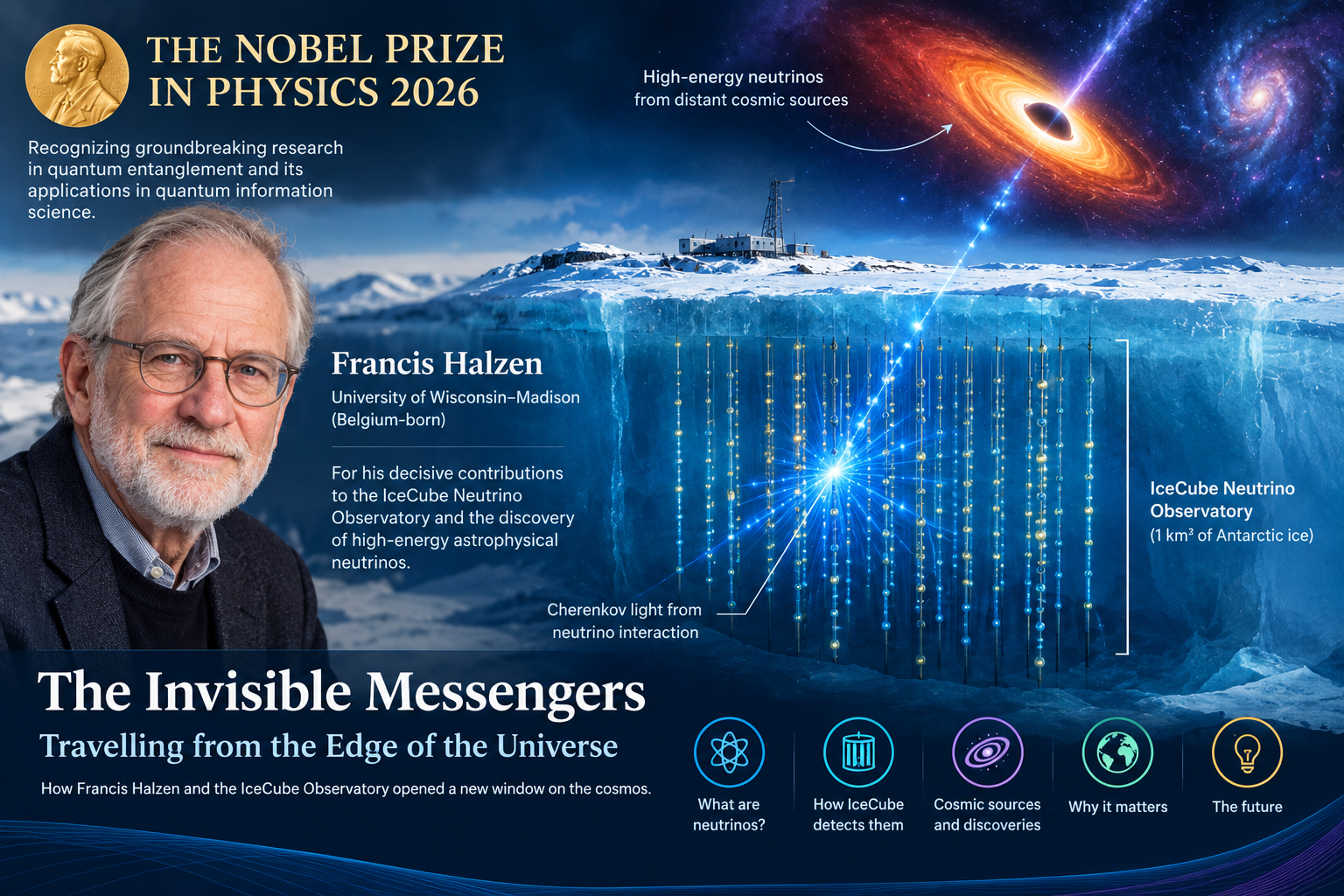
The 2026 Nobel Prize in Physics was awarded to Francis Halzen (University of Wisconsin–Madison, USA):
Official Citation: “for decisive contributions to the IceCube Neutrino Observatory and the discovery of high-energy neutrinos of astrophysical origin.”
Born in Belgium in 1944, Halzen spent the 1980s wrestling with a fundamental observational barrier: traditional telescopes, which rely on light, are blind to the interiors of the most violent engines in our universe. Cosmic accelerators like supermassive black holes must blast out high-energy neutrinos. But catching them would require an instrument the size of a mountain.
Rather than building an impossible glass structure, Halzen proposed using natural polar ice as the detector itself. Over two decades of intense engineering at the South Pole, his vision became IceCube—the largest particle detector on Earth.
What Did He Actually Discover?
Astronomers have traditionally studied the cosmos through light—from radio waves to visible photons and gamma rays. But light gets absorbed by dense cosmic dust clouds. Charged cosmic rays (like protons) get bent and scrambled by cosmic magnetic fields, scrambling their origins.
Neutrinos travel in straight lines across billions of light-years, unimpeded by dust, gas, or magnetic fields. They carry pristine signatures straight from the centers of blazars, merging neutron stars, and active galactic nuclei.
The Everyday Analogy: The “Blue Sonic Boom”
Imagine a supersonic jet flying overhead. When it breaks the speed of sound in air, it generates a sharp acoustic shockwave—a sonic boom.
When an ultra-high-energy neutrino travelling from a distant galaxy collides directly with a water molecule inside the Antarctic ice sheet, it creates a secondary particle (a muon) travelling faster than the speed of light in that ice. This creates an optical sonic boom: an eerie, faint blue glow called Cherenkov radiation.
By embedding 5,160 optical sensors two kilometers deep inside Antarctic ice, IceCube captures these blue light cones, reconstructs their angles with sub-degree accuracy, and points backward to their cosmic birthplaces.
Analogy Limitation: Nothing exceeds the speed of light in a vacuum (). Cherenkov radiation occurs because light slows down inside dense matter (
; in ice,
, slowing light to roughly
). The particle outruns light in that specific medium, not the cosmic speed limit.
Explore the Science: Three Levels
Level 1 — The Simple Idea (For a 12-Year-Old)
Think of Earth as a giant sponge. Most space debris gets stuck on the surface. Neutrinos are like water vapor: they slip right through without touching anything. To catch them, scientists melted holes two kilometers deep into the South Pole ice and dropped in long strings of digital light sensors. When an elusive neutrino finally bumps into an ice atom, it triggers a tiny blue flash. By timing that flash across multiple sensors, scientists trace the particle straight back to the monster black hole that launched it!
Level 2 — The Scientific Explanation
Cosmic neutrinos () are produced when ultra-high-energy protons collide with ambient photons or gas in extreme environments:
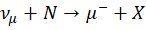

When a neutrino reaches IceCube, deep inelastic scattering via charged-current weak interactions creates a relativistic muon:
The muon radiates Cherenkov photons at an emission angle :
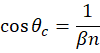
The array of Digital Optical Modules (DOMs) records photon arrival times with nanosecond accuracy, mapping the particle’s direction and energy.
Level 3 — The Deeper Mystery
Earth is constantly pelted by atmospheric muons produced by cosmic rays hitting our upper atmosphere—outnumbering cosmic neutrinos by millions to one. Halzen’s solution was to look downward. By filtering for particles traveling upward out of the bedrock into the ice, the entire mass of Earth absorbs the atmospheric noise. Any upward-moving muon must have been produced by a neutrino that crossed the entire planet first.
From Laboratory to Everyday Life
- Earth Tomography: High-energy neutrinos are absorbed by Earth’s core at predictable rates based on matter density, enabling direct radiological mapping of Earth’s interior composition without seismic guesswork.
- Extreme-Environment Photodetectors: IceCube pioneered pressure-resistant, low-noise digital optical sensors that survive refreezing under 300 atmospheres, driving advances in marine sensor arrays and deep-ocean exploration.
- Real-Time Multi-Messenger Astronomy: Automated IceCube alerts notify optical, radio, and space-based gamma-ray telescopes within seconds of high-energy detections, orchestrating global multi-messenger observation networks.
Timeline of Discovery
- 1930: Wolfgang Pauli postulates the neutrino to explain missing energy in radioactive beta decay.
- 1956: Clyde Cowan and Frederick Reines experimentally detect the neutrino using a nuclear reactor.
- Late 1980s: Francis Halzen proposes using deep Antarctic glacial ice as an uncontained Cherenkov detector.
- 2005–2010: Construction of IceCube at the South Pole; 86 boreholes melted to a depth of 2,450 meters.
- 2013: IceCube publishes first proof of high-energy cosmic neutrinos from beyond our solar system.
- 2018: Discovery of a cosmic neutrino coincident with a flaring blazar (TXS 0506+056).
- October 2026: Francis Halzen receives the Nobel Prize in Physics.
Why This Nobel Prize Matters
For over a century, astrophysicists were blind to the origins of ultra-high-energy cosmic rays. Because cosmic magnetic fields bend charged protons, pinpointing their accelerators was impossible.
Halzen’s work proved that high-energy neutrinos function as pristine directional vectors pointing straight back to cosmic engines. IceCube transformed a barren expanse of Antarctic ice into a new sensory organ for astrophysics, confirming active galactic nuclei and blazars as the accelerators powering the high-energy universe.
The Takeaway
Catching ghost particles at the South Pole reminds us that answering nature’s deepest questions often demands rethinking how we observe the universe. What sounds absurd today—melting a square kilometer of Antarctic ice to look downward through Earth—often becomes the foundation of tomorrow’s breakthroughs.
What do you think is the next great mystery in physics: dark matter, dark energy, or quantum gravity? Let us know in the comments below!
References & Resources
- Nobel Prize Outreach: Official Announcement: The Nobel Prize in Physics 2026.
- IceCube Collaboration: icecube.wisc.edu — Science overview, detector diagrams, and educational portals.
- Advanced Scientific Guide: Royal Swedish Academy of Sciences: Scientific Background.
- Halzen & Klein (2010): “IceCube: An Instrument for Neutrino Astronomy”, Review of Scientific Instruments.
Leave a Reply